Answering the buyer’s search for an OBD 1 and OBD 2 code reader, this guide highlights five practical options that cover both classic OBD 1 car diagnostics and modern OBD 2 systems. It is ideal for automotive hobbyists, DIYers, and professional technicians who work on a mix of older Ford-era vehicles and newer gasoline cars. Below is a quick comparison of the selected models, followed by detailed sections for each product and a practical buying guide.
| Product | Best For | Key Strength |
|---|---|---|
| JOPLAY OBD1 Code Reader (Ford 1981-1995) | Old Ford, Lincoln, Mercury vehicles | KOEO/KOER tests with 2.4″ LCD |
| INNOVA 3145 Ford OBD1 Code Reader | Ford family (1982-1995) | Direct Ford MCU/EEC-IV support |
| ANCEL AD310 OBD II Scanner | Newer OBD2 vehicles | Clear and read DTCs, live data, I/M readiness |
| FOXWELL NT301 OBD2 Scanner | Most 1996+ vehicles | Live data, VIN retrieval, MIL reset |
| MOTOPOWER MP69033 OBD2 Scanner | Broad OBD2 support on many cars | Extensive data readouts and live graphs |
JOPLAY OBD1 Code Reader for Ford (2 in 1)
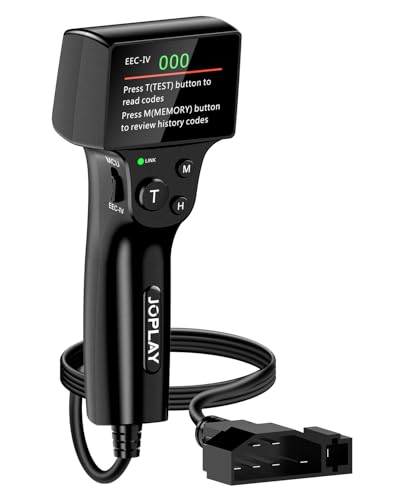
Features a wide vehicle coverage for Ford, Lincoln, and Mercury from 1981 to 1995. Interfaces with EEC-IV and MCU-based systems. The 2.4″ LCD displays code numbers and their definitions instantly, removing the need to count blinking lights or refer to manuals. It includes KOEO, CM, and KOER self-tests for a comprehensive check. Not suitable for ABS codes.
Best for: Classic Ford-era vehicles and owners who want straightforward KOEO/KOER diagnostics on a dedicated OBD1 interface. This is a strong pick for collectors or daily drivers with pre-1996 Fords.
Caution: Does not provide ABS or newer system codes; verify your model year and wiring before purchase.
JOPLAY OBD1 Code Reader (Gray) for Ford Range

Wide vehicle compatibility covers Ford, Lincoln, and Mercury from 1981 to 1995, with a 2.4″ LCD to show code numbers and definitions. Includes KOEO, CM, KOER self-tests for in-depth diagnostics. Designed for older platforms and interfaces with EEC-IV/MCU systems. Not suitable for ABS codes.
Best for: Owners of multiple classic Ford vehicles seeking a compact OBD1 diagnostic tool with clear code definitions. Choose this if you need a dedicated OBD1 reader with reliable KOEO/KOER testing.
Caution: As with other OBD1 tools, ABS or newer features are not supported.
ANCEL AD310 Classic Universal OBD II Scanner
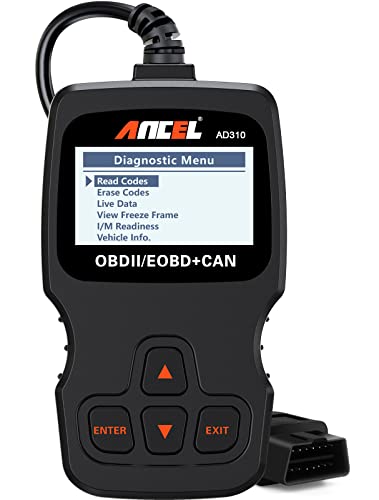
The AD310 is a compact, widely used OBD2 scanner suitable for 1996 and newer vehicles. It can read and clear diagnostic trouble codes, view live data, display freeze frame data, monitor I/M readiness, and provide vehicle information. It connects directly to the OBDII port without external power.
Best for: General use on most modern cars; a practical choice for quick check-engine-light diagnoses and basic live data retrieval. Better for users who want a single device for a broad OBD2 range.
Caution: It does not support ABS, SRS, or other specialized systems on many vehicles; verify feature coverage for your car model.
FOXWELL NT301 OBD2 Scanner

NT301 specializes in read fault codes, live data, and vehicle information for most 1996+ gasoline cars. It can read DTCs, access emissions readiness status, turn off MIL/CEL, and retrieve VIN. It provides live data graphs to spot trends in real time. It does not support advanced functions like bidirectional control on all models.
Best for: Technicians and DIYers who want reliable live data visualization and VIN retrieval for a broad range of OBD2 vehicles. Choose this when you need clear live data alongside standard code reading.
Caution: Some features may not be available on every vehicle; accuracy depends on proper vehicle compatibility and wiring integrity.
MOTOPOWER MP69033 OBD2 Scanner

Offers multi-function OBD2 capabilities with a built-in DTC lookup library, read/erase codes, view freeze frame, monitor readiness, display live data, and provide vehicle information. It supports 9 OBD2 protocols and a wide range of languages, powered via the vehicle’s OBD2 port without an external battery.
Best for: Users who want a versatile OBD2 scanner with rich data presentation and broad protocol support for many makes and models. Choose this when you need extensive live data alongside reliable code reading.
Caution: This device focuses on OBD2; it does not provide the specialized OBD1 functionality.
Buying Guide: Key Considerations For OBD 1 And OBD 2 Readers
- Vehicle compatibility: Confirm whether you need OBD1 compatibility for classic vehicles or primarily OBD2 for newer cars. Some readers focus on one era; others cover both, like dual-year adapters or general OBD2 devices that still work with older codes.
- Code reading and definitions: Look for devices with built-in code definitions or freeze-frame data. This helps you understand what the codes mean without external manuals.
- Live data capabilities: Real-time data displays (RPM, coolant temp, oxygen sensors) are useful for diagnosing issues beyond codes.
- Tests and diagnostics: KOEO/KOER/CM tests on OBD1 readers provide deeper checks for older systems, while MIL/CEL reset, I/M readiness, and VIN retrieval are common in OBD2 tools.
- Power and portability: Many scanners draw power from the vehicle; some include handheld designs or cables. Consider how you’ll use the device in your workspace or driveway.
- Limitations: Some tools explicitly do not support ABS, SRS, or other advanced modules. Note these restrictions when planning repairs.
Frequently Asked Questions
- Are OBD1 scanners still useful? Yes, for diagnosing 1980s–early 1990s Ford, Lincoln, and Mercury vehicles that use the EEC-IV/MCU systems.
- Can a single device diagnose both OBD1 and OBD2 cars? Some models support both eras via different interfaces or adapters; check product specs carefully.
- Do these readers require internet access? No, most rely on on-device code definitions and live data; online databases aren’t necessary for standard code reading.
- Will these tools reset check engine lights? Many OBD2 scanners can clear codes and MIL status after repairs; OBD1 tools vary in this capability depending on the vehicle.
- How do I verify compatibility with my car model? Use the product’s description and the vendor’s compatibility table or coverage checker to confirm model/year support.
- Do any of these require batteries? Most OBD readers pull power from the vehicle’s OBD port; some portable adapters may require no battery.