The best wireless tire TPMS sensor valve systems offer real-time pressure and temperature data, easy installation, and reliable alarm alerts. This guide highlights five strong options for American drivers, including RVs, SUVs, trucks, and motorcycles. Each pick is evaluated for who benefits most, ease of use, and notable limitations to consider before purchase.
Summary of chosen products
| Product | Main benefit | Best for |
|---|---|---|
| Tymate TM7 Tire Pressure Monitoring System | External sensors, 6 alarm modes, dual USB charging | DIY installers and budget-focused drivers seeking safety upgrades for older vehicles |
| Tymate TM2 RV TPMS | Solar charging, long battery life, factory pre-paired sensors | RVs, trailers, and vehicles with limited access to power |
| Autel TPMS MX Sensor (1-Sensor) | 4-in-1 sensor with dual frequencies, broad tool compatibility | Owners using Autel diagnostic tools or needing versatile replacement sensors |
| VESAFE Wireless TPMS | Real-time LCD display, multi-tire alarms, simple cigarette-lighter power | Compact cars and 4-tire setups prioritizing quick setup and visibility |
| MORESENSOR Signature Series 315MHz TPMS | Pre-programmed, relearn-ready sensors for common American models | Users replacing sensors across multiple popular brands with easy relearn requirements |
Tymate TM7 Tire Pressure Monitoring System

Features include accurate real-time monitoring with a robust accuracy of ±1.5 PSI or ±3°F, and a color LCD with adjustable backlight. The TM7 supports six alarm modes: high/low pressure, fast leakage, high temperature, sensor low battery, and sensor signal lost. It powers via a car lighter socket and includes dual USB charging, making it suitable for drivers who want a quick, space-saving upgrade without installing factory TPMS.
Best for: DIY enthusiasts and budget-conscious drivers who need immediate, visible tire data and additional charging capability. Limitation: external sensors may require mounting on older vehicles with compatible wheel configurations.
Tymate TM2 RV Tire Pressure Monitoring System

The TM2 includes four external sensors with IP67 waterproofing and low-power operation that can last up to six months on one battery, plus solar charging and USB/cigarette lighter options. It sets the current pressure as a reference upon pairing, enabling simple alarm threshold customization within a defined range (+25% PSI to -15% PSI of reference pressure). This is especially advantageous for RVs and trailers needing reliable data in variable environments.
Best for: RVs, trailers, and trucks where long sensor life and flexible charging are critical. Limitation: Sensor data accuracy is stated around 3 PSI, which may be less precise than higher-end systems in some driving conditions.
Autel TPMS MX Sensor 1-Sensor (315/433 MHz)
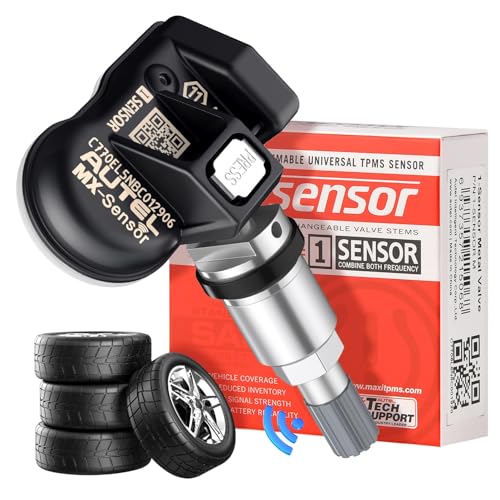
Autel MX Sensor offers 1-sensor precision with dual-frequency support and is designed for use with Autel TPMS tools. It features 88-chip technology for strong wireless programming signals and is 100% clone-able with easy press-in installation. It is compatible with a wide range of Autel tooling and vehicles. Best for: Autel tool users and those replacing sensors across multiple vehicle types who need a widely compatible, programmable sensor. Limitation: Requires programming with compatible Autel tools before installation; not a standalone plug-and-play solution for all users.
VESAFE Wireless TPMS for Small Vehicles

VESAFE provides a real-time LCD display for four tires with adjustable alert values (default 29-44 PSI) and audible/visual alarms. The system is powered via cigarette lighter plug and uses small, waterproof external sensors with replaceable CR1632 batteries, lasting up to about two years. Best for: Drivers who want a compact, straightforward display with easy installation. Limitation: External sensors and battery replacements may add ongoing maintenance for long-term use.
MORESENSOR Signature Series 315MHz TPMS

MORESENSOR Signature Series TPMS sensors are preprogrammed for select American vehicle models (315MHz). They emphasize relearn readiness and strong signal, with a focus on quick replacement and compatibility. Best for: Owners replacing sensors on popular U.S. vehicles who prefer plug-and-play relearn workflows. Limitation: Preprogrammed fits must be verified for your exact model using a fitment tool or owner’s manual to avoid misfit.
Buying Guide: Key Considerations for Wireless TPMS Sensors
- Power and charging: Do you prefer solar charging, USB/cigarette lighter power, or hardwired options? Solar-powered units excel for caravans and RVs, while USB-powered systems work well for daily drivers.
- Sensor type: External (perimeter) sensors are easier to install and retrofit on older vehicles, while internal/valve stem sensors can offer clean aesthetics but may require more effort to install.
- Alarm and display features: Look for multi-alarm modes (high/low pressure, temperature, fast leak) and a readable LCD or mobile alert integration for quick interpretation on the go.
- Battery life and durability: Consider IP ratings (waterproofing), battery type (CR1632 or similar), and expected sensor life in harsh climates.
- Vehicle compatibility: Some sensors are model-specific or require programming with diagnostic tools. Verify fit with your vehicle and, if needed, the tools you own or plan to buy.
- Ease of setup: Factory pairing, auto reference pressure, and relearn procedures can significantly reduce installation time and complexity.
- Maintenance: External sensors may need battery replacements; internal options might have longer lifespans but could require professional service for some replacements.
FAQ
- What is a TPMS sensor valve?
Answer: It is the component that houses the sensor and attaches to the wheel’s valve stem, transmitting tire pressure data to the monitor system. - Do I need special tools to install external TPMS sensors?
Answer: Many external sensors are designed for easy DIY installation, but some vehicles may require additional mounting hardware or relearn steps with diagnostic tools. - Can TPMS systems monitor temperature as well as pressure?
Answer: Yes, most modern TPMS units display tire temperature in addition to pressure, helping detect overheating or slow leaks. - Are solar-powered TPMS sensors reliable in all climates?
Answer: Solar power works well in sunny conditions, but some setups offer USB or cigarette-lighter charging for days with limited sun. - What does a “relearn” procedure involve?
Answer: Relearn is the process of programming new sensors to a specific vehicle’s ECU so the monitor recognizes them accurately. - Is there a risk with non-OE TPMS sensors?
Answer: Some vehicles require OE or model-specific sensors and may need programming with compatible tools to ensure correct operation and accuracy.