The best water filter system for a car wash depends on how often you wash, how hard your tap water is, and whether you want features such as a bypass valve or water-quality monitoring. Deionizing systems are designed to remove mineral ions that can leave spots as water dries. Waterdrop is a straightforward choice for final rinses, CR Spotless suits buyers seeking a portable system for several outdoor cleaning tasks, and AKM is aimed at frequent washing with a larger resin capacity.
| System | Best for | Notable feature |
|---|---|---|
| Waterdrop CWE | Simple final rinses | Pre-mixed resin and bypass switch |
| CR Spotless DIC-20 | Multiple outdoor cleaning uses | Portable deionizing system |
| AKM 15L | Frequent washing | 15L resin capacity and mobility cart |
| VEVOR | Monitoring rinse-water quality | Built-in TDS meter |
| iSpring WGB22BD-BP | Longer intervals between refills | Stated capacity up to 1,200 gallons |
Waterdrop CWE Spotless Water System
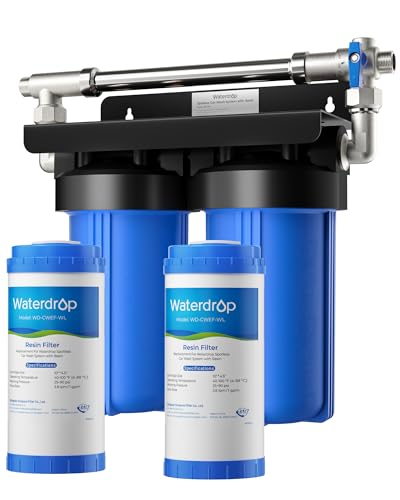
The Waterdrop CWE is best for drivers who want a dedicated deionized rinse without a complicated wash routine. It uses pre-mixed resin to reduce calcium, magnesium, and other mineral particles associated with water spots. Its bypass switch lets users choose between tap water and purified water, which can help reserve resin for the final rinse.
The listed instructions recommend using spotless-rinse mode for the final rinse, for about eight to ten minutes. This makes the system a practical option for buyers who plan to wash with regular water first and switch modes at the end. Confirm that the bypass is positioned correctly, as the product information notes that incorrect positioning can affect results and service life.
Choose this if you want a bypass-equipped system and a clearly described final-rinse routine. Limitation: the listing does not provide a resin capacity or estimated treated-water volume, so it is harder to compare refill intervals.
CR Spotless DIC-20 Portable System

The CR Spotless DIC-20 is best for households that want one deionizing system for vehicles and other outdoor cleaning tasks. The product is described for use with cars, motorcycles, bikes, boats, planes, yachts, windows, and solar panels. Its deionizing process removes minerals from water so surfaces can air-dry with fewer mineral spots.
This option may suit buyers who want a portable system associated with several uses rather than a car-only filter. The wash, rinse, and walk-away approach is intended to reduce the need for towel drying after the final rinse.
Choose this if you also clean windows or solar panels and value a multi-purpose system. Limitation: the supplied product details do not specify resin volume, rated capacity, or a bypass valve, so review the product listing for those details before choosing it over a system with published capacity information.
AKM 15L System With Mobility Cart

The AKM system is best for frequent car washing or cleaning larger vehicles. Its listed 15L resin capacity is intended to provide longer service life than a smaller resin load. The manufacturer estimates up to 1,500 gallons at 50 ppm TDS, or about 300 car washes or 75 RV washes; actual output may vary with source-water quality and mineral content.
A dedicated mobility cart is included to make moving the system around a driveway, garage, or yard easier. The system also has a bypass and garden-hose quick connector. Its deionized water is intended for a final rinse on cars, RVs, boats, and motorcycles, allowing surfaces to air-dry without towel drying.
Choose this if you expect to wash often and want a cart for moving a larger unit. Limitation: the stated gallon and wash estimates assume particular water conditions and should not be treated as guaranteed output for every home.
VEVOR System With TDS Meter

The VEVOR system is best for buyers who want to check water quality as resin is used. It includes two 4L containers of mixed-bed resin and a TDS meter for monitoring treated water. The product recommends considering resin replacement around 30 ppm, providing a listed reference point for maintenance.
VEVOR states a rated capacity of up to 330 gallons under average 200 ppm water conditions. The system is designed for a final rinse, removing calcium, magnesium, and other dissolved ions so the vehicle can air-dry with fewer water spots. It is also described for cars, RVs, and windows.
Choose this if monitoring TDS is more useful to you than relying on a rough wash-count estimate. Limitation: capacity depends on source-water conditions, and the listed 330-gallon figure is tied to average 200 ppm water.
iSpring WGB22BD-BP Spotless System

The iSpring WGB22BD-BP is best for buyers who want a bypass valve and a published capacity estimate. The system is designed to provide zero to minimal TDS water for a wipe-free final rinse. Its bypass lets users use standard tap water for the initial wash and switch to deionized water for rinsing, without repeatedly connecting and disconnecting hoses.
The product lists filtration capacity of up to 1,200 gallons, based on source water at 50 ppm, and estimates up to 240 car washes or 60 RV rinses. It is also described for motorcycles and boats. These figures give buyers a comparison point, but real-world capacity will depend on incoming water quality.
Choose this if you want a bypass and a stated capacity for planning use. Limitation: the listed gallon and wash estimates are conditional on 50 ppm source water, so they may not match your local supply.
Buying Guide: How To Choose A Car Wash Water Filter
Do you need deionized water or a standard hose filter?
For a spot-free final rinse, compare systems that specifically use deionization resin. The featured DI systems are designed to remove mineral ions such as calcium and magnesium. A conventional inline filter may reduce some contaminants or spots, but it is not automatically equivalent to a deionized system. Check the product’s stated filtration method and intended use.
How much capacity is enough?
Estimate how often you wash, then compare resin volume and rated output where available. Capacity figures are conditional: the AKM and iSpring estimates cite 50 ppm source water, while VEVOR cites average 200 ppm water. Harder or more mineral-rich water can change how much treated water a system produces. Treat wash-count estimates as guidance, not guarantees.
Is a bypass valve useful?
A bypass can let you wash with regular tap water and reserve deionized water for the final rinse. That can reduce unnecessary resin use. If you prefer to use purified water throughout, confirm that the system supports your routine and follow its operating instructions.
Should you choose a TDS meter or a larger resin tank?
A TDS meter helps monitor treated-water readings, while a larger resin capacity may suit frequent washing and reduce how often media needs attention. Choose based on whether you prioritize direct water-quality checks or longer potential service intervals.
Frequently Asked Questions
Can a deionized system help prevent water spots?
It is designed to remove mineral ions that can remain on a surface when tap water dries. Use it for the final rinse as directed, and understand that results depend on the system’s condition and incoming water.
Can I use regular tap water for the whole wash?
Many systems are intended to pair regular water for washing with deionized water for the final rinse. A bypass valve makes switching easier on models that include one.
Does deionized rinse water eliminate towel drying?
Product descriptions state that treated water can air-dry with fewer spots, reducing the need for towel drying. Follow the system instructions and account for local water conditions.
How do I know when resin needs attention?
Check the manufacturer’s guidance. Some systems provide a TDS meter or visible resin-status cues; others list estimated capacity rather than a direct indicator.
Will the same system work for an RV or boat?
Several systems in this guide are listed for RVs, boats, or other vehicles. Confirm the intended applications and capacity against your rinsing needs before buying.