V-belt dressing sprays are designed to restore grip, reduce squeal, and extend belt life in automotive and industrial settings. This guide highlights five proven options well-suited for varying belt types, from leather and rubber to PVC and composite drives. Each product targets different buyers—from everyday car owners seeking a quick-noise fix to shop-floor technicians needing durable, heavy-load solutions. Read on to compare delivery, durability, and application notes to choose the best belt dressing for your needs. A quick summary table follows to help you decide at a glance.
| Product | Best For | Notes |
|---|---|---|
| WEICON Belt Dressing Spray | Heavy-load drive belts | Synthetic elastomer coating; extends life, anti-slip |
| XIRUJNFD 100ml Belt Dressing Spray | Quiet cabins and mixed-use belts | Anti-slip, noise reduction, quick-dry |
| Nu-Calgon 4086-03 | V-belts in harsh environments | USDA approved; pliable, reduces squeal |
| ROCOL Belt Dressing Spray | Industrial and automotive belts | Instant grip; protects in damp/hot environments |
| Berryman Belt Dressing Spray | Glazed or worn belts | Restores grip; extends belt life |
WEICON Belt Dressing Spray

WEICON Belt Dressing Spray is a transparent coating based on synthetic elastomers designed for a wide range of drive belts under heavy loads. It acts as an adhesion promoter, prevents static charging, and protects against aging. It’s suitable for belts and tapes made of leather, rubber, or PVC, including V-belts, flat belts, timing belts, and conveyor belts. This makes it ideal for industrial applications where belts encounter high stress and temperature cycling. Best for maintenance teams and workshop settings requiring a durable, long-lasting belt surface.
Who it’s best for: shop floor technicians and fleet maintenance crews dealing with heavy-load belts. Why selected: broad material compatibility, strong aging protection, and static prevention help reduce squeal and prolong life. Caution: apply in a well-ventilated area; avoid applying near open flames as with most solvents.
XIRUJNFD 100ml Belt Dressing Spray

XIRUJNFD’s 3.38 fl. oz. version provides traction improvement and reduced belt tension to help dampen stress on motors and wheels. It’s marketed for automotive timing and drive belts and emphasizes noise reduction, preventing slippage from heat, cold, dust, and glazing. Engine protection is highlighted as a benefit, aiming to extend belt and component life. Best for: vehicle owners seeking noise reduction and smoother operation with a quick-dry formula. Caution: spray in a ventilated area and avoid excess buildup that could attract dust.
Berryman Belt Dressing Spray
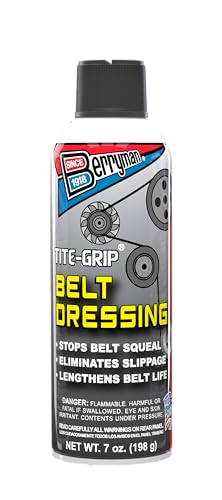
Berryman Belt Dressing Spray focuses on eliminating belt squeal and slippage by restoring grip and flexibility to worn or glazed belts. It extends belt life by conditioning and protecting rubber belts, making it a solid choice for V-belts, serpentine belts, and round belts. Best for: older or glazed belts needing grip restoration. Caution: over-application can leave a slick film on pulleys, potentially attracting dust or grime.
Nu-Calgon 4086-03 (11 oz.) V-Belt Dressing

Nu-Calgon 4086-03 provides a 11 oz. can of V-belt dressing designed to extend belt life by keeping belts pliable and preventing slippage, which eliminates squealing and chattering. Notably, this product carries USDA approval, signaling compliance with certain sanitation and handling standards. Best for: facilities needing a dependable, widely compatible dressing with regulatory considerations. Caution: verify compatibility with your belt material, especially for specialty or older belts that may have unique surface chemistries.
ROCOL Belt Dressing Spray

ROCOL’s Belt Dressing Spray delivers instant grip to prevent squeal and slippage, while protecting belts in both damp and hot/dry environments. It helps extend belt life by preventing drying and cracking. Best for: environments with variable humidity and temperature where immediate grip is valuable. Caution: ensure the spray doesn’t leave a residue that could attract dust in dusty industrial settings.
Buying Guide
Key considerations when selecting a V-belt dressing spray include belt material compatibility, operating environment, and application frequency. For heavy-load belts in industrial settings, choose products that emphasize adhesion, aging protection, and static prevention. Automotive users should prioritize noise reduction and quick-dry formulas to minimize downtime. Consider the following questions to refine your choice:
- What belt materials does the product support (leather, rubber, PVC, etc.)?
- Is there a focus on noise reduction or simply grip restoration?
- Do you need a spray with fast drying times for quick maintenance?
- Should the product be USDA approved or meet other regulatory standards?
- Is the application intended for automotive belts, industrial belts, or both?
Comparison tips: for immediate grip and noise reduction in mixed-use belts, look for anti-slip and quick-dry features. For long-term belt life in harsh environments, prioritize elastomeric or pliable coatings and aging protection. Always test a small area first and follow manufacturer instructions for re-application intervals and surface preparation.
Frequently Asked Questions
- What is V-belt dressing spray used for?
It is used to restore grip on worn or glazed belts, reduce squeal, and extend belt life by keeping surfaces pliable and protected.
- Can belt dressing damage belts?
When used as directed, most sprays aid performance; over-application or residue buildup can attract dust or cause uneven wear.
- Is belt dressing compatible with all belt materials?
Most sprays cover rubber, leather, and PVC belts, but check the product label for material-specific recommendations.
- Should I use belt dressing on all belts?
Not necessary for new, properly tensioned belts; use where squeal, slippage, or glazing are present.
- Is one spray better for cars and one for industrial machines?
Yes—automotive belts often benefit from quick-dry, noise-reduction formulas, while industrial belts may require durable coatings with aging protection.
- How often should belt dressing be reapplied?
Reapplication depends on belt condition and operating environment; follow the product’s guidance and inspect belts regularly.