Transition visors and photochromic visor inserts help riders adapt to changing light conditions without swapping visors. The following selections cover inner film inserts and aftermarket shields designed to tint automatically from clear to dark, improving visibility in sun, cloud, and night scenarios. This guide highlights five options with easy installation, compatibility notes, and practical considerations for a wide range of helmet models.
Summary of Selected Products
| Product | Type | Key Benefit | Notes |
|---|---|---|---|
| Photochromic Anti-Fog Helmet Visor Film | Inner film | Automatically tints with UV light; anti-fog | Easy stick-on, gradual transition |
| PSLER Photochromic Qualifier Visor | Aftermarket visor | Photochromic for day and night riding | Fitment for Bell Qualifier family; potential gaps |
| Photochromic and Anti Fog Insert Film | Inner film | Two-in-one tinting and anti-fog | Inside installation; may vary with base shield color |
| LEM Modular Helmet with Sun Visor | Full helmet with sun visor | Lightweight modular design; sun visor included | DOT certified; flip-up functionality |
| PSLER Sedici Strada Visor Replacement | Aftermarket visor | Photochromic option for Sedici Strada series | Fitment notes; electroplating care |
Photochromic Anti-Fog Helmet Visor Film

The Photochromic Anti-Fog Helmet Visor Film is a self-tinting inner film designed to adjust to light levels. It darkens under bright sun and becomes clear at night, with partial darkening on overcast days. This product aims to eliminate the need for sunglasses or additional visors and installs easily on the inside of the helmet visor. Light-sensing tinting is gradual, not instantaneous, and it provides an anti-fog barrier to maintain visibility in varied weather conditions.
PSLER Photochromic Qualifier Visor
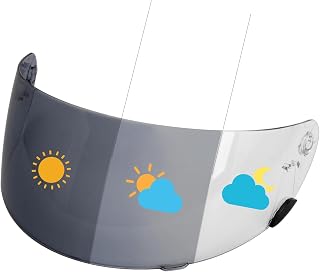
The PSLER Qualifier Visor is designed to fit Bell Qualifier, Star, Vortex, RS-1, and Revolver models as an aftermarket option. It supports day and night use with photochromic properties. Installations note potential gaps or noise leakage due to non-OEM curvature matching. The visor uses an electroplating process; routine cleaning is advised to protect the coating from bug residue and corrosion over time.
Photochromic And Anti Fog Insert Film

This insert film provides a two-in-one solution: photochromic tinting and anti-fog protection. It darkens in sunlight and clears indoors, with an installation process that requires clean, dry visor surfaces and firm adhesive bonding. The final tint can vary based on the helmet shield’s base color and material, with the tint shade often yielding a deep indigo hue rather than a pure black.
LEM Modular Motorcycle Helmet With Sun Visor

The LEM modular helmet combines a fiberglass shell and a removable sun visor. It weighs about 1.7 kg, supporting long rides with reduced neck strain. The modular flip-up design facilitates conversations and on-the-go stops, while meeting DOT safety standards for a secure riding experience. The visor system can enhance visibility across changing light conditions with the added convenience of a separate sun visor.
PSLER Sedici Strada Visor Replacement

The PSLER Sedici Strada visor replacement targets Sedici Strada 2 and Strada 3 lines, including FF801 and FF397 models. It is an aftermarket shield designed for day and night use with photochromic capabilities. Fitment notes emphasize that the FF397 variant uses an electroplating process; regular cleaning is recommended to prevent corrosion from bug residues. PSLER offers a limited replacement window for color variants and encourages direct troubleshooting with the seller for fit issues.
Buying Guide
When choosing transition visors or photochromic inserts for motorcycle helmets, consider these factors to ensure a good fit and reliable performance:
- Helmet compatibility: Verify fitment with your specific helmet model and shell curvature. Aftermarket visors may require more attention to gaps and seals.
- Transition speed and tint range: Some films tint quickly in bright sun and clear gradually; others may have slower transitions or limited tint depth. Check product details for typical darkening levels and indoor clarity.
- Installation method: Inner films and peel-and-stick inserts are popular for easy DIY installation, but require a clean, residue-free visor surface. Ensure the adhesive is designed for helmet use and won’t damage coatings.
- Anti-fog performance: If riding in humid or rainy conditions, anti-fog properties help maintain visibility. Look for dual-function films that combine tinting with anti-fog barriers.
- Durability and maintenance: Electroplating and coatings may require careful cleaning to avoid streaks or coating degradation. Follow cleaning guidelines to preserve performance.
- Durability under conditions: High-speed wind, bugs, and debris can affect coatings. Some visors are more resistant to corrosion and micro-scratching than others; check user reviews for real-world durability.
- Cost vs. benefit: Balance the upfront cost of a film or aftermarket visor with long-term benefits of not swapping visors or carrying sunglasses. Consider whether your riding environments (sunny vs. overcast) justify a transition solution.
- Return and warranty: Look for seller assurances on fit and color accuracy. A warranty or return policy helps address compatibility issues or color mismatches.
These considerations help riders select transition visors that support consistent visibility across day-to-night rides, while addressing comfort, safety, and maintenance expectations.