Finding a reliable tire pressure monitoring system (TPMS) can improve driving safety, optimize tire life, and help you avoid unexpected flats. This guide highlights five well-regarded TPMS kits that suit a range of vehicles from RVs to pickups. Below is a quick summary of the chosen products to help you compare at a glance.
| Product | Display & Alerts | Sensor Type | Best For | Notes |
|---|---|---|---|---|
| Tymate TM7 Tire Pressure Monitoring System | Colorful display; 6 alarm modes | External sensors (4) | RV/SUV/Truck | Real-time pressure readings |
| Tymate TM2 RV Tire Pressure Monitoring System | Color LCD; six alarm modes | External sensors (4) | RV/Trailer/Truck/SUV | Solar charging + USB/12V options |
| GM 433MHz TPMS Sensor (4-Pack) | Vehicle-specific compatibility | 315/433MHz sensors | GM vehicles | Replacements for several models |
| Ford 315MHz/433MHz TPMS Sensors (4-Pack) | OEM-style replacement | 315MHz or 433MHz sensors | Ford/F-Series and compatible | Multiple frequency options |
| Autel MX Sensor 315MHz/433MHz | OEM-like performance | 2-in-1 rubber sensors | Broad vehicle coverage | Programmable with compatible tools |
Tymate TM7 Tire Pressure Monitoring System

The Tymate TM7 TPMS offers a color display and six alarm modes to monitor real-time tire pressures, with four external sensors designed for robust performance across RVs, SUVs, MPVs, and trucks. It supports alert thresholds, leak detection, and low/high pressure warnings, helping drivers maintain optimal tire health. A notable feature is its multi-vehicle readiness and wireless ease of setup, which simplifies installation for various fleet or family vehicles. The TM7 emphasizes clear visibility and quick interpretation of tire data for safer driving decisions.
Tymate TM2 RV Tire Pressure Monitoring System

The Tymate TM2 TPMS includes four external sensors with long battery life and a solar charging option, plus USB or 12V charging for flexibility. It features six alarm modes for high/low pressure, fast leaks, high temperature, and sensor voltage or signal loss. The system automatically uses the current tire pressure as the reference, enabling easy threshold setup from +25% to -15% of reference pressure. Its solar charging capability supports extended use in remote locations, making it suitable for RVs and trailers as well as standard vehicles. The TM2 is designed for reliable performance with straightforward installation and reliable data transmission.
GM 433MHz TPMS Sensor Pack (4-Pack)

These GM-compatible TPMS sensors are designed to replace failed or older sensors on Chevrolet, Cadillac, Buick, GMC, and related models. The 433MHz variants are built to match factory specifications, aiming for reliable readings and compatibility with standard TPMS systems. If your vehicle requires GM-specific sensors, this option provides straightforward replacement without additional programming in many cases, depending on the model and year.
TPMS Sensors For Ford And Lincoln (4-Pack)

The Ford/LLincoln sensors listed cover popular 315MHz and 433MHz variants designed for modern Ford pickups and SUVs. These sensors provide a replacement option when OEM units fail, with emphasis on compatibility and reliable readings. The pack allows buyers to select the appropriate frequency for their vehicle, aiming to restore TPMS functionality without extensive programming. Performance depends on model-year compatibility and vehicle configuration.
Autel MX Sensor 315MHz/433MHz
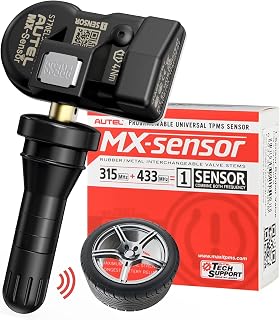
The Autel MX Sensor provides a versatile 2-in-1 rubber TPMS sensor option with 315MHz/433MHz compatibility for broad vehicle coverage. It is designed for OEM-like performance and programmable use with compatible TPMS tools. This sensor line supports replacement on many makes and models, offering an option when factory sensors fail or require replacement. It emphasizes flexible programming and broad compatibility for a variety of vehicles.
Buying Guide: Key Considerations For Choosing A TPMS
- Sensor type and vehicle compatibility: External sensors are common for easier installation, but confirm frequency (315MHz vs 433MHz) and sensor type matches your vehicle’s TPMS.
- Display and alert features: Look for clear, real-time readings and configurable alarm modes (high/low pressure, fast leak, temperature alerts, sensor voltage, and signal loss).
- Power options: Solar charging adds independence for RVs and off-grid use; USB or 12V charging provides reliability on long trips.
- Installation complexity: Some kits require factory pairing for sensors, while others arrive pre-paired with the monitor.
- Durability and water resistance: IP67 or similar ratings help ensure sensors withstand road exposure, weather, and moisture.
- Battery life and sensor lifespan: Longer battery life reduces maintenance and replacements; check expected sensor life and battery types.
- Display readability: A color LCD or bright gauge readouts improve visibility in bright daytime conditions and at night.
- Customer support and warranty: A solid warranty and accessible support reduce downtime if issues arise.
- Vehicle coverage: If you own multiple vehicles, consider systems that support multi-vehicle monitoring or easy add-ons.
Across these options, the TM7 and TM2 lines emphasize easy installation, real-time data, and robust alarm options for RVs and trucks. GM and Ford sensor packs supply vehicle-specific replacements when factory units fail, while Autel MX Sensor offers broad compatibility with programmable capabilities for diverse fleets and personal use. Buyers should match frequency, sensor type, and display features to their vehicle profiles and maintenance preferences.