Looking for a reliable TPMS receiver kit to monitor your tire pressure in real time? This guide highlights five top options that fit a range of vehicles, from cars and SUVs to RVs and trailers. Each pick is evaluated for ease of installation, power options, alarm features, and display clarity. Best for DIY installers, budget-conscious drivers, RV owners, and those needing solar charging, these TPMS receivers help prevent tire issues before they become costly problems. The table below compares the five selected products at a glance.
| Product | Brand | Key Benefit | Best For |
|---|---|---|---|
| Mopar 6820 9837AA TPMS Receiver | Mopar | Genuine OEM quality | Direct replacement in Chrysler/Fiat vehicles |
| Tymate TM7 TPMS | Tymate | Wireless, colorful LCD, USB charging | DIY enthusiasts and budget-minded drivers |
| Tymate TM2 RV TPMS | Tymate | Solar charging, multiple alarm modes | RV/trailer owners |
| Avutrel Android TPMS | Avutrel | Android integration on factory systems | Vehicles with factory infotainment screens |
| Strpump USB TPMS Receiver | Strpump | USB-connected display for Android car radios | Android car stereo setups |
Mopar 6820 9837AA TPMS Receiver

The Mopar TPMS Receiver, part number 68209837AA, is a genuine OEM control module designed for direct replacement in compatible Chrysler/Fiat models. Its compact dimensions and OEM fit aim to simplify installation for technicians and skilled do-it-yourselfers. The kit’s official status helps ensure compatibility with factory sensors and dash-mounted warning systems, reducing the risk of false alarms or data gaps. This option is best for owners who value authenticity and seamless integration with existing vehicle electrical architecture.
Best for: Owners who need a genuine OEM TPMS receiver with straightforward replacement and official part references. This device is particularly suitable for vehicles previously equipped with Mopar TPMS components, where original performance matters.
Limitation: Data sheets emphasize compatibility with specific diagrams and part references; verify fitment against your vehicle’s VIN to avoid mismatch.
Tymate TM7 Tire Pressure Monitoring System

The Tymate TM7 TPMS is a wireless system that includes four external sensors and a color LCD display. It features six alarm modes—high/low pressure, fast leakage, high temperature, sensor low battery, and sensor signal lost—providing constant visibility into tire health. Its plug-in power design allows easy setup in older vehicles that lack factory TPMS. With dual USB charging, it also serves as a multipurpose device for charging devices on long trips. The TM7 is well-suited for DIY enthusiasts who want a simple, install-and-use TPMS with a bright, readable screen.
Best for: Drivers seeking a self-contained, easy-install TPMS with a bright display and flexible power options, especially in older vehicles or those needing a quick safety upgrade without factory sensors.
Caution: While the system offers multiple alarms, ensure you have access to a suitable vehicle power source and verify sensor compatibility with your wheel configurations before purchasing.
Tymate TM2 RV Tire Pressure Monitoring System

The Tymate TM2 is an RV-oriented TPMS with four external sensors and a solar charging option. It supports alarm modes including high/low pressure and high temperature, with a reference pressure that auto-calibrates as tires are inflated or deflated. The system emphasizes long sensor life (up to two years) and IP67 waterproofing, which is important for outdoor or dusty environments. A solar charging capability helps ensure continued operation between trips, making it a strong choice for weekend RVers and full-time trailer users alike.
Best for: RVs, trailers, and large vehicles that require robust, low-maintenance monitoring with solar charging to reduce battery management concerns.
Limitation: Maximum accuracy is around 3 psi, so users seeking ultra-precise readings may want to compare with higher-precision units.
Avutrel Tire Pressure Monitoring System Android TPMS

Avutrel’s Android TPMS is designed to display tire pressure data on factory infotainment screens. This system is compatible with vehicles that use a stock navigation interface and requires verification of compatibility with the existing Android-enabled dashboard. It provides real-time monitoring across four external sensors, with alarm features for pressure, temperature, and signal issues. This option stands out for users who want to view TPMS data within the same screen they already use for navigation and media, minimizing new device clutter in the cab or cabin.
Best for: Vehicles with compatible factory infotainment systems seeking integrated TPMS data without adding a separate display unit.
Caution: Compatibility is limited to factory systems; confirm interface and app support for your specific vehicle model before purchase.
Strpump Car USB TPMS Receiver
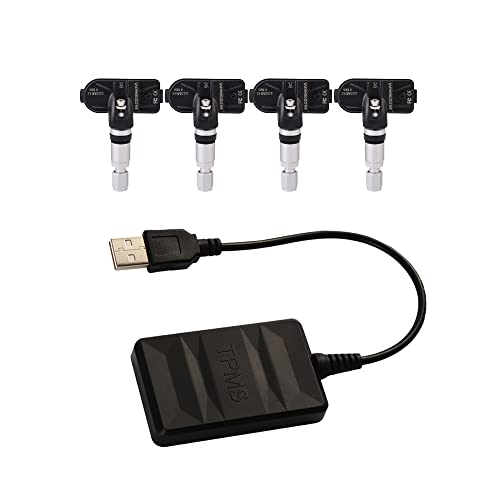
The Strpump USB TPMS Receiver connects via USB to an Android car stereo or similar device, displaying tire pressure and temperature on the car’s screen. It emphasizes interior sensor data and an audible alarm through the car speakers when a tire is out of range. This option is better for users who want a compact, USB-powered TPMS that integrates directly with an Android-based head unit, avoiding additional dashboard clutter and enabling straightforward data access while driving.
Best for: Android car stereo setups that prefer data on-screen within the vehicle’s existing entertainment system.
Limitation: Requires a compatible Android head unit with USB input and supported TPMS software; verify app and data compatibility before buying.
Masoll Tire Pressure Monitoring System

The Masoll M13 TPMS includes solar charging and auto-calibration, with a large LCD display for four sensors. It features auto-set alarm value and calibration, meaning the system uses the current pressure as a reference and alerts if actual pressure deviates by 25% high or 15% low. Solar charging plus energy-efficient wake/sleep cycles help maintain constant monitoring with minimal power draw, making it a practical option for frequent travelers or those who park in sun-exposed areas. It’s designed for vehicles with up to four tires and is adaptable to RVs and trailers with compatible signal boosters in longer setups.
Best for: Users who want automatic calibration and solar charging, with straightforward alarm thresholds for four-t tire configurations.
Caution: For longer trailers, consider a signal booster to maintain reliable sensor communication over extended runs.
Buying Guide
What should you consider when selecting a TPMS receiver?
- Vehicle compatibility: Confirm that the TPMS receiver supports your vehicle’s make, model, and wheel count. OEM receivers often guarantee the most seamless integration, while universal or Android-based systems offer broader applicability.
- Power options: Decide between plug-in power, USB-powered, or solar-charged models. Solar charging is advantageous for RVs and vehicles parked outdoors, while USB power is convenient for cars and daily drivers with easy access to a 12V/USB source.
- Alarm modes: Look for multiple alarm types, including high/low pressure, fast leakage, high temperature, and sensor battery or signal loss alerts. A broad alarm suite improves early issue detection.
- Display and readability: Evaluate LCD color, backlighting, and viewing angles. A clear display reduces distraction and improves readability in varying light conditions.
- Sensor durability: Consider IP-rated sensors for water and dust resistance, battery life, and ease of replacement. Longer sensor life reduces maintenance frequency.
- Installation complexity: Some systems require professional setup, while others are plug-and-play. If you’re a DIY installer, choose models with clear wiring diagrams and factory-fit options.
- Expansion potential: If you plan to monitor more than four tires or have a 6-wheel system, ensure the kit supports additional sensors or a 6-wheel configuration.
FAQ
- What is a TPMS receiver and why do I need one?
A TPMS receiver collects sensor data from tire pressure sensors and displays it to help prevent blowouts or tire damage caused by under- or over-inflation. It improves road safety and fuel efficiency.
- Do TPMS receivers require professional installation?
Some are designed for DIY installation with straightforward wiring, while OEM and some Android-integrated systems may benefit from professional setup to ensure seamless integration with the vehicle’s electronics.
- Can TPMS be used on RVs or trailers?
Yes. Many TPMS options include four or more sensors and configurations tailored for RVs and trailers, with features such as solar charging and extended sensor life to handle larger tire counts.
- What’s the difference between solar and USB TPMS chargers?
Solar charging provides ongoing power in outdoor parking situations, while USB charging relies on the vehicle’s power ports. Solar is ideal for off-grid or frequent parking outdoors.
- Is a color LCD display better than a basic numeric display?
A color LCD with backlight improves readability in bright sun and at night, reducing driver distraction and making it easier to monitor multiple data points quickly.
- How do I verify compatibility before buying?
Check the vehicle’s model year, wheel count, and whether the system supports factory infotainment integration or is designed as a standalone monitor. When in doubt, contact the seller with your VIN or year/make/model details.