Answering the need for accurate engine temperature readings, these temperature gauge sender units are chosen for reliability, compatibility, and easy installation. This guide helps buyers pick the right sender for MerCruiser and other marine engines, as well as common automotive gauges. The top picks below are best for boaters, performance enthusiasts, and DIY mechanics who want precise temperature feedback to protect engines and optimize performance. A quick comparison table is provided to help you decide at a glance.
| Product | Best For | Notes |
|---|---|---|
| Quicksilver 806490T | MerCruiser sterndrives and inboard engines | OEM-aligned, easy install |
| Auto Meter 2258 | Vehicle-specific temperature sensing | Short sweep style for tight spaces |
| Dweekiy Coolant/Water Temperature Sensor | Universal fit, 0-150°C | One-wire signal sensor |
| 18-5898 Mercruiser-compatible Sender | MerCruiser V6/V8 replacements | Multiple part-number compatibility |
| MotoRad Temperature Sender | General replacement with direct gauge connectivity | Factory-calibrated resistance |
Quicksilver 806490T Water Temperature Sender Unit

- Brand: Quicksilver
- For use with MerCruiser sterndrive and inboard engines
- Easy to install with common shop tools
- Best for OEM instrument compatibility with Mercury and Mariner systems
Best for: Boat owners running MerCruiser setups who want an OEM-aligned sender that fits directly into MerCruiser instrumentation. Choose this if you want straightforward compatibility and a trusted brand in marine electronics. Caution: Confirm the exact MerCruiser model year compatibility for your sterndrive or inboard engine to avoid mismatches.
Auto Meter 2258 Short Sweep Electric Temperature Sender

- Brand: AUTO METER
- Short sweep design suitable for limited gauge space
- Vehicle-specific fit type; compact dimensions
- Ideal for custom automotive or marine gauge installations
Best for: Enthusiasts with tight dash space who need a compact sender without compromising signal integrity. Better for vehicles where a short sweep needle movement is preferred. Limitation: Ensure the sender’s resistance range matches your gauge to avoid incorrect readings.
Coolant Temperature Sensor, Water/Oil Temp Temperature 1/8 NPT

- Brand: Dweekiy
- Universal 1/8″ NPT sensor for oil or water temperature
- 0-150°C (0-300°F) range, one-wire signal sensor
- Direct replacement for faulty aftermarket sensors
Best for: Projects needing a universal, broadly compatible sender for marine or automotive gauges. Choose this if you want a single-sensor solution that covers both water/coolant or engine oil temperature. Caution: Verify electrical compatibility with your gauge’s input type to ensure correct wiring.
18-5898 Mercruiser compatible Sender

- Brand: MDEOOSKY
- Replacement for Mercruiser V6/V8 engines
- Fits 1/2″ NPT temperature sender configurations
- Compatibility with multiple part numbers: 171960, 97258A1, 700427
Best for: Boat owners with MerCruiser V6 or V8 engines seeking a direct-fit replacement. Better for models requiring 1/2″ NPT fittings. Limitation: Check your engine’s exact part compatibility list to ensure correct match with your hull model.
MotoRad Temperature Sender With Gauge
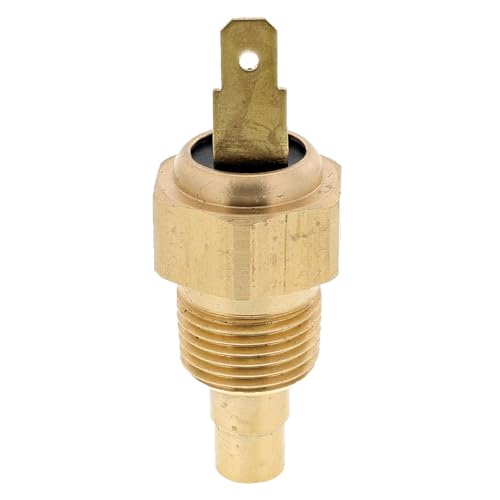
- Brand: MotoRad
- 100% factory resistance calibration
- Brass sensor housing for improved thermal conductivity
- Pre-installed thread sealant or O-ring on applicable sensors
Best for: General replacements where precise resistance matching to OE gauges is critical. Better for buyers who want a factory-calibrated option and leak-free installation. Limitation: Verify gauge compatibility with the sender’s resistance curve to prevent misreadings.
Buying Guide
What should I look for when choosing a temperature sender?
Match the sender’s thread size (NPT), electrical configuration (one-wire vs. two-wire), and resistance range to your gauge. Marine senders should be compatible with MerCruiser and other marine instrumentation, while automotive senders must align with your vehicle’s gauge cluster.
How do I know which sender fits my engine?
Consult your engine model, year, and the gauge type. OEM replacements like Quicksilver are best for their intended systems. Universal or aftermarket options require attention to thread size, resistance, and wiring scheme.
Are there installation tips that reduce risks?
Seal threads properly with the appropriate sealant or O-ring. Ensure electrical ground continuity on single-wire sensors. Avoid overtightening to prevent thread damage. Confirm gauge compatibility before final wiring.
What are common limitations to watch for?
Some senders may use a different resistance range than your gauge expects, causing inaccurate readings. Universal sensors may require adapters. In marine environments, corrosion resistance and vibration durability are important considerations.
How should I compare products quickly?
Look at compatibility (engine type and gauge), installation ease (thread size and mounting), and the sender’s calibration. Favor OEM options for exact fit or universal options with documented compatibility for your setup.
What if I’m unsure about compatibility?
Ask for model-specific guidance from the seller or consult your engine’s service manual. When in doubt, select a sender marketed as compatible with your engine family (MerCruiser, V6/V8, etc.).
FAQ
- What is a temperature sender and why do I need one? A temperature sender transmits engine temperature readings to a gauge, helping monitor heat levels and prevent overheating.
- Can I use a universal sensor on a MerCruiser engine? Yes, but verify thread size and resistance range to ensure accurate readings.
- Do I need any special tools to install a sender? Basic hand tools and thread sealant or O-rings are typically sufficient; some installations may require sealant for watertight fittings.
- Is OEM better than aftermarket for marine use? OEM senders offer proven compatibility with specific systems, but high-quality aftermarket options can work well if they match thread size and resistance.
- What should I check if the gauge reads wrong after installation? Check the sensor resistance, wiring, grounding, and whether the gauge’s input expects a different resistance curve.
- How do I know the correct sender for my engine family? Refer to your engine model, year, and the gauge type; use the product’s compatibility notes and the user manual.