Direct answer: For GM TBI (Throttle Body Injection) systems, selecting the right fuel pressure spring helps achieve stable idle, better throttle response, and reliable fuel delivery. This guide compares five compatible options, highlighting who each product is best for, and where to avoid common pitfalls. The focus is on springs that raise or regulate baseline pressure to match the engine’s fuel pump and injector needs. Ideal buyers include DIYers restoring older GM trucks and SUVs, or enthusiasts upgrading TBI setups for improved performance and efficiency.
Overview of top picks: the table below summarizes who each product is best for, the target pressure, and notable considerations. Use this as a quick reference before diving into detailed sections.
| Product | Best For | Key Note |
|---|---|---|
| ARU Fuel Pressure Regulator Spring | GM engines with 11-12 psi baseline, seeking 14-15 psi | Requires compatible fuel pump support |
| 11-12 Psi to 28-29 Psi Spring (JUNPENG) | High-pressure upgrades for 1986-1995 TBI motors | Significant pump upgrade may be needed |
| Throttle Body Shop TBS 10321 GM TBI 18 psi | Moderate upgrade for 18 psi target | Be prepared for pump and regulator compatibility |
| Throttle Body Shop TBS 10320 GM TBI 14 psi | Classic 11-12 psi to 14-15 psi upgrade | Widely compatible with OEM regulator cans |
| 17112907 Fuel Pressure Regulator Kit (UMONIE) | GM TBI engines requiring 9-13 psi baseline | Explicit compatibility with listed GM models |
ARU Fuel Pressure Regulator Spring — 14-15 Psi Upgrade

The ARU spring is designed to raise the TBI baseline from 11-12 psi to about 14-15 psi. It’s best for GM engines with TBI setups where idle stability is compromised by low pressure and where improved atomization from higher pressure can sharpen throttle response. This part is marketed as a replacement for the TBS 10320 GM regulator and is compatible with a range of common GM engines including 2.8L, 4.3L, 5.0L, 5.7L, and 7.4L BBC motors. Choose this if you want a straightforward upgrade without changing other components.
Who it’s best for: buyers seeking a moderate pressure bump to improve combustion efficiency and fuel economy, while retaining OEM regulator can compatibility.
Caution: verify your fuel pump can reliably sustain the higher pressure, and ensure system reliability with a careful baseline test after installation.
JUNPENG 28-29 Psi Spring for TBI 10322
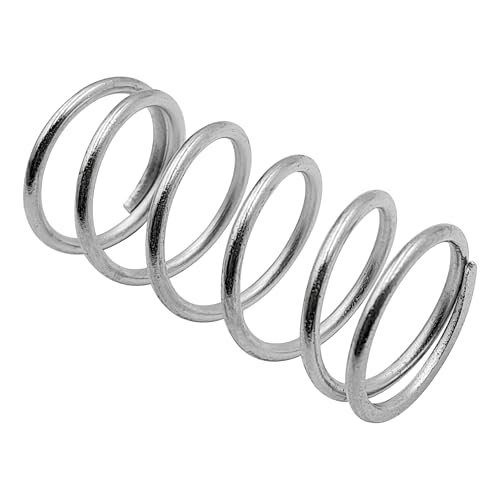
This spring lifts the regulator baseline to 28-29 psi, a substantial upgrade over stock for TBI motors. It is compatible with 1986-1995 GM engines including various 2.8L, 4.3L, 5.0L, 5.7L, and 7.4L configurations. It’s well-suited for builders chasing stronger throttle response and improved atomization through higher injector pressure. Best for enthusiasts who have confirmed fuel pump flow supports 28 psi or higher.
Who it’s best for: those upgrading to higher pressure with reliable pump support; ideal when the goal is sharper power delivery and more complete combustion.
Limitation: the higher baseline pressure demands a matching pump; without it, fuel starvation can occur under load.
Throttle Body Shop TBS 10321 — 18 Psi

The TBS 10321 spring shifts the stock TBI pressure from 11-12 psi up to 18 psi. It is designed for 1986-95 2.8L, 4.3L, 5.0L, 5.7L, and 7.4L TBI motors. This option pairs well with an OEM regulator can, but installation may require a compatible fuel pump upgrade to maintain the higher pressure reliably. It’s a solid middle-ground upgrade for those seeking noticeable performance gains without a major system overhaul.
Who it’s best for: buyers who want a clear boost without jumping to the highest pressures, and who can support a pump upgrade if necessary.
Limitation: ensure pump and wiring are up to the task; without adequate supply, pressure may dip under heavy acceleration.
Throttle Body Shop TBS 10320 — 14 Psi

The TBS 10320 is a 14 psi silver spring that raises stock pressure from 11-12 psi to 14-15 psi. It fits a broad range of GM engines from 1986-1995 (and 1987-1993 7.4L BBC) and is compatible with OEM regulator cans. It often works well with existing fuel pump setups in good condition, providing a balanced boost without overtaxing the fuel system. This is a reliable option for standard upgraders seeking a sensible increase.
Who it’s best for: those who want a predictable, mild upgrade with minimal additional system changes.
Caution: ensure the fuel pump remains capable of maintaining higher pressure during peak engine demand.
17112907 Regulator Kit — 9-13 Psi

This kit targets GM low-pressure TBI systems, delivering 9-13 psi operation. It is listed as compatible with multiple 4.3L, 5.0L, 5.7L, and 7.4L TBI engines and is presented as a direct OEM replacement option for several model years. This choice is best for those seeking to restore OEM performance and reliability without changing overall pressure beyond factory specs. It is not designed for CPI or higher-pressure systems.
Who it’s best for: restorers prioritizing factory-like fuel behavior and straightforward compatibility with listed trucks and vans.
Limitation: not suitable for higher-than-stock pressure goals or heavily modified fuel systems.
Throttle Body Shop TBS 10322 — 28 Psi Silver

The TBS 10322 spring increases TBI regulator pressure to 28-29 psi, which is compatible with 1986-95 GM TBI motors. It requires a fuel pump upgrade to sustain the higher pressure and is intended for enthusiasts looking for significant performance gains. It pairs with OEM regulator cans and demands attention to overall fuel system capacity to avoid lean or rich conditions under load.
Who it’s best for: builders seeking a strong upgrade and who can upgrade or verify pump capacity.
Limitation: higher pressure can outpace older pumps; confirm overall system capability before installation.
Buying Guide: Key Considerations For TBI Fuel Pressure Springs
What should you check before buying? Match the spring to your engine’s TBI configuration, the baseline regulator pressure, and your fuel pump’s capacity. Higher springs deliver more pressure, improving atomization and throttle response, but they require a compatible pump and regulator can to maintain steady pressure under peak load.
- Compatibility: Confirm model years and engine displacements (2.8L, 4.3L, 5.0L, 5.7L, 7.4L, BBC) listed by the seller.
- Pressure target: Decide between a mild bump (14-15 psi) and a higher push (28-29 psi) based on pump capability and injector needs.
- Fuel pump upgrade: Many high-pressure springs necessitate upgrading the fuel pump to sustain elevated pressure.
- OEM can compatibility: Most springs are designed to fit OEM regulator cans; verify for your vehicle.
- Diagnostics: A failing diaphragm or weak spring can cause lean or rich conditions; plan for inspection if symptoms arise.
Frequently Asked Questions
- What does a TBI fuel pressure spring do? It alters the baseline pressure the regulator maintains, affecting injector spray and engine response.
- Can I upgrade without changing the fuel pump? It depends on the target pressure; higher pressure often requires a stronger pump.
- Is a higher psi always better for TBI? Not necessarily. It should match the engine and fuel system; excessive pressure can cause lean or flooding conditions.
- Which GM engines use TBI? Common are 2.8L, 4.3L, 5.0L, 5.7L, and 7.4L V8 families from the late 1980s to mid-1990s.
- What should I test after installing a new spring? Check idle stability, throttle response, and fuel trims; look for abnormal exhaust or misfires that indicate improper pressure.
- Can these springs affect emissions? Indirectly, by changing combustion efficiency; improper setup can worsen emissions if not matched to the system.