The best syringe for automotive use depends on the fluid volume and access point: a 200cc or 500cc extractor suits larger fluid jobs, while a syringe with flexible tubing can help reach confined service points. The SWANLAKE 200cc model is best for extended reach, the SEDY 500cc for higher-capacity transfers, and the FOUR UNCLES flexible-hose syringe for hard-to-access areas. Compare capacity, hose setup, and seal features before choosing.
| Product | Best for | Standout feature |
|---|---|---|
| SWANLAKE 200cc Extractor | Hard-to-reach reservoirs | Tube extensions and locking end cap |
| SEDY 500cc Extractor | Higher-volume fluid changes | 500cc capacity and double seal |
| FOUR UNCLES Flexible-Hose Syringe | Confined service points | Flexible hose and clear barrel |
| SEDY 200cc Extractor | Moderate-volume fluid transfer | Oil- and chemical-resistant polypropylene |
| FOUR UNCLES 500cc Syringe | Large transfers with visible fluid levels | Transparent barrel and smooth plunger |
SWANLAKE 200cc Fluid Extractor

Best for: Automotive DIYers who need a manual extractor that can reach into deeper reservoirs or tight engine-bay spaces. It is selected for its included tubing and specific access features.
The 200cc pump is described for extracting and filling brake fluid, gear oil, antifreeze, and power steering fluid. Its listed accessories include a 7-inch tube extension and a 7.5-inch clear tube, which can help reach small openings. The clear tubing also makes fluid movement easier to observe.
A double-seal plunger, quick-connect hose fittings, and locking end cap are intended to help control leaks and spills. Its 200cc capacity may require repeated draws for jobs involving larger quantities.
SEDY 500cc Fluid Extractor
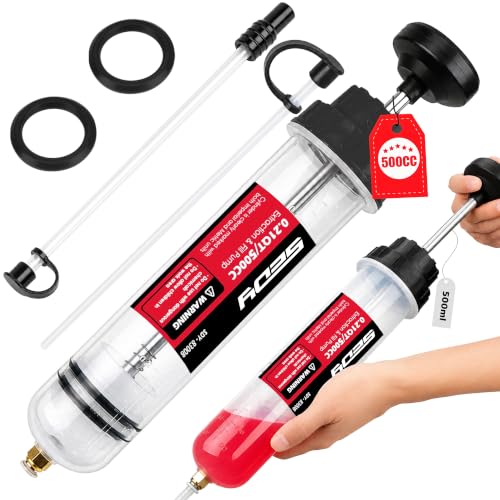
Best for: Buyers who want a larger-capacity manual syringe for oil, coolant, or fuel transfer. Its 500cc capacity is better suited to moving more fluid per draw than a 200cc model.
SEDY lists a double-sealed plunger with dual rubber rings and precision threading to support airtight suction and reduce leakage. The body is made from oil- and chemical-resistant polypropylene. The product is described for automotive and marine fluid transfers, including extraction and refilling.
Choose this if capacity and sealing features matter more than a compact tool. The listing does not specify included tubing or extensions, so check the product details if your service point requires a long or flexible hose.
FOUR UNCLES Flexible-Hose Syringe

Best for: People working around confined spaces or awkwardly positioned fill ports. The flexible hose is the key reason to choose this model over a basic rigid syringe.
The product is designed for fluid extraction and refilling around engine compartments, transmissions, and differentials. Its transparent barrel lets users monitor fluid movement, while the smooth plunger is intended to provide controlled transfer and help avoid messy pouring.
Choose this if access and maneuverability are your main concerns. The provided product information does not state its capacity or list specific hose dimensions, so confirm those details if the job requires a particular volume or reach.
SEDY 200cc Multi-Purpose Syringe

Best for: Buyers seeking a moderate-capacity extractor for smaller service tasks. It is described for brake fluid, gear oil, and power steering fluid, making it a practical option when a 500cc barrel would be more capacity than needed.
The syringe uses oil- and chemical-resistant polypropylene and has a double-sealed plunger. The listing also describes the seal as optimized for brake and antifreeze fluids. These features make it a better fit for automotive fluid handling than a general-purpose craft syringe.
Its 200cc capacity means larger transfers may take multiple draws. Confirm that the included configuration suits your access needs, as the provided features do not specify hose length.
FOUR UNCLES 500cc Transfer Syringe

Best for: Users who want a large-capacity syringe with a visible barrel for controlled extraction and filling. Its 500cc volume can reduce the number of refills compared with a smaller syringe.
The clear barrel helps users monitor fluid levels, and the smooth plunger is described as supporting consistent transfer. The product is intended for larger fluid jobs where repeatedly loading a smaller tool would take more time.
Choose this model if capacity and visibility are priorities. The provided information does not specify a flexible hose or extension, so it may be less suitable than the FOUR UNCLES flexible-hose model when access is especially restricted.
Buying Guide: How To Choose An Automotive Syringe
How much capacity do you need?
Capacity determines how much fluid the syringe can move in one draw. A 200cc model is a reasonable choice for moderate transfers and may be easier to manage in tight work areas. A 500cc model can reduce repeated draws for larger jobs, but it is a larger-capacity tool. Match capacity to the task rather than assuming the biggest syringe is always best.
Do you need a hose or extension?
Check the service point before choosing. Flexible tubing can help navigate around obstructions, while a defined extension can reach deeper openings. The SWANLAKE model lists tube extensions; the FOUR UNCLES flexible-hose model emphasizes maneuverability. Do not assume every extractor includes tubing of a suitable length.
What fluids and seals should you check?
Use the product’s stated fluid applications as a starting point and verify the manufacturer’s directions for the fluid and vehicle service. Double-seal designs are listed on the SEDY and SWANLAKE extractors. Wipe the tool after use and keep separate equipment for fluids that should not be mixed or contaminated.
How can you reduce spills?
A clear barrel or tube can make fluid movement easier to see, while a controlled plunger can help with measured extraction or filling. Work slowly, keep the syringe upright when practical, and use a container for removed fluid. Follow the vehicle’s service procedure, especially when handling brake fluid or other sensitive systems.
Frequently Asked Questions
What is an automotive fluid syringe used for?
It manually extracts or transfers fluid through a syringe barrel and, in some designs, a tube. Automotive examples include gear oil, coolant, power steering fluid, or other fluids identified by the product listing.
Is a 200cc or 500cc syringe better?
A 200cc syringe suits moderate transfers and can limit the amount handled per draw. A 500cc model moves more per draw and may reduce repeated refilling during larger jobs.
Can one syringe be used for different automotive fluids?
Follow the syringe maker’s instructions and the vehicle service guidance. To reduce cross-contamination, clean the tool appropriately or dedicate separate syringes to different fluids.
Should I choose a flexible hose or a rigid extension?
Choose a flexible hose when routing around obstacles matters. Choose an extension when the service point is deep or recessed and a straight reach is more useful.