When upgrading a car’s sound system, choose stand-alone speakers that fit your vehicle and listening needs. This guide highlights five reliable options, from compact door speakers to under-seat subwoofers, to help you pick the right match for your goals. Best suited buyers include daily drivers seeking improved clarity, audio enthusiasts chasing deeper bass, and those replacing stock speakers with faster, more efficient models. The table below summarizes strong choices and what makes each stand-out.
| Product | Best For | Key Benefit |
|---|---|---|
| Pioneer TS-X210 4” 3-Way Surface Mount | Compact installations | Wide frequency range and dual-port bass |
| Pioneer F-Series TS-F1634R 6.5” 2-Way | OEM replacements | Efficient 200W max with balanced woofer/tweeter |
| Znclces 2026 Upgraded 10″ Sub Under Seat | Deep bass in tight spaces | Under-seat design with built-in amplifier |
| Avantree Roadtrip Car Bluetooth Speaker & FM Transmitter | On-the-go or portable car audio | 2-in-1 Bluetooth speaker and FM transmitter |
| BOSS CH6530 Chaos Series 6.5” 3-Way | All-around car door upgrade | 3-way design with robust power handling |
Pioneer TS-X210 4” 3-Way Surface Mount Speakers

The TS-X210 delivers 100 watts max with 25 watts nominal power for crisp highs and solid bass. The dual-port bass-reflex system enhances bass response, and the 60 Hz to 30 kHz range supports detailed sound across genres. Best for small, surface-mount installations where space is limited and you want a punchy, dynamic sound without large enclosures. Caution: may require compatible crossovers for optimal integration in some factory systems.
Pioneer F-Series TS-F1634R 6.5” 2-Way

This 6.5″ pair handles up to 200 W max with 4-ohm impedance. The coaxial 2-way design integrates a woofer and tweeter for balanced, immersive sound, ensuring a broad frequency response. Its 88 dB sensitivity helps deliver clear output even with modest head-unit power. Best for OEM replacements where you want a simple, efficient upgrade without changing factory mounting. Limitation: higher-end bass may require a dedicated sub for ultra-deep response.
Znclces 2026 Upgraded 10″ Under-Seat Sub

Designed to fit under a seat, this 10″ sub features an integrated amplifier and enhanced heat dissipation via a cast aluminum shell. Peak power reaches 1200 W, enabling deep bass without taking up trunk space. Best for drivers who want substantial bass in a compact form factor or as a space-saving upgrade to factory systems. Caution: under-seat fit varies by vehicle; confirm clearance before purchase.
Avantree Roadtrip Car Bluetooth Speaker & FM Transmitter
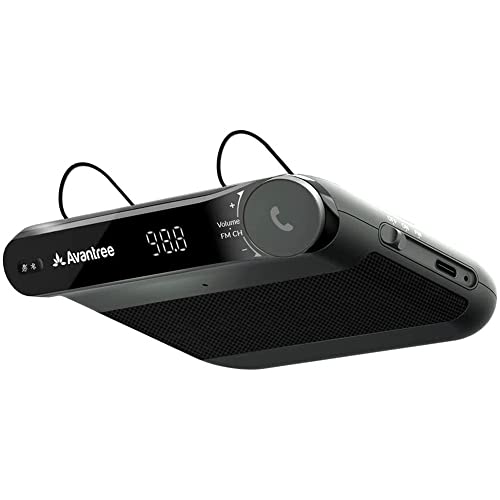
This 2-in-1 device acts as a Bluetooth speaker for calls and media, plus an FM transmitter to stream audio to your car stereo. It uses dual 3W speakers and a built-in mic for hands-free conversations. Best for temporary cars, rental cars, or as a portable add-on for those who want quick, wire-free setup. Limitation: audio depth may be limited compared to full car audio upgrades.
BOSS CH6530 Chaos Series 6.5 Inch Car Door Speakers

With a 3-way design and 6.5″ footprint, these door speakers offer full-range coverage with additional tweeter drivers for clear highs. Power handling isn’t specified beyond “300 Watts (Pair),” but the 4-ohm impedance supports typical head-unit outputs. Best for a robust, all-around upgrade in mid-sized vehicles. Caution: exact mounting depth and screw locations should be checked against your door panel before installation.
BOSS AVA6200 3 Inch Enclosed Box Speakers

Sold in pairs, these 3-inch enclosed speakers deliver 200 watts max per pair with a 90 dB sensitivity rating. They are suitable for enclosure installations in compact spaces, boats, or motorcycles, offering robust sound in a limited footprint. Best for adding compact, weather-resistant audio in challenging environments. Limitation: smaller drivers may not deliver deep bass in open-air compartments.
Buying Guide
Key purchase considerations for stand-alone car speakers include mounting space, power handling, and compatibility with your head unit.
- Speaker size and fit: Measure available space and verify mounting depth to avoid clearance issues.
- Power handling: Match max power and nominal ratings to your head unit or amplifier to prevent distortion or damage.
- Impedance: Most car speakers use 4-ohm impedance; ensure compatibility with your system to maximize efficiency.
- Sound goals: For sharper highs, choose 2-way or 3-way designs; for louder bass, pair with a subwoofer or a dedicated enclosure.
- Installation type: Surface-mount, door-mounted, or under-seat options affect installation complexity and space usage.
FAQ
- What’s the difference between 2-way and 3-way car speakers?
2-way speakers separate woofer and tweeter, offering balanced sound; 3-way adds a midrange driver for more refined detail across frequencies. - Can I install aftermarket speakers in my OEM car?
Yes, but you may need adapters or crossovers to fit and to preserve impedance and tuning. - Is a dedicated subwoofer necessary if I upgrade door speakers?
Not always. If you want deep bass, a subwoofer provides impact; otherwise a high-quality set of midbass speakers can satisfy most listeners. - How do I choose the right impedance?
Most factory radios are designed around 4-ohm speakers. Check your head unit’s specifications to ensure optimal compatibility. - Are under-seat subs easier to install than trunk subs?
Under-seat subs save trunk space and can be easier to install in compact vehicles, though placement varies by model and seat clearance.