Finding the right speed controller is essential for smooth, reliable e-bike performance. This guide spotlight helps riders pick controllers that suit their bike voltage and power needs, from quiet sine-wave options to robust high-current models. Ideal buyers include commuters seeking steady throttle, hobbyists upgrading high-power systems, and DIY enthusiasts building a custom e-bike or scooter. Below, five controllers are analyzed for compatibility, protection features, and practical use cases. A quick buying table summarizes key details to compare at a glance.
Product Comparison Snapshot
| Product | Voltage Range | Power | Best For |
|---|---|---|---|
| CSBST 500W Kit with LCD | 24V/36V/48V | 500W | Moderate-power builds; beginner to intermediate upgrades |
| KH866 Dual Mode 1000–1500W | 48V/60V/64V/72V | 1000–1500W | High-power e-bikes and scooters |
| CHENHO 750–1000W Sine Wave | 36V/48V/64V | 750–1000W | Smoother ride and quieter operation |
| ChongXiao 2000W Aluminium Controller | 36V–84V | 1000–2000W | Ultra-high-power builds |
| CSBST 350W LCD Kit | 24V/36V/48V | 350W | Entry-level upgrades; lightweight builds |
CSBST 500W Brushless Controller Kit With LCD

The CSBST 24V/36V/48V kit pairs a brushless motor controller with an LCD display and thumb throttle, delivering steady speed control and useful ride data. It offers protection features like undervoltage and overcurrent safeguards to help protect the battery and motor in everyday riding. This setup is best for riders building or upgrading mid-power e-bikes or scooters who want clear feedback on speed and battery status, plus reliable braking cut-off when stopping.
Who this is best for: riders seeking an all-in-one display-enabled controller for moderate power applications, and hobbyists who want intuitive monitoring during daily commutes.
Why selected: strong protection features, decent heat dissipation, and a simple interface make it a solid mid-range option for everyday use. Cautions include that high-speed performance in demanding terrains may require higher-current models.
KH866 Dual Mode 1000–1500W Controller

This dual-mode controller supports 12-tube configurations and handles voltages from 48V to 72V with power ranging from 1000W to 1500W. It automatically detects hall sensors and can switch to non-hall mode as needed, offering reliable performance across varying terrain. The aluminum alloy body aids heat dissipation for extended use. This option is best for high-power builds that require robust torque and stable throttle response.
Who this is best for: riders upgrading to high-power e-bikes or scooters and seeking a universal replacement that remains dependable under heavy loads.
Why selected: versatile voltage handling and automatic mode switching help ensure consistent performance. Limitation: higher current demands may require adequate cooling and wiring upgrades.
CHENHO Sine Wave 750–1000W Controller
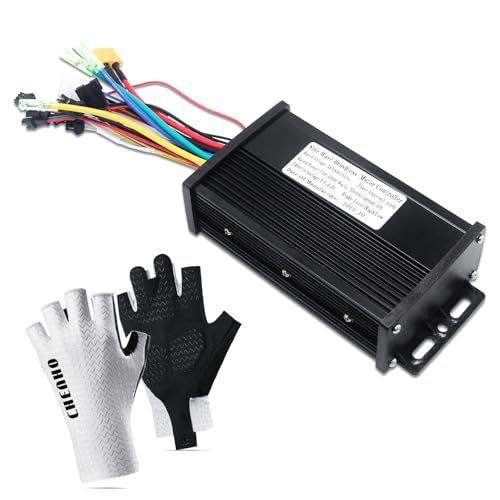
CHENHO’s sine-wave controller supports 36V/48V/64V systems with outputs up to 1000W. It emphasizes smoother acceleration, quieter operation, and better efficiency versus older square-wave designs. A 30A maximum current enables reliable torque for climbs and city riding. This controller is a smart pick for riders prioritizing ride comfort and reduced motor noise.
Who this is best for: riders who want smoother power delivery and quieter operation on mid-range e-bikes or scooters.
Why selected: sine-wave tech reduces heat and noise, improving daily riding experience. Caution: performance depends on matching motor and battery with appropriate wiring and protection.
ChongXiao 2000W Aluminium Controller

This unit covers a broad voltage window from 36V to 84V and claims 1000–2000W power with a maximum current of 50A. Its aluminum alloy housing aids cooling under heavy use, making it suitable for ambitious builds that demand high torque and strong hill-climbing ability. It supports various battery configurations and motor types, offering flexibility for custom e-bike projects.
Who this is best for: builders pursuing extreme power for off-road or performance-focused e-bikes.
Why selected: unmatched high-current capability for demanding setups. Caution: high power can stress wiring and battery packs; ensure compatible components and proper protection circuits.
CSBST LCD Kit for 24V/36V/48V

This CSBST kit combines a 500W brushless controller with an LCD display. It emphasizes real-time speed, battery power, riding time, and mileage readings. The unit is designed for durability in harsh environments, with waterproof, heat-resistant, and backlit features for clear visibility in various conditions. It suits riders who want a compact, everyday controller with on-device metrics.
Who this is best for: riders seeking an economical, all-in-one controller and display with practical ride data for daily commuting.
Why selected: balanced performance and readability of essential metrics. Caution: may be limited in high-power scenarios compared with higher-current systems.
Buying Guide: Key Considerations For Your E-Bike Controller
Voltage compatibility matters most. Match the controller’s voltage range to your battery pack (36V, 48V, 52V, or higher). Higher voltages generally deliver more power but require compatible motors, wiring, and safety protections.
Current rating determines torque. Controllers labeled 30A, 40A, or 50A support different levels of acceleration and hill-climbing ability. Ensure your motor and battery can handle the current without overheating.
Control technology matters. Sine-wave (or sinusoidal) controllers offer smoother throttle response and quieter operation, which reduces heat buildup and improves ride comfort over square-wave designs.
Protection features. Look for undervoltage, overcurrent, brake-off, and thermal protection. These safeguards extend motor and battery life and prevent sudden shutdowns during rides.
Display and interface. An on-board LCD or LED display that shows real-time speed, battery level, riding time, and mileage helps you manage range and performance. Waterproofing and backlight are practical in variable weather.
Build quality and cooling. Aluminum housings with reliable heat dissipation help maintain stable performance under load. Consider airflow and mounting options for your frame and tires.
Wiring and installation. Check for connector compatibility with your motor, battery, and throttle. Clear labeling and robust insulation reduce mistakes during setup and maintenance.
FAQ
- What is the main difference between sine-wave and traditional square-wave controllers? Sine-wave controllers provide smoother acceleration, quieter operation, and better efficiency, reducing heat buildup on many e-bike systems.
- Do I need a high-current controller for hills? Yes, higher current delivers more torque, which helps on steep climbs but requires compatible motor, battery, and proper cooling to avoid overheating.
- Can I mix controllers with any e-bike motor? Not safely. Compatibility depends on voltage, current rating, hall sensor support, and motor type. Always match specifications to avoid damage.
- Is an LCD display necessary for a good ride? Not strictly necessary, but an LCD display provides real-time data that helps manage power, range, and maintenance, especially on long commutes.
- What should I check before installing a new controller? Verify voltage range, current limit, sensor mode (hall or sensorless), wiring connectors, and whether your motor and throttle are compatible with the controller.