If you’re dealing with oil leaks, the right seal fix can stop drips fast and protect your engine. This guide highlights five top Amazon products that tackle engine oil leaks, rear main seals, and gasket leaks. It’s ideal for DIYers, long-commute drivers, and fleet owners who want a quick, cost-effective fix. Each pick is evaluated for common leak types, ease of use, and practical limits. The table below summarizes who each product is best for and the leak types they target.
| Product | Best For | Leak Type |
|---|---|---|
| Bar’s Leaks OS-1 Oil Seal Engine Oil Burning & Leak Repair | Most engines with minor main seal leaks | General oil leaks, worn valve seals |
| Bar’s Leaks Rear Main Seal Repair | Rear main seal leaks and hard-to-stop leaks | Rear main, timing cover, cam seals |
| ATP AT-205 Re-Seal | Multiple seals across engine and transmission | Rubber seals and gaskets |
| Lucas Oil 10278 Engine Oil Stop Leak | Seals worn engine oil seals | Worn oil seals, general consumption |
| BlueDevil Oil Stop Leak | Permanent-stop oil leaks | Engine oil leaks across many engines |
Bar’s Leaks OS-1 Oil Seal Engine Oil Repair

Best for: vehicles with leaking main seals or worn valve seals and guides. This product claims effectiveness across gasoline, diesel, turbocharged, EcoBoost, hybrid, and even racing engines, making it a versatile option for a broad range of cars and trucks. It is designed to renew valve seals and help seal main seals when leaks stem from worn seals.
Why selected: The formulation targets active leaks from seals and gaskets and is one of the most widely used brands for long-standing seal issues. It’s useful when the goal is to restore seal integrity without disassembly. Caution: lasting results depend on leak severity and engine condition.
Bar’s Leaks Rear Main Seal Repair
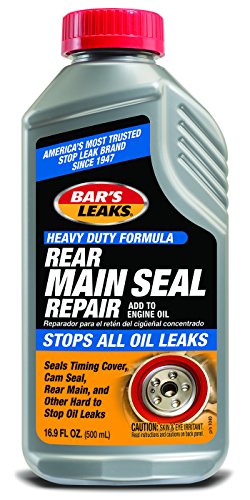
Best for: rear main seal leaks or other hard-to-stop oil leaks. This product is designed to add to engine oil and seal rear main leaks, while also performing better than conventional stop-leak products on other leaks.
Why selected: It focuses on a critical leak point—rear main seals—often the source of persistent drips. The product is described as specifically designed for rear main leaks but delivers broader sealing capability. Caution: results vary with engine design and leak size.
ATP Automotive AT-205 Re-Seal Stops Leaks

Best for: engines, transmissions, power steering, and hydraulic systems that require a fast-acting reseal. It is compatible with conventional and synthetic oils, ATF, gear oil, and other fluids. The product claims to rejuvenate rubber seals and gaskets in multiple systems.
Why selected: A versatile, professional-strength option that can address multiple seal types without draining fluids. Caution: strong formulations may not be ideal for engines with very high mileage or severe damage; effectiveness can vary with system design.
Lucas Oil 10278 Engine Oil Stop Leak

Best for: sealing worn engine oil seals and reducing oil consumption while potentially raising oil pressure. It is compatible with petroleum, semi-synthetic, and full synthetic oils, and is designed to renew worn seals with minimal risk.
Why selected: Lucas Oil is a trusted brand for seal renewal and oil system protection. Caution: results depend on the condition of seals and the extent of wear; not a substitute for severely damaged seals or gaskets.
BlueDevil Oil Stop Leak

Best for: engines with oil leaks across gasoline and diesel engines, offering a seemingly permanent sealing effect. The product emphasizes ease of use—pour into the oil slump or crankcase and let it work.
Why selected: BlueDevil promotes a permanent-seal approach and broad engine compatibility. Caution: “permanent” claims depend on leak size and engine condition; may not fix large or structurally damaged leaks.
Buying Guide: How To Choose The Right Oil Leak Sealant
What type of leak do you have? Identify whether the leak is from the main seals, rear main, gaskets, or a loose connection. For active burning oil or frequent consumption, consider products aimed at renewing worn seals and reducing consumption.
Is your engine gasoline or diesel? Most sealants claim cross-compatibility, but diesel engines often demand different formulations. Check compatibility with your oil type (conventional, semi-synthetic, or full synthetic).
What is the leak severity? Small, slow drips respond well to additive sealants, while large or structural leaks may require mechanical repair. Start with a product recommended for “minor leaks” if you’re uncertain.
How easy is application? Some products require simple pouring into the oil fill while others demand a specific dosage with a particular driving pattern. Consider your comfort level with DIY fixes and the time you can allocate.
What are the risks? Some sealants can alter oil viscosity or interact with filters. Review product directions for potential effects on seals, gaskets, or engine components and avoid use if your engine has known critical failures.
Practical tips for using a sealant
- Follow dosage instructions precisely to avoid over-application.
- Clean up any accidental spills to prevent staining or slick surfaces.
- Monitor oil levels after application and top up if necessary.
- If leaks persist after the recommended period, seek professional inspection.
FAQ
- Do oil leak sealants work for rear main leaks? Some products claim to seal rear main leaks, but results vary by leak size and engine condition. Consider a dedicated rear main seal repair if leaks persist.
- Can sealants damage my engine? When used as directed, most sealants are designed to be safe for typical engines. Overuse or combining incompatible products may affect seals, gaskets, or oil flow.
- Are sealants compatible with synthetic oils? Many are formulated for compatibility with conventional and synthetic oils. Always check the product label for compatibility.
- How quickly do sealants work? Some products claim fast-action sealing within minutes to hours, while others may take longer depending on leak type and engine condition.
- Should I use sealants as a permanent fix? They can provide a lasting seal for small leaks, but major leaks or structural damage usually require mechanical repair.
- When should I avoid using a sealant? If the engine shows severe damage, contamination, or persistent leaks after treatment, consult a mechanic and avoid long-term reliance on a sealant.