If you are looking for a way to remove soot from a diesel particulate filter (DPF), cleaning the filter is different from removing or deleting it from the vehicle. The products below are intended to support cleaning or maintenance; none is a replacement DPF. The MotorPower Care foam and BÖRFH spray are direct-application options, while Rislone and MotorPower Care additives are added to fuel. Choose a cleaner based on the product directions and your vehicle’s symptoms, and consult a qualified technician for persistent warning lights or fault codes.
| Product | Best suited for | Application type |
|---|---|---|
| MotorPower Care DPF Foam Cleaner | Direct cleaning without filter removal | Spray through a sensor port |
| MotorPower Care DPF Cleaning Solution | DIY buyers seeking a foam kit | Non-disassembly cleaning |
| BÖRFH DPF Cleaner Spray | Direct treatment of soot and ash deposits | Spray through a sensor port |
| Rislone 4744 DPF Clean | Fuel-system and emissions-system maintenance | Fuel additive |
| MotorPower Care DPF Filter Purge Additive | Routine DPF maintenance | Fuel additive |
MotorPower Care DPF Foam Cleaner

This direct-application cleaner is best for owners seeking a no-removal cleaning approach. The product is designed to be applied through an oxygen sensor or temperature sensor port with its long-reach nozzle. Its instructions describe spraying the foam, allowing it to soak for 20 to 25 minutes, reinstalling the sensor, and driving.
It was selected because it provides a clear alternative to taking the filter off for cleaning. The listing says it is intended for DPFs, catalytic converters, and EGR valves. Limitation: using it requires access to a sensor port and following the product instructions; it is not a replacement for diagnosis or repair of a damaged filter.
MotorPower Care DPF Cleaning Solution

This cleaner is best for a DIY buyer who wants a foam-based kit intended for use without disassembling the DPF. The listing describes its cleaning method as foam technology and says the kit includes steps for use. It is a reasonable comparison choice for shoppers prioritizing a non-disassembly process.
Choose this if you want a cleaning kit rather than a fuel additive. The product description says it is also used by diesel service facilities, but that statement does not establish that it will resolve every clog or warning light. Limitation: the supplied listing gives fewer application details than the other direct-spray products, so review the kit instructions before starting.
BÖRFH Diesel Particulate Filter Cleaner Spray

BÖRFH is best for buyers looking for a spray described as targeting carbon and ash deposits inside the DPF. The listing says the included hose connects to a pressure or temperature sensor port, allowing direct application without removing the filter. It also describes the cleaner as intended to address clogged-filter symptoms such as power loss, warning lights, and fault codes.
It was selected for its direct-to-filter approach and explicit mention of ash as well as carbon. Limitation: the product description does not establish that cleaning will correct every fault code. A warning light can have causes beyond soot buildup, so diagnose recurring problems rather than repeatedly applying cleaner.
Rislone 4744 DPF Clean
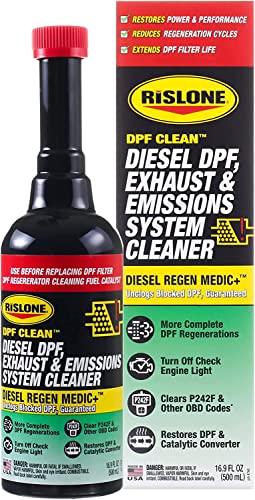
Rislone is best for owners who prefer a fuel additive for ongoing fuel, exhaust, and emissions-system maintenance rather than direct spraying into the filter. The product listing says it is designed for vehicles with DOC catalytic converters, DPFs, SCR devices, or DEF systems. It also recommends regular use every 5,000 miles.
Choose this if you want an additive with a stated maintenance interval and listed compatibility with several emissions-system components. The description also says it targets certain OBD codes, including P242F. Limitation: a fuel additive is not the same as physically cleaning a removed filter, and a code should be diagnosed if it returns.
MotorPower Care DPF Filter Purge Additive

This two-pack is best for diesel owners looking for a fuel additive to help maintain a clean DPF. The listing describes it as a diesel additive intended to clean and protect the filter and says maintaining a clean DPF can improve fuel economy. Each bottle contains 16.9 fluid ounces.
It was selected as a simple maintenance-oriented option for buyers who do not want a direct sensor-port application. Limitation: the supplied product details do not specify a dosing interval or explain how it handles severe blockage. Follow the product label and vehicle manual rather than assuming an additive can clear a heavily restricted filter.
Buying Guide: Choosing a DPF Cleaning Method
Do you need direct cleaning or routine maintenance?
Direct-spray products are applied through a sensor port and are designed to reach the filter without removing it. Fuel additives are poured into the fuel system and are positioned as maintenance options. These methods are not interchangeable: compare the label instructions with the condition of the vehicle and the type of service needed.
Should you remove the filter?
“Removing diesel particulate filter” can mean taking the part off for service or deleting it from the exhaust system. Physical removal for professional cleaning is different from permanently removing or bypassing emissions equipment. Do not assume any product listed here is a DPF delete solution. Check applicable emissions rules and consult a qualified diesel technician before altering emissions equipment.
What should you check before using a cleaner?
- Read the product directions and confirm the application method matches your vehicle and access points.
- Check the vehicle manual and investigate diagnostic codes before treating a suspected clog.
- Consider professional diagnosis if the warning light persists, performance remains poor, or the filter may be damaged.
- Do not treat an additive’s maintenance claims as proof that it can resolve every blockage or emissions fault.
Frequently Asked Questions
Can these products remove a DPF from a vehicle?
No. They are cleaners or additives intended to maintain or clean emissions components. They do not physically remove or replace a DPF.
Can I clean a DPF without taking it off?
Some direct-spray products are designed for application through a sensor port without filter removal. Follow the specific product instructions and vehicle service guidance.
Is a fuel additive the same as a DPF spray cleaner?
No. An additive goes into the fuel, while a spray cleaner is applied directly through an access port. Their application methods and intended use differ.
Will a DPF cleaner fix a warning light?
It may be intended to address soot-related buildup, but a warning light can have other causes. Diagnose persistent or recurring codes rather than relying on cleaner alone.
Should I delete or bypass my DPF?
These products are not designed for that purpose. Removing or bypassing emissions equipment can raise legal and vehicle-compliance concerns; consult applicable regulations and a qualified professional.