If you are searching for red-tinted glasses for night driving, note that the products listed here use yellow-tinted lenses, not red lenses. They are marketed to reduce glare or improve contrast, but any tint can also reduce the amount of light reaching your eyes. The ZILLERATE is best for a padded, lightweight frame; LYOFOX for an anti-fog feature; and livho for drivers who also want blue-light-blocking glasses for screens. Compare lens features and fit, and do not rely on tinted glasses to make night driving safe.
| Product | Best For | Listed Lens or Frame Feature |
|---|---|---|
| ZILLERATE Night Vision Driving Glasses | Comfort-focused everyday wear | Yellow polarized lenses; rubber-padded TR90 frame |
| LYOFOX Night Driving Glasses | Drivers seeking an anti-fog feature | Yellow lenses; anti-fog coating |
| livho Blue Light Blocking Glasses | Driving and screen use | Yellow lenses; anti-glare coating; UV400 protection |
| Joopin Night Vision Glasses | Lightweight square-frame style | Yellow lenses; lightweight resin frame |
| Eyekepper Driving Glasses | Glare and wet-road reflection concerns | Yellow polarized lenses; UV400 protection |
ZILLERATE Night Vision Driving Glasses
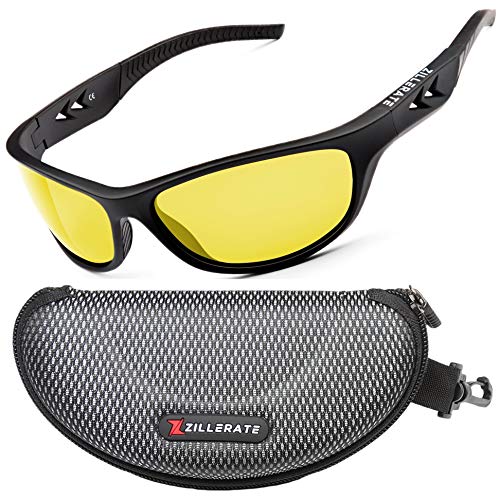
Best for: Drivers who prioritize a lightweight frame with padded contact points. ZILLERATE lists yellow-tinted polarized lenses intended to reduce harsh glare and improve contrast in low light. The TR90 frame has rubber padding, which the listing describes as helping the glasses fit comfortably without digging in. The product is also described as anti-scratch and impact-resistant.
Choose this pair if frame comfort is a key consideration for longer trips and you want a design marketed for both men and women. Its stated combination of a padded frame and polarized yellow lenses makes it a useful comparison point against simpler lightweight styles.
Limitation: The lenses are yellow, not red, and the listing does not provide a measured light-transmission value. Because tinted lenses may dim the view, assess visibility carefully before using them behind the wheel.
LYOFOX Anti-Glare Night Driving Glasses

Best for: Buyers who want an anti-fog feature listed alongside glare reduction. LYOFOX describes its glasses as having yellow-tinted polarized lenses, an anti-fog coating, and a metal frame. The listing also mentions UV protection and use for activities such as running and fishing.
Choose this option if you want a multipurpose pair and consider the anti-fog coating a useful feature. The metal frame may also appeal to shoppers who prefer that frame material over a rubber-padded or resin style. These are yellow-lens glasses rather than red-tinted glasses.
Limitation: The listing does not give specific details about the amount of UV protection or how much light the lenses transmit. Do not assume an anti-fog coating or polarization guarantees clearer or safer night driving.
livho Blue Light Blocking Night Glasses

Best for: People who want glasses marketed for both nighttime driving and screen use. livho lists yellow-tinted lenses with an anti-glare coating for driving, plus blue-light blocking and UV400 protection. The product description also mentions use while gaming, reading, or watching TV.
Choose this pair if having one style for screens and driving is more important than getting a frame specifically described as padded or metal. Its listed combination of screen-related features and a yellow tint distinguishes it from the other driving-focused choices.
Limitation: The listing does not establish that blue-light blocking improves driving vision or makes night travel safer. The lenses are yellow, not red, and may affect how bright the road appears.
Joopin Square Night Vision Glasses
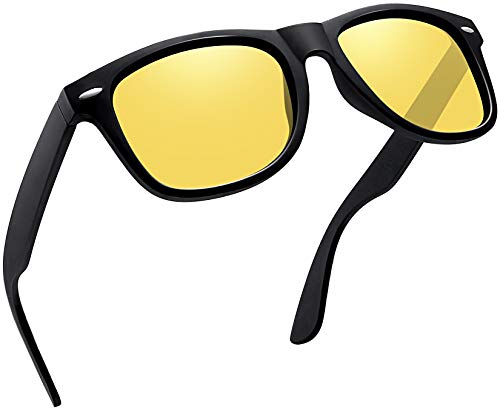
Best for: Shoppers who prefer a square frame and a lightweight design. Joopin says its yellow lenses are intended to filter scattered blue light from headlights and improve contrast in conditions such as fog, rain, and cloudy weather. The listing describes a lightweight resin frame and one-piece nose pads.
Choose this pair if appearance, a unisex design, and lightweight materials matter to you. It offers a different frame style from the more performance-oriented descriptions of padded TR90 or anti-fog-coated glasses.
Limitation: Joopin notes that individual effectiveness may vary. No lens tint can replace clear vision, attentive driving, or a prescription correction when needed.
Eyekepper Yellow Polarized Driving Glasses

Best for: Drivers comparing options that specifically mention wet-road reflections and UV400 protection. Eyekepper describes yellow polarized lenses intended to reduce reflections from headlights and wet pavement, with contrast support for road signs, lane markings, pedestrians, and vehicles.
Choose this pair if glare from reflections is a particular concern and the listed UV400 feature matters to your selection. It is a yellow-lens option, not a red-tinted one, and its description directly identifies nighttime and adverse-weather driving as intended uses.
Limitation: The listing does not specify a light-transmission measurement. Polarization and tint do not ensure that objects will be easier to see in every lighting condition.
Buying Guide: How to Choose Night Driving Glasses
Are these glasses red or yellow?
All five products above are described as having yellow-tinted lenses. If red tint is essential, check the product’s current lens color and specifications before purchasing; the supplied product details do not identify a red-lens option.
Should you choose polarized lenses?
Several listings describe their lenses as polarized and say they are intended to reduce glare or reflections. Compare that feature with other details, such as frame material and coatings. Polarization is not proof that a pair improves nighttime safety, and performance can vary with conditions.
What should you check before driving?
- Look for lens color and light-transmission information. The listings here do not provide a numerical transmission value.
- Check whether the frame style and nose pads feel secure and comfortable for your face.
- Consider listed extras, such as LYOFOX’s anti-fog coating or livho’s blue-light-blocking feature, only if they match your intended use.
- Try the glasses in a safe, stationary setting first. Stop using them if they make the road, signs, or pedestrians harder to see.
Night driving glasses should not replace prescription eyewear or good driving practices. If glare is persistent or vision is difficult at night, consult an eye-care professional. Keep the windshield and glasses clean, reduce speed when visibility is poor, and avoid driving when you cannot see the road clearly.
Frequently Asked Questions
Do yellow-tinted glasses reduce headlight glare?
Some products are marketed to reduce perceived glare, but results can vary by person and conditions. The product descriptions do not establish that they improve safety.
Are any of these products red-tinted?
No. The supplied descriptions identify yellow-tinted lenses for all five products.
Can tinted glasses make night driving harder?
Yes. A tint can reduce the light reaching your eyes, which may make it harder to see in already-dark conditions. Stop using a pair if visibility worsens.
Are polarized lenses necessary for night driving?
No universal requirement is stated in these product details. Polarization is a listed feature on some options, but it does not guarantee improved night vision.
Can I wear night driving glasses over prescription glasses?
The supplied product information does not state whether these frames fit over prescription glasses. Check the frame dimensions and fit details with the seller before choosing.