Answering buyers seeking reliable red rubber brake grease, these selections prioritize compatibility with brake system seals, calipers, and other rubber parts. Ideal for automotive enthusiasts, DIYers, and professional mechanics needing superior lubrication with rubber-to-rubber and rubber-to-metal performance. Below is a concise buying guide followed by five vetted products and a quick comparison table.
| Product | Brand | Key Use | Notes |
|---|---|---|---|
| Millers Oils Red Rubber Grease, 500ml | Millers Oils | Piston seals in brake systems | Vegetable oil thickened with pyrogenic silica |
| Red Rubber Grease 100% Pure Genuine, 57 gm | Generic | Brake caliper piston seals and boots | Meets Lucas Girling TS-2-34-04 spec |
| Granville 0846 500g Rubber Grease | Granville | Servicing master cylinders, rubber seals | Red rubber grease |
| 114gm / 4 oz Red Rubber Grease | Generic | Brake caliper piston seals and boots | Meets Lucas Girling TS-2-34-04 spec |
| ZDBB Brake Silicone Grease | ZDBB | Brake caliper guide pins and rubber O-rings | High temp, waterproof, quiet braking |
Millers Oils Red Rubber Grease 500ml
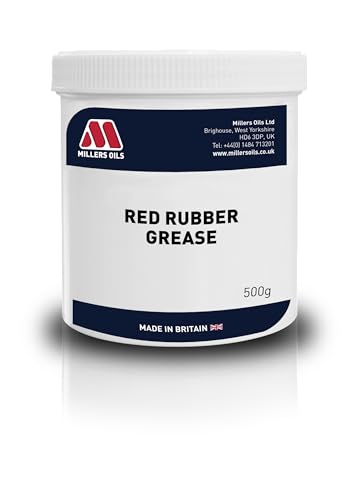
Best for: Piston seals in brake systems and rubber components. This grease uses vegetable oil thickened with pyrogenic silica, designed to stay in place under braking conditions. Choose this if you need a rubber-safe option with strong sealing performance.
Why selected: It targets brake-system seals while also offering lubrication for other rubber parts. The formulation focuses on compatibility with EPDM and nitrile rubbers common in brakes. A caution: verify compatibility with any non-standard seal materials before use.
Red Rubber Grease 100% Pure Genuine, 57 gm

Best for: Rubber-to-rubber and rubber-to-metal lubrication in brake components. This product claims compatibility with natural and synthetic rubbers and provides corrosion resistance, making it suitable for caliper boots and piston seals.
Why selected: It’s a compact, ready-to-use option for smaller service jobs or top-ups. Limitation: smaller quantity may require more frequent reapplication for frequent brake work.
Granville 0846 500g Rubber Grease

Best for: Servicing master cylinders and maintaining sealing rubbers within brake systems. This grease is noted for red rubber compatibility and long-lasting lubrication in hydraulic assemblies.
Why selected: Clear focus on master cylinders and sealing rubbers. A limitation is that it’s marketed primarily for master cylinder service, so broader use should be confirmed for other rubber components.
114gm / 4 oz Red Rubber Grease

Best for: Rubber-to-rubber and rubber-to-metal lubrication in brake piston seals and boots. It provides good mechanical stability and resists leakage and dripping, suitable for brake calipers.
Why selected: Adequate kit size for typical brake service jobs with emphasis on sealing rubber compatibility. Limitation: data notes focus on compatibility rather than long-term viscosity stability under heavy braking.
ZDBB Brake Silicone Grease 1oz

Best for: High-temperature brake assembly lubrication, including caliper pins, pad contact surfaces, and rubber O-rings. Silicone formulation helps prevent drying and squeal in high heat conditions.
Why selected: Strong heat resistance and water resistance make it a solid option for noise reduction and durability. A potential limitation is silicone-based formulas can be less compatible with some natural rubbers if improperly used; verify material compatibility.
AGS SIL-Glyde 4 oz Tube

Best for: Complete brake assembly protection, including plastic and rubber components. Designed to minimize disc brake squeal and support smooth disassembly.
Why selected: Comprehensive protection across the brake assembly. Limitation: primarily marketed for noise suppression, so ensure rubber compatibility for specific seals in your system.
Buying Guide
Key considerations when choosing red rubber brake grease include compatibility with common brake materials, temperature stability, and lubrication longevity. The following questions help clarify options:
- What rubber materials are in your brake system? EPDM, nitrile, or silicone rubbers each respond differently to different greases.
- Are you servicing pistons, seals, or guide pins? Some greases target piston seals specifically, while others are better for guide pins or boots.
- What is the operating environment? High temperatures, exposure to moisture, and corrosion risks influence grease choice.
- Do you need corrosion resistance or oxidation inhibitors? This affects the grease’s durability in braking environments.
- Is a silicone-based option preferred for noise reduction and heat resistance, or a vegetable-oil thickened option for rubber compatibility?
Practical comparison at a glance
- Best for piston seals: Millers Oils Red Rubber Grease 500ml
- Best compact option: Red Rubber Grease 57 gm
- Best for master cylinders: Granville 0846 500g
- Best value for caliper seals: 114 gm Red Rubber Grease
- Best for high heat and quiet braking: ZDBB Brake Silicone Grease
Notes on usage and safety
Follow product-specific instructions for application amounts and contact times. Avoid mixing greases unless the manufacturer approves. When in doubt, consult a professional technician to prevent brake system contamination or reduced performance.
FAQ
- Q: Can I use red rubber brake grease on all brake components? A: Check rubber material compatibility first; some components may require silicone-based or other formulations.
- Q: Do these greases affect braking performance? A: Proper lubrication reduces noise and wear but should not alter braking force; use as recommended for each component.
- Q: How often should grease be reapplied? A: Service intervals vary by driving conditions; inspect seals and pistons during maintenance and reapply as needed.
- Q: Is a silicone-based option better for noise reduction? A: Silicone formulations can significantly reduce squeal but ensure compatibility with rubbers in your system.
- Q: Are these products suitable for legacy vehicles? A: They can be, but verify compatibility with older seal materials and brake designs before use.
- Q: Should I avoid silicone grease on certain rubber seals? A: Some natural rubbers may swell with certain silicone formulations; confirm compatibility for your seals.