Answering the top buying question: which racing rotors and brake kits deliver reliable stopping power across common American muscle, luxury, and daily drivers? This guide identifies five solid options, explains who they’re best for, and highlights the key trade-offs. Ideal buyers include performance enthusiasts, daily drivers seeking reduced fade and cleaner braking, and weekend racers needing a dependable upgrade without complex installation.
Summary of selected products
| Product | Vehicle Fit | Rotor Type | Brake Pads Type | Best For |
|---|---|---|---|---|
| Detroit Axle 3.6L Camaro Kit | Chevrolet Camaro 2010–2015 (V6 LS/LT) | Drilled & Slotted | Ceramic | Camaro V6 owners needing complete front/rear kit |
| PowerStop K8453-26 | Lexus GS 2016–2020 | Carbon-fiber ceramic rotors | Carbon-fiber ceramic | High-end daily driving with reduced dust |
| Acinoparts Front Kit | Cadillac Escalade, Silverado Tahoe etc. (select models) | Drilled & Slotted | Ceramic | Large-frame trucks and SUVs needing clean braking |
| MAX Advanced Brakes CR-V Kit | Honda CR-V 2017–2023 (Gas) | Cross-drilled rotors | Carbon ceramic | Everyday driver who wants fade resistance |
| Detroit Axle Rear For Chrysler/Dodge | Chrysler 300, Dodge Challenger/Charger (various years) | Drilled & Slotted | Ceramic | Rear rotor upgrade for performance builds |
Detroit Axle 3.6L Camaro Drilled & Slotted Kit

What it includes: Front and rear drilled and slotted rotors with ceramic brake pads plus brake cleaner and fluid. Fitment is specified for 12.64 inch front and 12.40 inch rear rotors, designed for 2010–2015 Camaro V6 models. Best for Camaro owners seeking a complete upgrade kit that improves heat management and reduces brake dust relative to some OE setups.
Best for: Camaro enthusiasts needing a full replacement kit with all major components in one package. Choose this if you want a balanced upgrade across front and rear axles for daily driving or spirited driving on weekends.
Caution: This kit is specified for particular rotor sizes; verify your vehicle’s rotor dimensions before purchase to avoid incompatibility.
PowerStop K8453-26 Carbon-Fiber Ceramic Kit

What it includes: Front and rear rotors with carbon-fiber ceramic brake pads. Engineered for higher horsepower and modified vehicles with a focus on superior heat dissipation and reduced dust.
Best for: Drivers who need strong stopping power on high-performance or tuned vehicles and want notably cleaner wheels from dust reduction. This is a strong pick for daily drivers that also see occasional spirited braking.
Caution: Some users may notice a firmer pedal feel; ensure compatibility with your calipers and rotor sizes before purchase.
Acinoparts Front Kit for Silverado Escalade and More

What it includes: Front drilled and slotted rotors (12.99 inch/330 mm) and ceramic brake pads with hardware. Noted as a compatibility-driven option for large American trucks and SUVs, with a ceramic compound designed for clean braking and reduced noise.
Best for: Large-vehicle owners needing improved fade resistance and quieter operation on daily commutes and light towing. Choose this for trucks and SUVs seeking better rotor cooling and consistent pedal feel.
Caution: Verify that rotor diameter and hub compatibility match your vehicle’s specifications to avoid misfit issues.
MAX Advanced Brakes CR-V Cross-Drilled Kit

What it includes: Front and rear carbon-ceramic rotors and pads engineered for Honda CR-V’s gas engine variants from 2017–2023. Features cross-drilled rotors to help dissipate heat and minimize fade, with a non-directional rotor finish for smoother bedding and stable pedal response.
Best for: Daily drivers and light performance enthusiasts who want a refined daily driving experience with improved fade resistance and cleaner braking aesthetics on a compact SUV.
Caution: Compatibility is vehicle-specific; confirm that the kit fits your exact CR-V model year and engine before buying.
Detroit Axle Rear Brake Kit for Chrysler/Dodge
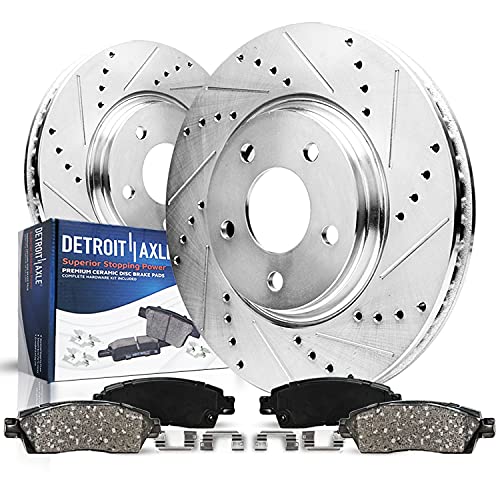
What it includes: Rear drilled and slotted rotors with ceramic brake pads and hardware, sized around 13.78 inches (350 mm). This kit offers a compatible rear upgrade for a range of Dodge Challenger, Charger, and Chrysler 300 models across several years.
Best for: Those upgrading rear braking performance in muscle cars and large sedans where improved rotor cooling and reduced pad fade provide balanced stopping power with the front kit.
Caution: Rear-only kits should be paired with a matching front kit for balanced braking; verify rotor diameter and hub compatibility with your vehicle.
Buying Guide: Key Considerations For Racing Rotors And Brakes
- Vehicle compatibility: Confirm rotor diameter, bolt pattern, and caliper clearance to ensure proper fitment and braking performance.
- Rotor type and material: Drilled, slotted, and cross-drilled designs aid heat dissipation and fade resistance. Ceramic and carbon-ceramic pads reduce dust and noise but may vary in initial bite.
- Brake balance: Upgrade front and rear components in a balanced way to avoid wobble, unbalanced braking, or premature wear on one axle.
- Intended use: Daily driving, towing, track days, or performance tuning each have different requirements for heat tolerance and modulation.
- Dust and noise: Carbon-ceramic and high-end ceramic pads typically provide cleaner wheels and quieter operation under normal conditions.
Frequently Asked Questions
- What is the main difference between drilled and slotted rotors?
Drilled rotors improve heat dissipation in high-heat scenarios, while slotted rotors help remove gas and dust from the braking surface for consistent contact. - Are ceramic brake pads better than organic pads?
Ceramic pads offer quieter operation, lower dust, and longer life in many conditions, but some high-performance compounds can feel firmer at pedal takeoff. - Do I need to replace pads and rotors together?
Replacing both reduces uneven wear and ensures even surface contact for consistent braking performance. - How do I determine the correct rotor size for my vehicle?
Check the owner’s manual or VIN-based parts lookup to confirm front and rear rotor diameters, bolt patterns, and hub sizes. - Can these kits improve braking for daily driving?
Yes, many kits reduce fade and dust while improving pedal feel for regular use; performance-focused compounds can provide additional benefits for spirited driving. - What maintenance is needed after installation?
Inspect pads and rotors for wear, check caliper hardware, and ensure proper brake fluid levels and no leaks.