Answering the common question, these products are designed to remove oxidation, restore color, and refresh gloss on aging or sun-damaged paint. They’re best for daily drivers, classic cars, and hobbyists who want professional-looking results at home. For quick fixes, choose a one-step formula; for deeper correction, opt for a dedicated cut-and-polish kit. Below are five standout options that address oxidation, swirls, and dullness with clear, finish-focused results.
| Product | Brand | Best For |
|---|---|---|
| Meguiar’s Mirror Glaze M105 Ultra-Cut Compound | Meguiar’s | Heavy oxidation and deep scratches on glossy finishes |
| Chemical Guys C4 & P4 Clear Cut Correction Compound and Polish Combo | Chemical Guys | Defects fast removal with high-gloss refinement |
| Oxide Reducing Emulsion (OxideOff) | OxideOff | Gentle DIY restoration of faded, oxidized paint and dull headlights |
| 303 Products Compound | 303 Products | Removes up to 1500 grit scratches with clarity restoration |
| Veksis Paint Deepoxidation Remover | Veksis | Non-abrasive oxidation removal for all paint types |
Meguiar’s M105 Ultra-Cut Compound

Meguiar’s M105 Ultra-Cut is a heavy-cut compound designed to remove moderate to heavy paint defects. It tackles scratches, oxidation, swirls, and sanding marks up to 1200 grit. The formula aims to deliver a high-gloss finish after defect removal. Best for: cars with significant surface imperfections where rapid defect removal is prioritized. Limitation: may require a follow-up finishing polish to maximize depth and clarity on delicate finishes.
Chemical Guys C4 & P4 Clear Cut Correction Compound and Polish Combo
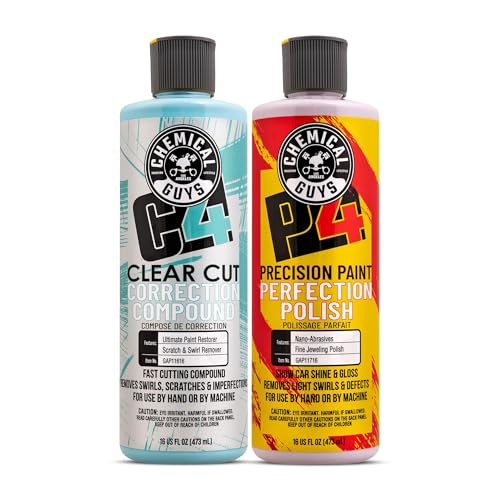
This two-step kit combines C4 Clear Cut Compound for fast defect removal with P4 Precision Polish for a flawless, high-gloss finish. It’s best for removing scratches, swirls, towel marks, and etching while restoring depth and color vibrancy. Choose this if you want a complete polishing workflow in one package. Caution: the kit is designed for dedicated polishing sessions and may require subsequent protection to maximize longevity of results.
Oxide Reducing Emulsion (OxideOff)
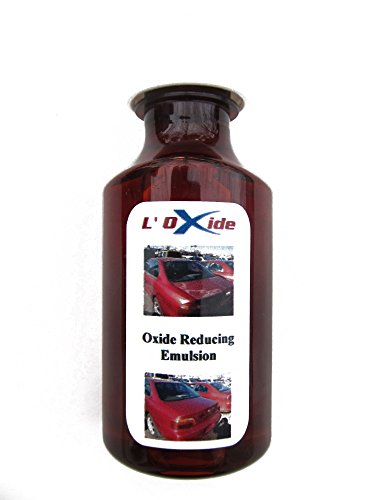
OxideOff offers an easy DIY approach to restoring faded and oxidized paint, peeling clear coats, and dull headlights. It emphasizes a simple application without heavy rubbing or polishing. Best for: newcomers or light-duty restorations seeking straightforward improvement. Limitation: results can vary with depth of oxidation, and heavy defects may require more intensive correction steps.
303 Products Compound

303’s compound is designed to remove up to 1500 grit scratches and is compatible with single-stage and base-clear paint systems. It aims to restore surface clarity while maintaining finish integrity. Best for: older finishes needing more aggressive defect removal without sacrificing clarity. Limitation: not a complete polishing system—plan to follow with a dedicated polish or glaze for optimal depth.
Chemical Guys Insynchro Scratch & Swirl Remover

Insynchro combines cutting and polishing in a single-step formula for light to moderate swirls and oxidation. It uses micro-abrasives designed for a smooth finish without haze. Best for: quick, one-step corrections on daily drivers. Limitation: may not fully correct deeper defects or heavy swirl marks on very aged finishes.
Buying Guide
Key considerations when choosing a paint oxidation removal product:
- Defect severity: For deep scratches and heavy oxidation, select a fast-cut compound (Meguiars M105) or a dedicated combo kit (Chemical Guys C4/P4). For lighter imperfections, a one-step option (Insynchro) may suffice.
- Finish type: Check compatibility with clear coats, single-stage, or ceramic-fortified paints. Some formulas are safer for clear coats but may require more work on single-stage paints.
- Polish vs. compound balance: Compounds remove defects; polishes refine and enhance gloss. Kits that pair both can streamline the process, but ensure you also have a protective sealant or wax afterward.
- DIY workflow: Non-abrasive formulas are safer for beginners; heavier-cut products demand patch testing and technique to avoid hazing.
- Application method: Consider whether you prefer a single-step solution or a two-step process with dedicated cutting and polishing.
- Finish longevity: After oxidation removal, apply a clear coat-safe sealant or wax to protect the restored finish from future oxidation and UV exposure.
Frequently Asked Questions
- What is the difference between a compound and a polish?
Answer: A compound removes defects and oxidized layers; a polish refines the surface, boosting gloss and color depth. - Can I use these products on plastic headlights?
Answer: Some products are formulated for paint—avoid abrasives on lights unless the label specifies headlight use. - Do I need a separate wax after using an oxidation remover?
Answer: Yes, applying a protective sealant or wax helps prevent future oxidation and enhances shine. - Is one-step Insynchro suitable for all vehicles?
Answer: It works well for light to moderate swirls on many paints but may not fix heavy defects. - How do I test a product before full use?
Answer: Always test on a small, inconspicuous area to confirm safe use and effectiveness. - What order should I use these products in?
Answer: For heavy defects, start with a cutting compound, then follow with a polish; finish with a sealant or wax.