The best muffler and tailpipe putty depends on the size of the job and how much product you need. Permatex 80333 is a strong choice for a small repair and is listed as safe for catalytic converters. LOCBONDSO and NASCA offer non-slumping formulas rated to 2012°F, while Visbella is designed for exhaust joints and comes in two listed tube sizes. MPD is a larger-format option for buyers who need more paste.
| Product | Best For | Listed Heat Resistance |
|---|---|---|
| Permatex 80333, 4 oz. | Small repairs and catalytic-converter-safe use | Up to 2000°F |
| LOCBONDSO, 2.6 oz. | Paste that stays in place | Up to 2012°F |
| Visbella, 75 g | Exhaust joints and smaller applications | Up to 2012°F |
| NASCA, 5.3 oz. | Thick paste for DIY application | Up to 2012°F |
| MPD, 16 oz. | Buyers needing a larger container | Up to 2000°F |
Permatex 80333 Muffler And Tailpipe Putty

Best for: Drivers looking for a 4-ounce exhaust repair putty with a stated catalytic-converter-safe formulation. Permatex says the putty permanently repairs holes and leaks in exhaust systems and seals out fumes at temperatures up to 2000°F.
Choose this product if its listed temperature rating and catalytic converter information match your repair needs. Its 4-ounce size is suited to a contained repair rather than a buyer specifically seeking a bulk container.
Limitation: The listed maximum temperature is lower than the 2012°F rating stated for some other options here. Check the product directions for application and curing instructions.
LOCBONDSO Non-Slumping Muffler Repair Kit

Best for: DIY users who want a thick paste intended to stay where it is applied. LOCBONDSO describes its 2.6-ounce product as non-slumping and quick-setting, with a stated heat resistance of up to 2012°F (1100°C).
The manufacturer also describes the paste as forming a strong, durable bond for muffler and exhaust leak repairs. It is a reasonable option when application control is a priority, such as when paste that runs or drips would be inconvenient.
Limitation: This is the smallest listed container among the selected products. Consider another size if you expect to need more material, and follow its directions rather than assuming a particular curing schedule.
Visbella Exhaust System Sealant, 75 g

Best for: Buyers who want sealant described for exhaust-system joints, including mufflers, tailpipes, and catalytic converters. The 75-gram Visbella formula is a thick, non-slumping paste that sets hard with heat and is rated for temperatures up to 2012°F.
Visbella says the product cures as water evaporates and continues curing when additional heat is applied. Choose it if the listed joint applications fit your repair and you want a smaller tube format than the 150-gram version also listed.
Limitation: The listing does not give a specific cure time. Read the package directions and allow the stated curing process before returning the exhaust system to use.
NASCA High Temp Exhaust Sealant

Best for: DIY users seeking a larger 5.3-ounce container with a non-slumping formula. NASCA lists heat resistance up to 2012°F and says the paste is designed to seal cracks, holes, and leaks in exhaust systems.
The thick consistency is intended to keep the material in place during application. This makes NASCA a better fit for buyers who value controlled placement and want more product than the 2.6-ounce LOCBONDSO option.
Limitation: The claims about a permanent bond and resistance to cracking or shrinking come from the product listing; the listing does not specify a cure time. Follow the supplied directions and assess whether putty is appropriate for the damage.
MPD Muffler Cement Putty, 16 Oz.
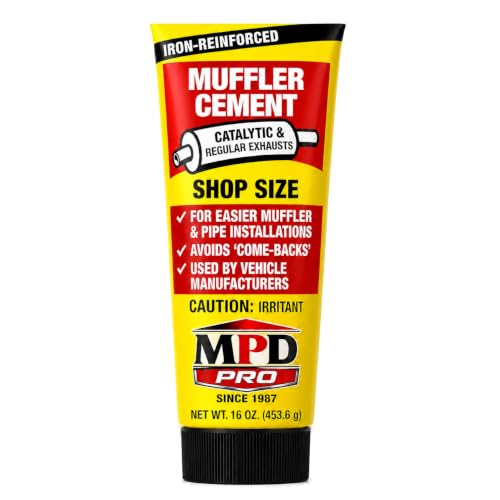
Best for: Buyers who prefer a larger 16-ounce container for exhaust sealing work. MPD lists the putty for exhaust systems, mufflers, and tailpipes, with heat resistance up to 2000°F.
Its container size stands out compared with the smaller tubes and packages in this guide. Choose it if quantity is more important than selecting a product with additional listed details such as catalytic-converter safety or a non-slumping formula.
Limitation: The supplied product information provides only the temperature rating and intended applications. It does not specify application steps, curing time, or whether it is safe for catalytic converters.
Buying Guide: How To Choose Muffler And Tailpipe Putty
What temperature rating should you compare?
Compare the product’s stated maximum temperature with the demands of the repair and the manufacturer’s instructions. The products here list ratings from 2000°F to 2012°F. A higher number alone does not establish that a product is suitable for every exhaust location or type of damage.
Should you choose non-slumping paste?
A non-slumping formula is designed to stay in place rather than run or drip during application. LOCBONDSO, Visbella, and NASCA specifically describe their products this way. This feature may help with controlled placement, but it does not replace careful surface preparation or following the package directions.
How much putty do you need?
Compare package size with the scale of the job. The selected options range from 2.6 ounces to 16 ounces. A smaller container may suit a limited repair; a larger one may make sense when you need more material. Do not assume that package size alone determines how much of a damaged area the product can repair.
When is putty not the right repair?
Putty is intended for sealing, not for restoring the strength of a severely corroded, broken, or structurally damaged exhaust component. If damage is extensive or fumes continue to escape, have the system inspected by a qualified repair professional. Exhaust fumes can be hazardous; do not rely on an uncertain seal as a safety fix.
Frequently Asked Questions
Can muffler putty seal exhaust leaks?
These products are marketed for sealing exhaust holes, leaks, cracks, or joints. Their suitability depends on the location and extent of damage, along with correct application and curing.
Is muffler putty safe for catalytic converters?
Permatex 80333 is specifically listed as safe for catalytic converters. The other selected product descriptions do not make that same claim, so check their labels before use near a converter.
Does exhaust putty need heat to cure?
Some listed products set or cure with heat. Visbella says its paste cures as water evaporates and continues curing with additional heat. Follow the instructions for the exact product you choose.
Can putty repair a badly rusted muffler?
Putty should not be treated as a replacement for a severely weakened or structurally damaged part. Extensive corrosion may require component repair or replacement rather than a surface seal.