Finding the most efficient gasoline generator means balancing fuel economy with reliable power for your needs. This guide highlights five top inverter and portable gasoline generators, focusing on efficiency, quiet operation, and suitability for hikers, campers, homeowners, and remote job sites. Each product section explains who benefits most, why it was selected, and any practical limitations to consider.
| Product | Best For | Key Advantage |
|---|---|---|
| WEN Super Quiet 2350-Watt (56235i) | Lightweight power on the go | Ultralight at 39 lb; quiet operation |
| LIFAN 2300W Inverter | Small loads, sensitive electronics | Pure sine wave; 56dB quiet |
| Pulsar PGD16ISCO 1600W | Compact camp use | Very lightweight; 1600W clean power |
| Champion 2500-Watt Ultralight Inverter | Backpacking or tailgating | Ultra-lightweight; 53 dBA; parallel-ready |
| WEN 4500-Watt Inverter (56432i) | RV or home backup needs | Higher wattage; RV-ready; quiet operation |
Notes: The table above summarizes five strong options across inverter-based generators with emphasis on efficiency and portability. The “best for” descriptors reflect typical use cases for each model, helping buyers choose based on load requirements and noise tolerance.
WEN Super Quiet 2350-Watt Portable Inverter Generator
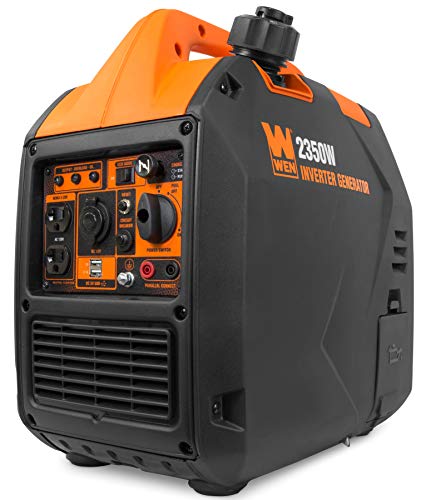
Features include a lightweight body and ultra-quiet operation. It produces 2350 surge watts and 1900 rated watts of clean power suitable for charging phones, tablets, TVs, and computers. Best for: travelers and campers who need portable power without significant noise or weight. Limitation: lower continuous wattage may require careful load management for appliances with higher startup surges.
LIFAN 2300W Gasoline Inverter Generator

Best for: home outages and outdoor trips requiring clean power for sensitive electronics. The LIFAN delivers pure sine wave power with 1800W rated output and less than 3% THD. Its 56dB noise level at 25% load makes it neighbor-friendly. Limitation: 2300W peak may be insufficient for heavier loads or concurrent power needs.
Pulsar PGD16ISCO Ultra Light Quiet 1600W

Best for: minimal-load camping or emergency power for essential devices. The 57cc engine provides 1600 peak watts and 1200 running watts with a 0.6-gallon tank for several hours of operation at half load. It delivers clean, reliable power for sensitive electronics. Limitation: modest wattage means fewer high-demand appliances can run simultaneously.
Champion Power Equipment 2500-Watt Ultralight Inverter

Best for: outdoor enthusiasts who need a durable, portable inverter with quiet operation. It weighs about 39.7 pounds and offers 2500 starting watts and 1850 running watts with up to 11.5 hours of runtime. It’s parallel-ready for expanded capacity. Limitation: when running at maximum load, efficiency can vary based on fuel quality and load balance.
WEN 4500-Watt Inverter Generator (56432i)

Best for: RV users and home backup where higher wattage and clean power are needed. The 181cc engine delivers up to 4500 surge watts and 3600 running watts with a quiet operating profile. It can switch between gasoline and propane, offering flexibility for longer outages. Limitation: higher weight relative to lighter models, which affects portability.
Champion Power Equipment 12,500-Watt Tri-Fuel Generator

Best for: home backup with extensive power requirements. This unit operates on natural gas, propane, or gasoline and includes hoses for natural gas and propane. The 500cc engine supports a broad range of loads and features an Intelligauge for monitoring. Limitation: significantly heavier and less portable than compact inverter models, requiring a stable setup and space.
Buying Guide: Key Considerations for Efficient Gasoline Generators
- Power needs: Determine starting watts vs running watts. Choose a unit that covers your essential loads with a comfortable margin to avoid overload.
- Fuel type and efficiency: Inverter models often deliver better fuel efficiency and cleaner power, which helps run sensitive electronics longer on less fuel.
- Noise and portability: If you use the generator near neighbors or in camping, consider decibel levels and weight. Lighter units typically sacrifice sustained wattage.
- Runtime and fuel capacity: A larger fuel tank increases runtime but adds weight. Assess how long you need to run between refuels for your typical scenario.
- Safety features: Look for CO sensors, automatic shutoff, and overload protection to protect users and equipment.
- Parallel capability: If you foresee higher power needs, check whether the unit can be paired with another unit for more wattage.
- Maintenance and service: Consider ease of starting, availability of replacement parts, and warranty terms when evaluating total cost of ownership.
FAQ
- What defines “inverter” vs. traditional portable generators? Answer: Inverter generators use advanced electronics to regulate and clean the output, providing stable voltage for sensitive electronics and better fuel efficiency at varying loads.
- Why choose a lighter inverter for camping? Answer: Lighter units are easier to transport and typically emit less noise, which is advantageous for outdoor use and stealthy camp setup.
- Is it safe to run a generator indoors or in a garage? Answer: No. Always operate outdoors in a well-ventilated area to avoid carbon monoxide buildup and fire hazards.
- Can I run a high-wattage appliance on a 1600W generator? Answer: No. Check the starting wattage (surge) and running watts; high-demand appliances may require a more powerful unit or parallel setup.
- What maintenance helps maximize efficiency? Answer: Regular oil changes, air filter cleaning/replacement, spark plug checks, and ensuring proper fueling can help sustain efficiency and performance.
- Do higher wattage units consume more fuel? Answer: Yes, generally, but fuel efficiency depends on load. Running at moderate, continuous load is often more efficient than idling or full load for short bursts.