If you operate boats, jet skis, or other marine equipment, a marine electric oil change pump can save time and reduce mess by transferring engine oil and other fluids quickly. This guide highlights five reliable options, explains who each product is best for, and compares key features. Whether you’re a casual boater, a professional mechanic, or a DIY hobbyist, these pumps help you perform clean, quick oil changes without crawling under engines.
Summary of selected products:
| Product | Best For | Notes | Power |
|---|---|---|---|
| Harpy Eagle Electric Oil Change Extractor | Boat owners, marina technicians | Versatile with long hoses and included storage case | 100W |
| Amarine Made Oil Pump | On-the-go oil changes | Portable; simple battery connection | 60W |
| ATLIKE 12V 100W Oil Extractor | Home workshops and garages | Self-priming, compatible with multiple fluids | 100W |
| FAITIO 12V 100W Oil Extractor | Marine engines and equipment | Copper motor; extended hoses | 100W |
| FACFUEL 12V 100W Oil Extractor Kit | All-in-one kits for boats | Storage case and complete hose set | 100W |
Harpy Eagle Electric Oil Change Extractor Pump

Best for: Boat owners and DIY marine enthusiasts who need a robust, ready-to-use oil extractor with generous hose length. The 100W motor pumps up to a quart per minute, aiding quick engine oil removal from larger marine engines. It ships fully assembled, with a storage case and a manual listing 100 car models’ oil capacities for easy reference. This model emphasizes durability with metal construction rather than plastic components.
Why chosen: It combines high pump power with practical accessories, helping reduce spills through quick-release plugs and a hose clip for secure draining. The extended hoses support extraction from multi-cylinder marine engines without repositioning the pump.
Caution: Do not rely on this for fuels or highly viscous substances. Maintain proper storage to avoid leaking via quick-release plugs when not in use.
Amarine Made Oil Pump

Best for: On-the-go oil changes for cars, motorcycles, RVs, boats, and lawn equipment where portability matters. This 12V, 60W pump draws roughly 5A and offers a flow of about 0.8–1.0 liters per minute, enabling quick draining in mobile setups.
Why chosen: Its compact size and simple battery connection make it convenient for use away from fixed workshop water outlets. The manual emphasizes warming the engine before pumping for best results, and it clearly cautions against using incompatible fluids such as gasoline or water.
Caution: Not suitable for gasoline/petrol or highly viscous oils; ensure correct inlet/outlet orientation and secure hoses before operation.
ATLIKE 12V 100W Oil Extractor

Best for: Home workshops and light-duty marine work where hands-free oil changes are desired. This unit automates priming and provides a steady 1–4 L/min flow, ideal for quickly removing engine oil without manual pumping.
Why chosen: Its self-priming feature and compatibility with multiple fluids makes it a flexible option for various vehicles, including small boats. The recommendation to warm the engine improves pumping speed and efficiency.
Caution: Operates best with fresh oil; avoid pumping heavy gear or transmission fluids not listed as compatible.
FAITIO Oil Pump 12V 100W

Best for: Marine engines and heavy-duty uses where a robust copper motor and extended hose length matter. The unit targets oil and gear oil changes with a reliable metal housing and low-noise operation.
Why chosen: The copper motor supports fast, stable suction, and a longer hose set helps reach engine compartments typical of boats and jet skis. The kit notes preheating for faster fluid transfer, which is practical during cooler sessions.
Caution: Not for gasoline or water; ensure correct hose connections and lock hoses during operation to prevent leaks.
FACFUEL Electric Oil Extractor Kit

Best for: All-in-one oil change setups for marine vessels and trucks, where a complete kit simplifies installation and storage. The kit includes a storage case, two long hoses, anti-leak plugs, and a fixing clamp, along with a 12V 100W copper motor.
Why chosen: The combination of a durable metal housing, extended hoses, and leak-proof design makes this a reliable option for regular oil changes. The quick-release plug and fixing clip reduce spillage risk and keep operations tidy.
Caution: Ensure engine is warmed to around 100°F for quicker pumping; confirm hose-to-container connections are secure before starting.
FACFUEL Electric Oil Extractor Pump With 59-Inch Hose

Best for: Marine and heavy-duty automotive use where a longer, kink-resistant hose matters. The 59″ anti-kink hose supports flexible routing to containers and a more controlled flow of oil.
Why chosen: The anti-kink feature and durable metal housing support steady pumping under demanding conditions. The kit’s compatibility with several 12/24V configurations makes it versatile for different vessels and vehicles.
Caution: Not for gasoline or water; ensure hoses are properly secured to prevent leaks during transit and pumping.
FAITIO Oil Extractor 12V 80W (Blue)
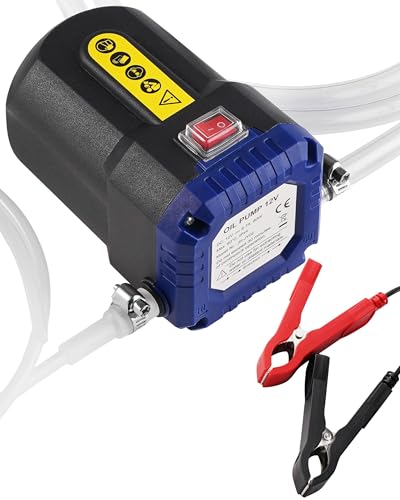
Best for: Users seeking a compact, affordable option with built-in safety features. This model emphasizes quick, clean oil changes with a one-touch emergency stop and overcurrent protection.
Why chosen: Copper motor support ensures reliable suction, and the unit’s design focuses on minimizing spills with a leak-proof assembly. Preheating the engine boosts pumping speed for efficient changes.
Caution: Not for gasoline or diesel; follow the recommended preheating step to optimize performance.
Buying Guide
What should you consider when choosing a marine electric oil change pump?
Oil compatibility: Most pumps support engine oil in common grades, but some models exclude gasoline, water, or heavy gear oils. Verify compatibility with your intended fluids before purchase.
Motor power and flow rate: A higher wattage and faster flow speed reduce time spent on oil changes. For larger marine engines, look for 100W models with 1 quart per minute or higher flow.
Hose length and fittings: Longer hoses reach difficult-to-access engine compartments. Quick-release plugs help prevent spills during storage and transport.
Durability and materials: Copper motors and metal housings resist corrosion better than plastic. Marine environments benefit from rugged construction and leak-proof designs.
Ease of use: Self-priming pumps simplify operation, especially for DIY users. Look for kits with clear instructions, storage cases, and secure hose clamps.
Safety features: Overload protection, anti-kink hoses, and safe switches minimize risk of spills, overheating, and electrical issues.
Maintenance: Consider pumps that include simple maintenance steps, visible hose-condition indicators, and easy cleaning procedures to extend lifespan.
Where should you use a marine electric oil change pump?
On boats, jet skis, and other marine vessels to drain engine oil from dipstick ports or sumps. In garages or mobile setups, these pumps can facilitate quick changes without heavy lifting or lying under equipment for extended periods.
What about installation and care?
- Warm the engine before pumping when recommended to improve flow.
- Ensure correct inlet/outlet orientation and secure hoses to prevent spills.
- Keep storage areas dry and use included plugs and clamps to minimize leaks when storing.
FAQ
- Can these pumps be used for transmission fluid? Yes, many models support transmission fluid, but check each unit’s compatibility list before use.
- Are these pumps suitable for marine environments? Most are designed with metal housings and corrosion resistance suitable for marine use, but always follow manufacturer guidelines.
- Do I need to preheat the engine before pumping? Several models benefit from preheating to around 100°F–140°F to improve flow, especially with thicker oils.
- Can I use these pumps for diesel engines? Some models support diesel oil; verify product specifications to avoid misuse.
- Is professional assistance required? For basic oil changes, these pumps are user-friendly, but consult a professional if you’re unsure about fluid types or safety precautions.
- What maintenance is needed after pumping? Rinse or wipe hoses after use, store with plugs in place, and inspect hoses for wear or cracks before next use.