When choosing tire balancing weights, look for durable clips, stable materials, and easy installation. This guide focuses on commonly used clip-on and adhesive weights that fit most steel wheels and alloy rims. Best for DIY car owners, shop technicians, and fleet maintenance planners who want reliable, straightforward balancing options. The top picks below highlight different formats and sizes to match your wheel type and balancing needs.
| Product | Weight Range | Installation Type | Best For | Key Benefit |
|---|---|---|---|---|
| CKAuto MC-Series Coated Weights (25Pcs/Style, 100Pcs/Box) | 0.25-1.0 oz per weight | Clip-on with polymer coating | Alloy wheels on passenger cars and light trucks | Coating prevents staining and eases retention |
| JiiinMiiin P Type Lead Weights (100Pcs total) | 0.25-1.0 oz per weight | Clip-on | Passenger cars, light trucks, SUVs | Close tolerance for accurate balance |
| CKAuto 2.0 oz P200 Lead Weights | 0.25-2.0 oz per weight | Clip-on | All steel wheels on various vehicle types | High-speed dynamic balance retention |
| CKAuto P Style 1/2 oz Weights | 0.5 oz per weight | Clip-on | Passenger cars and light trucks | Easy installation with reliable fit |
| Wevdn 48 Pcs Adhesive 1/4 oz Weights | 0.25 oz per segment | Adhesive-backed (stick-on) | Cars, ATVs, SUVs, trucks needing fine-tuning | Low-profile and rust-resistant coating |
Below is a quick summary of each of the chosen products, helping buyers compare formats at a glance and choose the right weight system for their wheels.
CKAuto MC-Series Coated Lead Wheel Weights

Best for: Vehicles with alloy wheels on regular passenger cars and light trucks. The MC-series uses a hardened spring steel clip and a polymer coating to prevent staining on wheels. The coated finish helps maintain wheel appearance while providing secure retention. Use these when you need robust performance and less wheel upkeep. Caution: coated weights may not be ideal for non-standard rim channels; verify fitment with your wheel type.
JiiinMiiin P Type Lead Clip Weights
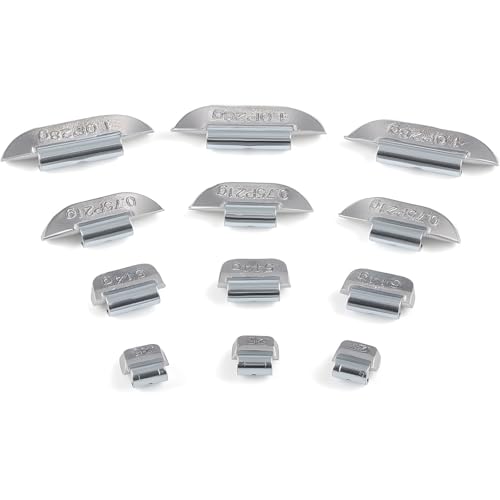
Best for: Balancing all types of steel wheels on passenger cars, light trucks, and SUVs. The P-type design comes in multiple weights for precise tuning and claims close tolerances for accuracy. Caution: as lead weights, handling should follow standard safety practices to avoid exposure during installation.
CKAuto 2.0 oz Lead Clip Weights

Best for: Versatile balance on all steel wheels across passenger cars, light trucks, SUVs, vans, and full-size pickups. Designed for easy installation and high-speed rotation balance. Caution: ensure correct weight range matches your rim and vehicle specifications to avoid over- or under-balancing.
CKAuto P Style 1/2 oz Lead Weights

Best for: Standard steel wheels on passenger cars and light trucks. The P Style weights are easy to install and are designed to maintain dynamic balance at high speeds. Caution: uncoated weights may stain rims if not cleaned before installation; keep target rim clean for best results.
PARTWELL Wheel Weights P-Series 1.25 oz

Best for: Full-size pickups, SUVs, vans, and passenger cars seeking precise tolerances and balanced performance. The 1.25 oz P-series weights are designed to fit various rim profiles with secure clipping. Caution: ensure the box contains weights that match your wheel type to avoid mismatches.
Wevdn Adhesive Backed Wheel Weights 0.25 oz Segments

Best for: Cars, ATVs, SUVs, and trucks needing precise micro-adjustments. The 0.25 oz segments allow flexible placement per tire and offer rust-resistant, low-profile adhesive weights. Caution: adhesive weights may require careful surface cleaning and warming to maximize adhesion in extreme conditions.
Buying Guide
What type of weight should you choose? Clip-on weights are standard for most steel wheels and offer quick, reliable balancing with secure retention. Adhesive weights work well for alloy wheels or rims where clips are impractical, but may require surface preparation for durable adhesion.
How many weights do you need? Start with a small kit if you’re balancing a few tires, then expand as needed. Consider a mixed approach if you have a diverse fleet or multiple vehicle types.
What about coating and material? Coated weights reduce staining on rims and corrosion risk, while uncoated weights are typically cheaper but require careful handling and cleaning to avoid rim marks.
Installation considerations: Clean the rim surface before applying weights. For clip-ons, ensure clips fit securely into the rim bead seat and avoid over-tightening. For adhesive weights, press firmly and run the wheel to seat the balance after installation.
FAQ
- What weight range is most common for passenger cars? Most kits include weights from 0.25 oz to 1.0 oz per piece to enable incremental balancing on common steel rims.
- Are coated weights better than uncoated? Coated weights reduce staining and corrosion on rims, which can preserve wheel appearance over time.
- Can adhesive weights be used on all wheels? Adhesive weights work well for many alloy wheels, but some rims or high-performance setups may require clip-ons for reliability at high speeds.
- How many weights should I buy? For typical household use, a 50–100 piece assortment with multiple weights per style covers most balancing tasks.
- Is lead safe to handle? Lead weights should be handled with care, following standard safety practices to minimize exposure during installation and disposal.
- What is the advantage of a P-series weight? P-series weights provide precise tolerances and secure clips, which helps maintain dynamic balance during high-speed rotation.