If you’re shopping for a large-display tire pressure gauge, you want a tool that reads accurately, is easy to read in low light, and works across multiple vehicle types. This guide highlights five top options that emphasize big, legible displays or digital readouts, plus durable construction. The top picks suit different buyers: daily drivers needing quick checks, motorcycle riders seeking compact reliability, and professionals needing precise measurements for workshops or road trips. Below, you’ll find quick product comparisons and a buying guide to help you choose the right gauge for your needs.
Quick comparison table of selected products:
| Product | Best For | Range / Key Feature |
|---|---|---|
| ETENWOLF Tire Pressure Gauge 0-75 PSI | Best for night visibility | Large glow dial; ANSI B40.1 Grade A; 0-75 PSI |
| ETENWOLF T300 Digital Tire Pressure Gauge | Best for extreme ranges | 3-200 PSI; ANSI B40.7 Grade 2A; AI chip with temperature compensation |
| AstroAI Digital Tire Pressure Gauge 0-150 PSI | Best all-around digital option | Backlit LCD; 4 units; wide range 0-150 PSI |
| JACO ElitePro Tire Pressure Gauge | Best for rugged use | 100 PSI; brass body; built-in air bleeder; 360° swivel chuck |
| AstroAI Pencil Tire Pressure Gauge (2 Pack) | Best budget precision | 10-75 PSI or 20-120 PSI; stainless steel; ANSI B40.1 Grade B |
ETENWOLF Tire Pressure Gauge 0-75 PSI

Best for: drivers who need a simple, bright-readout gauge for quick checks in low light. This model uses a large glow dial and a manual calibration to ANSI B40.1 Grade A (±1%). It handles a wide range up to 75 PSI, making it suitable for most cars, light trucks, and SUVs. The glow dial helps ensure visibility at night or in underlit garages. Limitations: not ideal for very high-Pressure tires like some trucks or RVs beyond 75 PSI.
ETENWOLF T300 Digital Tire Pressure Gauge

Best for: users who need a wide measurement range and high precision. The T300 covers 3-200 PSI and is calibrated to ANSI B40.7 Grade 2A with ±1 PSI accuracy. It includes an AI chip for thermal compensation, maintaining accuracy in extreme temperatures. Best used for vehicles with higher tire pressures, like some trucks or performance cars. Caution: Presta valve adapter is not included and must be purchased separately for bicycles.
AstroAI Digital Tire Pressure Gauge 0-150 PSI
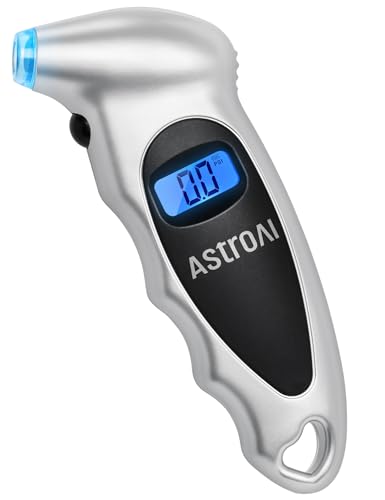
Best for: drivers who want digital readings with easy visibility in dim environments. The AstroAI gauge features a backlit display, a nozzle light, and four measurement units (PSI, Bar, Kgf/cm², kPa). It maintains accuracy across cold and warm conditions and provides quick unit switching with a single button. Limitation: extremely cold temperatures can affect battery-dependent readings over long-term use, and battery replacement may be needed periodically.
JACO ElitePro Tire Pressure Gauge
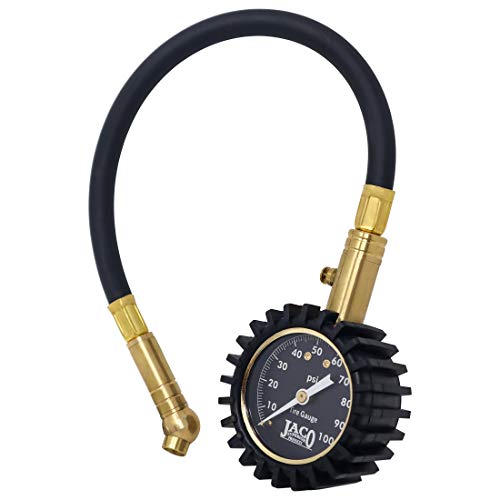
Best for: professionals and serious enthusiasts who need a rugged, precise tool. The ElitePro is calibrated to ANSI standards (±1.5%) with a solid brass body and a shock-resistant guard. It includes a 360-degree swivel chuck and a built-in air bleeder for precise adjustments. This gauge is reliable for frequent use and offers a durable, long-life design. Caution: no batteries are used, so readings rely on mechanical action, which may require more manual effort in some situations.
AstroAI Pencil Tire Pressure Gauge 2 Pack

Best for: budget-conscious buyers who want compact, precise tools for multiple vehicles. This pencil gauge is available in two ranges (10-50 PSI or 20-120 PSI) and is calibrated to ANSI B40.1 Grade B (2%). It uses stainless steel construction for durability and comes with extra valve caps. Limitation: lower end of the scale offers less precision at very high pressures; choose the appropriate range for your vehicle to maximize accuracy.
Buying Guide
What to consider when buying a large tire pressure gauge:
- Display type: Big analog dials are quick to read by sight, while digital displays offer precise numbers and backlighting for night use.
- Pressure range: Match the gauge range to your typical tire pressures. Vehicles like trucks or performance cars may require higher ranges than compact cars.
- Calibration standard: ANSI B40.1 Grade A/B or ANSI B40.7 Grade 2A indicate different tolerances. Higher-grade calibrations yield tighter accuracy.
- Durability: Metal bodies, brass components, and protective casings extend life under field use and accidental drops.
- Special features: Built-in bleeder valves, swivel chucks, and multi-unit readings add convenience for frequent checks or multiple vehicles.
- Battery dependence: Digital models require battery replacements over time; pencil/mechanical gauges do not.
- Portability: Pencil gauges and compact designs are ideal for glove compartments or toolkits; larger gauges suit stationary setups or home garages.
Frequently Asked Questions
- What is a large tire pressure gauge best for? It helps quick, clear readings, especially in low light, and benefits drivers who regularly check tire pressures across different vehicles.
- Do digital gauges require batteries? Yes, most digital models use replaceable batteries; mechanical gauges do not.
- What PSI range should I choose? Choose a gauge that covers the typical tire pressures for your vehicles. Many cars operate around 30-35 PSI, but trucks and performance tires can exceed 50-60 PSI.
- Is ANSI calibration important? ANSI-rated gauges provide defined tolerances. Higher-grade ratings mean more accurate readings across the range.
- Can I use a gauge for bikes or motorcycles? Some models include adapters or ranges suitable for bicycles; check compatibility before use.
- How should I store a tire gauge? Keep it in a cool, dry place, away from direct sunlight and moisture to preserve accuracy and durability.