Answering the common buyer question: these sealers aim to stop coolant leaks around intake and head gaskets without major disassembly. They’re best for motorists seeking a temporary or preventative fix to reduce cooling-system leaks and overheating risks. The top picks below target intake gasket leaks and related head-gasket issues, with clear guidance on who should choose each product.
| Product | Brand | Key Strength | Best For |
|---|---|---|---|
| Bar’s Leaks HG-1 Head Seal | Bar’s Leaks | Fast seal for blown head and intake gasket leaks | Owners with confirmed head/intake gasket leaks seeking a quick fix |
| Bar’s Leaks 1109 Liquid Copper Block Seal | Bar’s Leaks | Permanent leak sealing in radiators, blocks, and gaskets | Vehicles with multiple cooling-system leaks and mixed material assemblies |
| K-Seal ST3501 Pour & Go | K-Seal | One-step sealing for head gaskets, blocks, and cracks | Broad compatibility; quick, broad-sealing solution |
| K-Seal ST5516 Heavy-Duty | K-Seal | Heavy-duty, large-engine sealing | Commercial or agricultural vehicles with larger cooling systems |
| Bar’s Leaks 1100 Head Gasket Repair Sealant | Bar’s Leaks | Seals head gasket leaks and related cooling-system issues | Vehicles needing combined head gasket and block/sealant repair |
Note: Use these products exactly as directed. Most are designed for use with the engine at idle for a specified period and require the cooling system to be in good working condition otherwise. The selection below focuses on intake-gasket leak scenarios and common head-gasket leak symptoms.
Bar’s Leaks HG-1 Head Seal Blown Head Gasket Repair

Best for: Owners with suspected or confirmed blown head or intake gasket leaks who want a fast, brand-backed repair. The product promises to seal warped or cracked heads and blocks if the engine can idle for about 15 minutes without overheating. It’s described as a safe, long-standing solution from a trusted brand.
Why selected: This entry emphasizes repairing head and intake gasket leaks, leveraging Bar’s Leaks’ decades-long presence. It’s positioned as a decisive fix for severe leaks when quick intervention is needed. Caution: It may not be a long-term substitute for major head-gasket failure in high-mileage engines.
Bar’s Leaks 1109 Liquid Copper Block Seal

Best for: Vehicles with a mix of cooling-system leaks, including radiators, blocks, or gaskets. The copper-based formula is designed to permanently seal leaks without draining the system.
Why selected: It’s a one-step pour-directly-in solution that bonds with coolant to seal multiple leak points. Caution: Results can vary depending on leak size and engine condition; avoid if the cooling system is severely corroded or clogged.
K-Seal ST3501 Pour & Go Head Gasket Sealer

Best for: Cars or light trucks with head gasket, cracked head, or porous engine block issues, seeking a one-step, versatile solution. It works with most antifreeze types and various engine materials.
Why selected: It emphasizes fast sealing with ceramic micro-fibres and compatibility across antifreeze types. Caution: On very severe engine damage or highly clogged cooling systems, more extensive repairs may be required.
K-Seal ST5516 Heavy-Duty One Step Repair

Best for: Large engines and heavy-duty equipment where a robust, quick seal is needed. Suitable for commercial or agricultural vehicles with antifreeze-compatible formulas.
Why selected: It’s designed for heavy-duty use and large engines, offering a strong one-step solution. Caution: May be overkill for small passenger vehicles with minor leaks.
Bar’s Leaks 1100 Head Gasket Repair Sealant
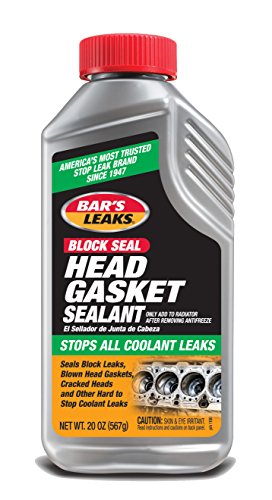
Best for: Vehicles with head gasket leaks requiring a one-step repair that also addresses related cooling-system issues. The formula mixes antifreeze-compatible sealing liquid with gasket particles.
Why selected: It claims to repair head gaskets, cylinder heads, intake gaskets, and more, using a single-step, no-drain formulation. Caution: Extreme leaks or overheating prior to use can reduce efficacy.
Buying Guide
What type of leak is being addressed?
Identify whether the issue is a gasket leak, a cracked head, or a minor radiator seepage. Sealing products differ in strength and material compatibility. For suspected blown gaskets, stronger formulations like head gasket repair sealants are typically more appropriate.
Engine type and size
Heavy-duty engines and large displacement vehicles may require high-strength, heavy-duty sealants. For small cars, standard formulations often suffice. Always verify compatibility with your engine materials (aluminum vs. cast iron).
Coolant compatibility
Check that the sealer is compatible with your antifreeze type. Many products specify compatibility with glycol-based antifreeze and specify whether draining is required.
Application method
Most options are pour-and-go, designed to be added to a running engine. Follow exact idle-time recommendations to allow the material to circulate and seal leaks.
Limitations and expectations
These products are often best for temporary fixes or as a diagnostic aid. Severe engine damage or large cracks may require mechanical repair and component replacement. Do not rely on sealants as a substitute for professional evaluation in critical cooling-system issues.
Choosing between brands
Trusted brands with long histories in automotive cooling systems (such as Bar’s Leaks and K-Seal) provide consistent formulations and clearer usage guidance. Consider the leak location, engine type, and whether you need a targeted intake/gasket solution or a broader head-gasket repair.
Usage checklist
- Confirm the leak type and engine condition.
- Choose the product compatible with your antifreeze and engine materials.
- Follow idle-time and temperature guidelines precisely.
- Check for improvements after the recommended circulation period and recheck for any overheating signs.
FAQ
- Can a gasket sealant fix a major blown head gasket? Yes, but results vary. Severe damage may require replacing the head gasket and related components.
- Do these products require draining the cooling system? Some formulations do not require draining; others may. Always follow the product instructions.
- Is it safe to use sealants on aluminum engines? Most sealants are designed to be compatible with aluminum and cast iron; confirm the product’s material compatibility.
- How long does it take to see results? Typically several minutes to circulate, followed by a test drive or idle period per instructions.
- Will sealants void warranties? Use with caution if a vehicle is under warranty; consult the dealer or manufacturer guidelines.