Answering the right question for buyers seeking in-bed diesel tanks: these are auxiliary fuel tanks designed to fit in a pickup bed, expanding range and reducing refueling stops. They’re best for long haulers, work crews, and off-road enthusiasts who need reliable diesel on the job or during remote trips. The following picks are among the most practical options based on capacity, durability, and ease of use. Use the quick-reference table to compare key specs at a glance.
| Product | Capacity | Best For | |
|---|---|---|---|
| RDS MFG INC Fuel Tank – 60-Gallon | 60 gallons | Light to mid-duty tasks; short-bed compatibility | Top-siphon fueling possible with electric pump |
| 51 Gallon Aluminum Fuel Transfer Tank Toolbox Combo (Vigorighter) | 51 gallons | All-in-one fuel + toolbox solution | Includes 12 GPM pump, 13 ft hose, auto nozzle |
| RDS MFG INC – 72548 Fuel Transfer Tank/Auxiliary Tank/Toolbox Combo | 60 gallons | Durable toolbox combo for serious use | Includes integrated transfer design |
| Dee Zee DZ92556NSB Transfer Tank | Standard transfer tank size | Heavy-duty steel construction | Radius curve reduces weld stress Points |
| RDS MFG INC Rectangular Auxiliary/Transfer Tank – 69 Gallon | 69 gallons | Higher capacity option | Top-siphon fueling via electric pump |
RDS MFG INC Fuel Tank – 60-Gallon

Best for: buyers with a short-bed truck seeking a straightforward 60-gallon auxiliary tank. Features include a range of capacities and dimensions to fit various needs, with gasoline auxiliary fueling allowed if siphoned from the top using an electric fuel pump. The main advantage is compatibility with shorter truck beds, reducing fitment issues when space is limited.
Caution: verify your short-bed measurements before ordering to ensure proper clearance and mounting.
51 Gallon Aluminum Fuel Transfer Tank Toolbox Combo (Vigorighter)
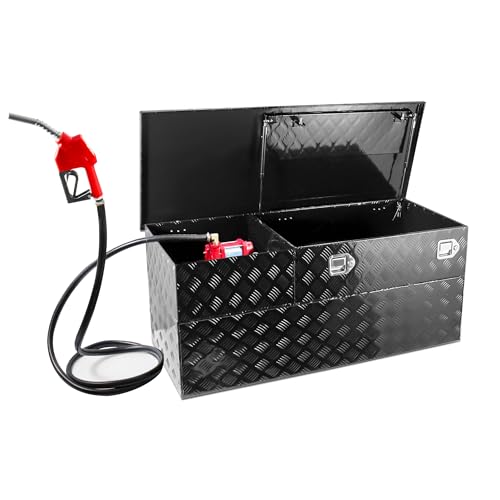
Best for: users who want an all-in-one solution that saves space by combining a 51-gallon tank with a toolbox. The rugged, corrosion-resistant aluminum body supports durable field work, and the built-in 12 GPM pump provides ready-to-use transfer with a 13-foot hose and auto-nozzle.
Why chosen: the integrated toolbox adds organization and reduces separate storage needs, making it ideal for tradespeople who carry tools and fuel in one unit.
Limitation: larger overall footprint may affect bed length in compact trucks.
RDS MFG INC – 72548 Fuel Transfer Tank/Toolbox Combo

Best for: professionals needing a 60-gallon transfer setup with an integrated toolbox for coordinated fuel and tool storage. It emphasizes a complete transfer system with favorable dimensions for mid to full-size trucks.
Why chosen: combines a robust transfer tank with toolbox functionality, simplifying on-site fueling logistics.
Caution: ensure your mounting space accommodates the unit’s dimensions.
Dee Zee DZ92556NSB Transfer Tank

Best for: buyers who need heavy-duty steel construction with durable finish and built-in stability features. The 14-gauge steel and radius curve design aim to minimize stress points, while 5 baffles and a drain plug enhance stability and maintenance.
Why chosen: steel builds typically offer longer-term durability in demanding work environments where vibration and shifting loads are common.
Limitation: heavier weight may require a stronger mounting setup and careful handling during installation.
RDS MFG INC Rectangular Auxiliary/Transfer Tank – 69 Gallon

Best for: users needing higher capacity without stepping up to a larger footprint. The 69-gallon rectangular design aims to maximize fuel capacity within a practical bed footprint and is compatible with top-fuel siphoning via an electric pump.
Why chosen: offers a compact yet high-capacity solution for extended trips or heavy-duty use cases.
Limitation: confirm top-fuel pump compatibility and mounting space for your specific truck model.
Buying Guide
What to consider when choosing an in-bed diesel fuel tank
- Truck bed compatibility: measure bed length and wheel well clearance to ensure the unit fits without obstruction.
- Capacity vs. space: higher gallons provide more range but require more bed space; balance with vehicle size and cargo needs.
- Material and durability: aluminum tanks are lighter and corrosion-resistant; steel tanks offer rugged durability for heavy-duty use.
- Fuel type compatibility: confirm that the unit supports diesel and that any siphon or pump mechanism is compatible with your fuel system.
- Fuel delivery accessories: pumps, hoses, nozzles, and check valves affect transfer speed and spill risk; consider plug-and-play kits for convenience.
- Install and mounting: check mounting brackets, frame compatibility, and whether a toolbox combo is needed for tools and fuel in one unit.
- Maintenance and safety: look for drain plugs, baffles, and spill-control features to minimize leakage and maintain balance during transport.
FAQ
- What is the best capacity for frequent long trips? A higher capacity (60–69 gallons) is ideal for minimizing refueling stops on long trips, depending on your truck’s fuel economy and load demands.
- Can these tanks be used with gasoline or diesel? Many models support gasoline or diesel; verify the product description and installation instructions for your intended fuel type.
- Do these tanks include pumps? Some models come with integrated pump kits; others require a separate pump purchase. Check product features for details.
- Are there safety concerns installing in-bed tanks? Follow mounting instructions, confirm weight distribution, and use proper hardware to secure the tank to the truck bed.
- How do I know if a tank fits my truck bed? Compare the product dimensions to your bed length, wheelbase, and the presence of bed rails or a toolbox mounting area.
- What maintenance is required? Regularly inspect seals, hoses, and drain plugs; ensure vents and tops are clean to prevent fuel contamination.