Shop-ready guide to top high power car speakers that deliver strong performance, minimal distortion, and crisp treble for American road trips, commutes, and weekend cruises. This article highlights five high-output options and how they compare on power handling, efficiency, and sound quality—plus practical buying tips to match your vehicle and listening preferences.
| Product | Brand | Max Power | Impedance | Approx. Voice Coil |
|---|---|---|---|---|
| ORION Cobalt CM654 | ORION Store | 1000W | 4 Ohm | 1.5″ |
| ORION XTR XTX654 | ORION Store | 1400W | 4 Ohm | 1.5″ |
| PIONEER F-Series TS-F1634R | PIONEER Store | 200W | 4 Ohm | — |
| PIONEER TS-F6935R | PIONEER Store | 230W | 4 Ohm | — |
| Pioneer TS-501M | PIONEER Store | 300W | 4 Ohm | — |
Orion Cobalt CM654 High Efficiency 6.5″ Midrange Pair

The ORION Cobalt CM654 is positioned as a high-efficiency midrange option for car audio enthusiasts seeking clean, dynamic projection across a broad frequency range. Designed for pro-level performance in a compact 6.5-inch format, these speakers emphasize balanced sound with powerful output. The unit features a 1.5-inch voice coil and a compact 2.75-inch mounting depth, making it compatible with a wide range of factory and aftermarket enclosures. With a stated max power of 1000W and 250W RMS, the CM654 is built to handle demanding head units or amplifiers without severe distortion, provided matching power is used. The efficiency rating around 96.67 dB helps deliver strong louder performance at moderate electrical loads, which is helpful for stock electrical systems in many vehicles.
Key considerations include: ensuring your amplifier can deliver clean power without clipping, confirming enclosure compatibility, and paying attention to high-temperature voice coil resilience for long listening sessions. This model is well-suited for listeners who want high output with controlled midrange clarity rather than deep bass emphasis. It pairs well with other components in a well-tuned system, particularly when used alongside tweeters and woofers that complement midrange performance.
Orion XTR XTX654 High Efficiency 6.5″ Mid-Range Bullet
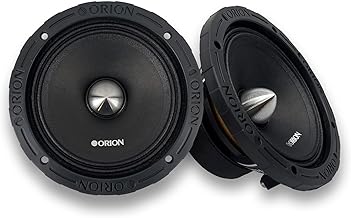
The ORION XTR XTX654 is designed for high-output performance with a focus on efficiency and reliability. The speaker provides a robust 1400W max and 350W RMS, enabling loud, dynamic output with relatively low distortion when paired with a suitable amplifier. A 1.5-inch high-temperature voice coil and a 40-ounce magnet structure contribute to durability under sustained use, while the efficiency rating around 97 dB supports louder output at manageable electrical demands. If you’re chasing a bold midrange presence that cuts through road noise, the XTX654 offers solid midrange projection without sacrificing treble clarity or bass integration when used within a complete system.
As with other high-power midranges, consider enclosure types, mounting depth, and crossover design to ensure the midrange aligns with your overall sound signature. This model is a good choice for users prioritizing midrange punch and vocal clarity in rock, pop, and modern genres where intelligibility matters at higher volumes.
Pioneer F-Series TS-F1634R 6.5” 2-Way Speakers

The Pioneer F-Series TS-F1634R offers a practical balance between power handling and efficiency. With a 200W max and 4-ohm impedance, these 6.5-inch 2-way coaxial speakers are designed for OEM-integrated setups and aftermarket upgrades alike. The coaxial design combines woofer and tweeter components to deliver a wide frequency response, reducing the need for separate crossovers and simplifying installation. Sensitivity sits around 88 dB, meaning you can achieve louder output with moderate amplification while keeping distortion low. This makes them a versatile option for listeners who want noticeable upgrades over stock speakers without pushing the electrical system too hard.
Ideal use cases include factory replacements where a balanced, non-fatiguing sound profile is preferred for daily listening, as well as users seeking a straightforward, reliable upgrade for improved clarity across mid and high frequencies. Pairing these with a suitable amplifier and a dedicated subwoofer can deliver a well-rounded system for casual and enthusiast listening alike.
Pioneer TS-F6935R 3-Way Coaxial Car Speakers

The Pioneer TS-F6935R 3-Way Coaxial Speakers bring a three-driver arrangement to the 6″ x 9″ footprint, providing a more nuanced distribution of frequencies across low, mid, and high ranges. With a 230W max and 4-ohm impedance, these speakers handle disciplined power while maintaining driver separation to minimize distortion at higher volumes. The 3-way design includes a dedicated woofer, midrange, and tweeter, which helps achieve a broader, more accurate frequency response. Sensitivity is around 87 dB, which is typical for higher-performance coaxials that aim to deliver higher volume with reasonable amplifier power. For listeners seeking a more concert-like feel in their daily drive, these speakers can offer improved vocal presence, smoother treble, and a more expansive soundstage when combined with proper crossovers and enclosure design.
Practical considerations include ensuring proper mounting compatibility and evaluating whether your head unit or amp can support the multi-driver arrangement. If you plan to push the system louder, a quality amplifier and tuned crossover network become essential to preserve clarity and minimize phase issues across the sound spectrum.
Pioneer TS-501M 4-Way Coaxial Car Audio Speakers

The Pioneer TS-501M 4-Way Coaxial Speakers combine small-footprint versatility with a surprisingly broad frequency range. The 5-1/4-inch round design fits many compact doors or dash locations while delivering up to 300W peak power. The 4-way architecture uses separate drivers to cover low, mid, and high frequencies more accurately than typical 2-way systems. The setup is intended for drivers seeking clean, non-fatiguing sound with good vocal presence and crisp highs. Sensitivity is designed to support higher output at moderate power, which can be beneficial for stock electrical systems or modest aftermarket amplifiers. These speakers are a practical upgrade for listeners who want a noticeable improvement over factory speakers without extensive modifications.
When evaluating these, consider enclosure and door panel space, wiring harness compatibility, and the overall plan for amplification. A properly matched amp and high-quality crossovers can help maximize the 4-way design’s potential while preserving a balanced, distortion-free listening experience across genres.
Buying Guide: High Power Car Speakers
- Power handling vs. amplifier capability: Choose speakers with max or RMS power that your amplifier can comfortably support to avoid distortion and overheating. A well-matched system delivers clean, loud output without clipping.
- Impedance and compatibility: Most aftermarket car speakers use 4-ohm impedance. Ensure your head unit or amplifier supports 4-ohm loads and that wiring harnesses fit your vehicle.
- Speaker type and design: 2-way coaxial designs are common and easy to install; 3-way or 4-way systems offer greater frequency separation and clearer highs but may require more complex crossovers and mounting.
- Enclosure and mounting: Midrange and coaxial speakers perform best with properly designed enclosures or door panels. Check mounting depth and magnet size to prevent fitment issues in OEM locations.
- Efficiency and sensitivity: Higher sensitivity (dB) means louder sound with less power, which is helpful for stock electrical systems. However, efficiency alone doesn’t guarantee musical accuracy; consider overall tonal balance.
- Sound signature and genres: If you prioritize vocals and clarity for rock, pop, or podcasts, midrange and tweeter quality matters. For bass-heavy genres, plan a subwoofer and appropriate bass drivers to complement the midrange speakers.
- Durability and weather resistance: In vehicles exposed to heat, choose voice coils and magnets rated for high temperatures and long-term reliability. This reduces degradation in performance over time.
- Installation complexity: Some speakers are plug-and-play with factory integration, while others require custom enclosures, crossovers, or modification. Weigh cost, time, and driving interest when choosing.
- System integration: A balanced system often includes a dedicated subwoofer, a capable amplifier, and a crossover network to ensure clean transitions across the frequency spectrum.
Overall, the best high power car speakers deliver a combination of endurance, efficient amplification, and clear tonal balance across a broad frequency range. When evaluating options, consider your vehicle’s electrical system, goal for loudness, and how the speakers integrate with other components in your audio chain. The five models highlighted above each emphasize different strengths—from midrange clarity and high efficiency to multi-way clarity—so you can align your choice with your listening preferences and install capabilities.