To fix a flat bike tire, choose a repair product that matches your setup: Slime Bike Tube Sealant is best for preventive tube protection, while GÜP Kwiki is designed for quick on-the-go sealing and inflation. Joe’s No Flats suits riders looking for sealant for tubeless tires, tubulars, or tubes. The options below cover both advance puncture protection and emergency repairs; check your tire type and the product’s stated puncture limits before buying.
| Product | Best For | Type |
|---|---|---|
| Slime Bike Tube Sealant | Preventive protection for bicycle tubes | Tube sealant |
| GÜP Kwiki Quick Fix, 2-Pack | Portable repair and inflation | Sealant and inflator |
| GÜP Kwiki Quick Fix | Race-day and trailside backup | Sealant and inflator |
| Joe’s No Flats Super Sealant | Mountain and gravel tires | Ready-to-use sealant |
| Slime 2-in-1 Tire and Tube Sealant | Preventing or sealing smaller punctures | Tire and tube sealant |
Slime Bike Tube Sealant

Slime Bike Tube Sealant is best for cyclists who use inner tubes and want puncture protection installed before a flat happens. Its Fibro-Seal Technology is designed to seal tube punctures up to 1/8 inch, or 3 mm. The product information says to use it with an air source and describes up to two years of continuous protection after installation.
Choose this if you want a tube-specific product for prevention as well as puncture repair. It is not described as an instant-inflation aerosol, so riders needing a compact emergency inflator may prefer a different option. Its stated sealing limit is 1/8 inch.
GÜP Kwiki Quick Fix Two-Pack
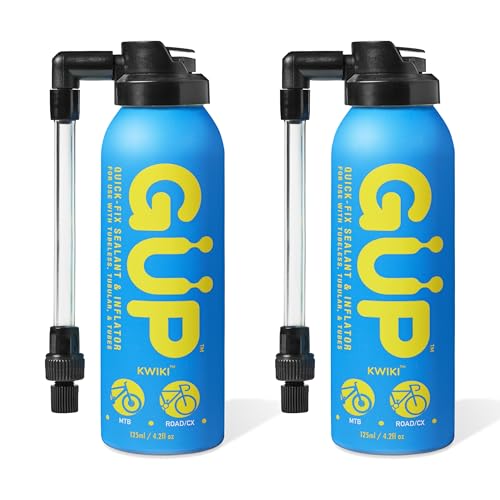
This GÜP two-pack is best for riders who want a portable emergency option that seals and inflates at the same time. The product is listed for mountain, road, cyclocross, and gravel bikes, and its hose-top adapter fits both Schrader and Presta valves. It is also described for tubed and tubeless tires, and the canister weighs 122 g.
Choose it if avoiding wheel removal during a roadside repair is important: the push-button actuator is designed for on-the-go use. The listed features do not specify a maximum puncture size or how much inflation to expect, so it should not replace checking the tire and restoring its pressure as needed.
GÜP Kwiki Quick Fix

This single-canister version is best for riders who want a trailside or race-day backup for tubeless, tubed, or tubular tires. GÜP says it seals most punctures and inflates without requiring wheel removal or extra tools. Its listed limits are up to 6 mm for tubeless tires and 3 mm for tubed tires. The formula is described as latex-based and ammonia-free, with continued sealing for 60 to 90 days after use.
Choose this if you value a lightweight, 122 g canister and a quick repair process. Avoid relying on it for punctures larger than the stated limits; the product information does not promise a repair for every kind of tire damage.
Joe’s No Flats Super Sealant
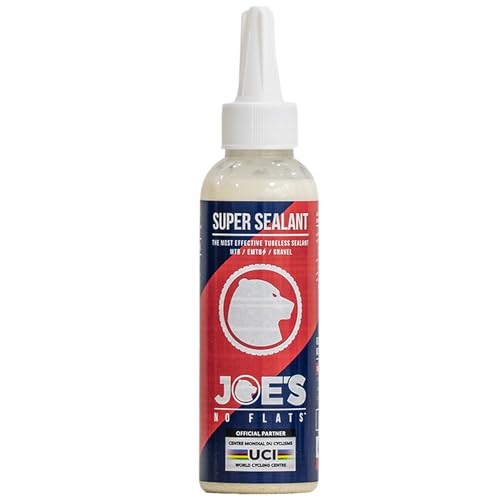
Joe’s No Flats Super Sealant is best for mountain and gravel riders with high-volume, low-pressure tires. It is listed for use in tubeless tires, tubulars, and tubes, and is designed to seal holes up to 6 mm. The product information gives a recommended pressure range of 20–70 PSI, a shelf life of three years, and an in-use life of six to eight months.
Choose this if you want a ready-to-use sealant with a stated range of tire types and puncture sizes. Its suitability is specifically framed around mountain and gravel tires, so riders should compare their setup and pressure with the listed range before choosing it.
Slime 2-in-1 Tire and Tube Sealant
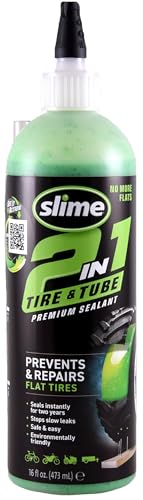
Slime 2-in-1 is best for buyers who want one sealant listed for both tubes and non-highway tires. It is designed to seal tread-area punctures up to 1/4 inch in tires and up to 1/8 inch in tubes, and the product information says it can help stop slow leaks. Used in advance, it is described as providing two years of puncture protection.
Choose this if your tire type falls within its stated non-highway use and puncture limits. The key limitation is that it is not presented as a highway-tire product, and the tube puncture limit is smaller than the tire limit.
Buying Guide: How To Choose Bike Flat Repair
Do you have a tube or a tubeless tire?
Identify your tire setup before buying. Slime Bike Tube Sealant is specifically for bicycle tubes. GÜP Kwiki and Joe’s No Flats list use across multiple setups, including tubeless and tubed tires. Confirm the product’s instructions for your exact tire configuration.
Do you want prevention or an emergency repair?
Preventive sealant goes into a tire or tube ahead of a puncture. Emergency sealant-and-inflator products are intended to help during a ride; GÜP Kwiki is described as sealing and inflating without removing the wheel. If you prefer a manual repair, carry the tools and replacement tube appropriate for your bike.
Which puncture limit matters?
Compare the stated maximum puncture size with your needs, but remember these figures are product claims, not a guarantee that every hole can be sealed. Slime Tube Sealant lists up to 1/8 inch for tubes; GÜP Kwiki lists up to 3 mm for tubes and 6 mm for tubeless tires. Larger cuts or sidewall damage may fall outside a product’s stated limits.
What else should you check?
Check valve type, tire type, pressure range, and how long the sealant remains effective. GÜP’s two-pack lists a hose adapter for Schrader and Presta valves. Joe’s lists a 20–70 PSI range and six to eight months of in-use life. Follow the product label for installation, inflation, and cleanup directions.
Frequently Asked Questions
Can tire sealant fix every bike flat?
No. The products list limits for puncture size and tire type. A large cut, damaged sidewall, or puncture outside those limits may need a tube or tire replacement.
Can I use the same sealant in tubes and tubeless tires?
Some products in this guide list both uses, including GÜP Kwiki and Joe’s No Flats. Slime Bike Tube Sealant is specifically intended for tubes. Check the product details before installation.
Does emergency sealant inflate the tire too?
GÜP Kwiki is described as sealing and inflating at the same time. The listed details do not provide a specific final pressure, so check tire pressure after the repair when possible.
How long does bike tire sealant last?
It varies by product. The listings describe up to two years of protection for the Slime sealants, 60 to 90 days of continued sealing for GÜP Kwiki, and six to eight months in use for Joe’s No Flats. Follow the label for maintenance.