The best way to fill or reduce a car scratch depends on how deep it is: compounds are suited to light surface marks, while putty is intended for deeper gouges that need filling before repainting. Meguiar’s Ultimate Compound is a strong fit for clear-coat defects, Carfidant includes a buffer pad for light scratches and swirls, and TouchUpDirect putty targets deeper damage. The options below cover several repair approaches, with important limits to consider before you start.
| Product | Best For | Repair Approach |
|---|---|---|
| Meguiar’s Ultimate Compound | Light scratches and oxidation | Hand or DA polishing |
| Carfidant Scratch Repair Kit | Light marks with included applicator | Compound and buffer pad |
| TouchUpDirect Scratch & Chip Putty | Deep scratches and gouges | Fill, then sand, prime, and paint |
| Fix It Pro Clear Coat Pen | Fine clear-coat scratches | Precision clear-coat application |
| NASILOOP Car Scratch Remover | Wiping by hand without a machine | Surface polishing |
Meguiar’s Ultimate Compound

Best for: Drivers addressing light scratches, swirls, oxidation, or water spots on glossy paint. This compound is designed to remove surface imperfections and restore color clarity. The product information says it is clear-coat safe and can be applied by hand or with a dual-action polisher.
Choose it if you want one polishing compound for several common paint defects. It is a better fit for marks in the finish than for a deep gouge that has removed paint; polishing does not replace missing paint or body filler. Follow the product directions and use an inconspicuous test area first.
Limitation: The listed use is polishing defects, not filling deep damage. A scratch through the paint may need touch-up paint or a more involved repair.
Carfidant Scratch Repair Kit

Best for: DIY users who want a compound and a buffer pad in one kit for light scratches and swirl marks. Carfidant also lists water spots, oxidation, and other paint contaminants as intended uses, with gloss restoration as a goal.
This is a practical choice when the repair involves surface-level wear and you do not already have an applicator. The kit is described as easy to use for consumers. It is better suited to polishing the existing finish than filling a deep scratch with material.
Limitation: The listed benefits focus on light scratches and surface marks. Do not expect a polishing compound to replace paint where the scratch has cut through the finish.
TouchUpDirect Scratch & Chip Putty
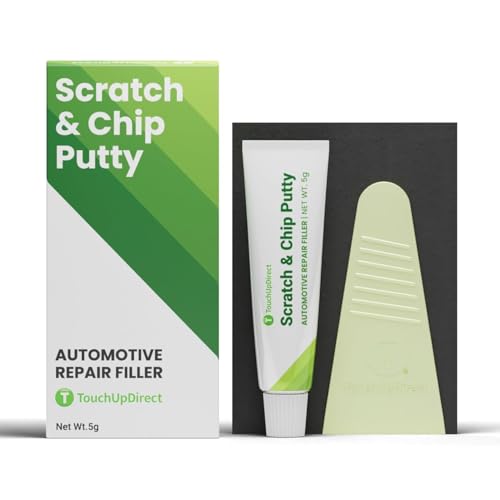
Best for: Small, deeper scratches, pits, and gouges where paint alone may not fill the damaged area. The ready-mixed putty is applied directly, and the kit includes a spreader and sandpaper. The product information describes it for small repairs on metal, fiberglass, and aluminum.
Choose this if the damage needs a filler step before sanding, priming, and painting. The listed instructions place putty within a repair process, rather than presenting it as a finished color-matched surface. The 5-gram tube is intended for small repairs.
Limitation: Putty is not a one-step cosmetic touch-up; the described process continues with sanding, primer, and paint. It may not suit large damaged areas.
Fix It Pro Clear Coat Pen

Best for: Fine scratches limited to the clear-coat layer, especially narrow marks where a precision tip may be easier to control than a broad applicator. The pen is described as a clear-coat filler and sealer that works across car colors because it does not supply color-matched paint.
Choose it if you want a targeted application without compound, buffing, or masking tape, as stated in the product features. Avoid using it as a substitute for colored touch-up paint when the scratch has gone through the clear coat and into the paint layer.
Limitation: It is intended for minor surface blemishes and clear-coat scratches, not deep gouges or exposed body material.
NASILOOP Car Scratch Remover

Best for: Buyers who prefer a hand-applied product and do not want to use a polishing machine. NASILOOP describes its formula for swirl marks, light scratches, oxidation, and water spots, applied by wiping in circular motions.
The product claims use on gloss, matte, and metallic finishes and lists cars, trucks, motorcycles, and boats. Check the label and test an inconspicuous spot before applying it, especially on a specialty finish. Its no-machine application makes it a convenient option for quick home detailing.
Limitation: The listed scope is light surface defects. It is not presented as a filler for deep scratches or missing paint.
Buying Guide: How To Choose A Car Scratch Repair Product
Is the scratch in the clear coat or through the paint?
Start by identifying the damage. Light swirls and shallow marks may respond to a polishing compound. A scratch that exposes a different layer, primer, or bare material needs a repair approach that adds material, such as touch-up paint or filler, rather than polishing alone. If you are unsure how deep it is, avoid aggressive sanding or repeated polishing.
Should you use compound, a pen, or putty?
- Compound: Consider it for light surface marks, swirls, oxidation, or water spots. It works by polishing the finish; it does not replace missing paint.
- Clear-coat pen: Consider it for fine marks limited to the clear layer. It is not a color-matching solution for exposed paint.
- Touch-up paint: Look for a product matched to the vehicle’s paint when color has been removed. A generic clear product cannot supply missing color.
- Putty: Consider it for deeper gouges that need filling. Expect additional sanding and painting steps.
What should you check before applying a product?
Read the product directions, confirm the intended paint finish, and work on a clean surface. Test a small, inconspicuous area first. Use the least intensive method that suits the damage, and stop if the finish changes unexpectedly. For extensive damage or repairs involving exposed metal, a professional body shop can assess the appropriate preparation and refinishing steps.
Frequently Asked Questions
Can a scratch remover fill a deep car scratch?
Most polishing compounds are intended to reduce surface defects, not fill deep damage. A gouge may need filler, sanding, primer, and paint.
Will polishing compound fix paint that has chipped off?
No. Compound polishes the existing finish; it does not replace missing paint. Use a suitable touch-up repair process for exposed paint or material.
Is a clear-coat pen suitable for every scratch?
No. A clear-coat pen is intended for fine scratches in the clear layer. Scratches that reach the color coat or deeper may need color-matched paint or other repair steps.
Should I use a machine to apply scratch remover?
Not necessarily. Meguiar’s lists hand or dual-action polisher use, while NASILOOP describes hand application. Follow the selected product’s instructions.
When should I choose putty instead of compound?
Choose putty for a deeper gouge or pit that needs material added. Choose compound for lighter surface marks that can be polished.