Choosing the right disc brakes for mountain biking involves balancing stopping power, heat management, and compatibility with your bike. This guide highlights five solid options across hydraulic and mechanical designs, emphasizing performance, durability, and ease of installation. Each section links to the product page and shows key features to help you compare at a glance.
| Product | Brand | Brake Type | Rotors | Notes |
|---|---|---|---|---|
| TOBWOLF 1 Pair MTB Disc Brake Set | TOBWOLF Store | Hydraulic | 160mm | Left Front / Right Rear configuration |
| TOBWOLF Upgrade Four-Piston MTB Disc Brake Set | TOBWOLF Store | Hydraulic | 160mm | Four-piston, improved heat dissipation |
| TOBWOLF 1 Pair MTB Front & Rear Cable Disc Brake | TOBWOLF Store | Mechanical | 160mm | Cable-actuated, 2 rotors |
| BUCKLOS Mountain Bike Disc Brake Kit | BUCKLOS Store | Mechanical | 160mm | Universal compatibility |
| Bike Disc Brake Kit (Complete) | Generic | Mechanical | 160mm | Includes pair of rotors and levers |
TOBWOLF 1 Pair MTB Disc Brake Set

This hydraulic kit includes 160mm rotors and employs a Left Front / Right Rear control scheme, a common configuration for dual-lever setups. It uses aluminum alloy calipers and upgraded ceramic pads designed to resist wear and heat. The pads are engineered to minimize rotor scuffing, with a focus on stable performance in varied weather. Installation notes emphasize proper caliper alignment, rotor seating, and hydraulic bleeding to ensure smooth actuation and reliable stopping power.
TOBWOLF Upgrade Four-Piston MTB Disc Brake Set

This model features a four-piston, dual-sided braking system with CNC-machined aluminum calipers. The quad-piston design enhances stopping power while synchronized bilateral pistons reduce rotor warp. Heat dissipation channels help sustain fade-free performance on long descents. It is paired with ceramic pads for heat resistance and smooth engagement, and it notes that the left-front/right-rear operation can vary by rider or region with cable switching as needed.
TOBWOLF 1 Pair MTB Front & Rear Cable Disc Brake

This kit provides mechanical disc brakes with 160mm rotors, post-mount calipers, and a comprehensive hardware pack. Cable-actuated systems are typically easier to service in remote riding locations and compatible with a wide range of frame standards. The package includes multiple bolts and spacers, with attention to mounting compatibility and rotor fit for dependable service.
BUCKLOS Mountain Bike Disc Brake Kit

This mechanical kit includes dual aluminum calipers, rotors, and brake levers along with pad replacements. It emphasizes quiet braking with semi-metallic pads and a single-piston design, offering broad compatibility with MTB, E-bike, gravel, folding bikes, scooters, and fat bikes. The included universal adapter and 160mm rotors support various frame standards, making it a versatile option for many builds.
Bike Disc Brake Kit (Complete)
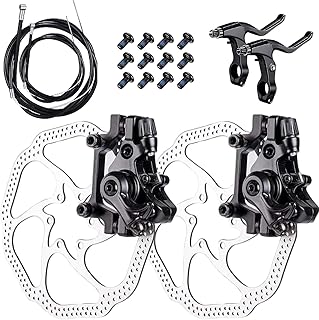
This complete mechanical kit includes two 160mm rotors, front and rear calipers, cables, levers, screws, and rotor screws. The package highlights compatibility with various bikes, including MTB and road-adjacent builds. It emphasizes a durable build with XTR-level pad material and robust mounting hardware, designed to deliver steady braking performance across a range of riding conditions.
Buying Guide
Key considerations when selecting disc brakes for mountain bikes include brake type, rotor size, mounting compatibility, and riding conditions. Hydraulic brakes generally offer stronger, more consistent stopping power and better modulation, especially on long descents, but may require more maintenance and a higher upfront cost. Mechanical brakes are simpler to service in the field and can run reliably with fewer adjustments.
Rotor size impacts braking leverage; 160mm rotors are common for many trail bikes and provide balanced performance versus weight. If your frame or fork is limited to a specific mounting standard, confirm compatibility with post-mount or flat-mount configurations. Caliper design, piston count, and pad material (ceramic versus metallic) influence heat management and fade resistance under heavy use.
Consider the lever ratio and handle ergonomics, especially if you ride for extended periods or prefer different front/rear control setups. Some kits offer left-front/right-rear configurations or allow cable-side switches to fit regional preferences. Availability of spare pads, compatibility with mineral oil versus dot-compatible systems, and included hardware should factor into the buying decision.
Warranty and support are also important, given the potential for wear and alignment adjustments. Look for sealed-for-life seals, corrosion resistance, and accessible manuals or video guides to help with installation and routine maintenance. Finally, assess total system weight and rider skill level to ensure the selected kit meets your riding style and maintenance readiness.