If you’re upgrading your cooling system, a reliable coolant overflow tank helps maintain proper coolant levels, reduces leaks, and supports engine cooling performance. This guide highlights five popular options and explains who each is best for, with practical reasons to choose or avoid each one. Ideal for DIYers, professional auto shops, and anyone replacing an aging reservoir, these picks balance capacity, material, and installation considerations.
| Product | Capacity | Material | Best For | Notes |
|---|---|---|---|---|
| EVIL ENERGY 800ml Aluminum Universal | 800 ml | Aluminum alloy | Compact spaces; most cars | Universal fit; check space before purchase |
| EVIL ENERGY 1L Aluminum Universal | 1 L | Aluminum | Higher capacity; universal fit | O-ring gasket; requires space |
| Dorman 603-001 Universal | Standard reservoir with cap | Plastic | OE-style replacement | Three mounting holes |
| YEYETUO 800ml Aluminum | 800 ml | Aluminum | Efficient heat dissipation | Leak-proof O-ring seal |
| Dorman 54002 Engine Coolant Recovery Kit | Recovery kit | Plastic | Complete recovery setup | Includes cap, hoses, mounts |
EVIL ENERGY Aluminum 800ml Overflow Tank

The EVIL ENERGY 800ml overflow tank uses an aluminum alloy body with a rubber hose, designed for universal fit in most cars. It offers a compact footprint with a length of 7.48 inches and a bottom diameter of 2.95 inches. This option is best for tight engine bays or smaller vehicles where space is at a premium. Advantage: lightweight and corrosion-resistant aluminum helps with heat management. Limitation: verify hood clearance and hose routing to avoid interference with other components.
Best for: DIYers with limited space who want a durable, corrosion-resistant reservoir. Best for vehicles that can accommodate a smaller-capacity overflow bottle without compromising coolant balance.
EVIL ENERGY 1L Aluminum Universal Overflow Tank

This model increases capacity to 1 liter and uses a secure cap with an O-ring gasket for a tight seal. The kit notes a male-to-barb fitting of M14×1.5 and compatibility with 3/8″ ID hose, making it versatile for many vehicles. It is best for drivers who want more coolant storage and a robust seal to minimize leakage. Caution: confirm the space around the radiator area is enough for the larger cap and fittings.
Best for: Vehicles that can accommodate an extra liter of coolant and require a more secure, sealed reservoir. Better for users who value airtightness and a solid TIG-welded design.
Dorman Universal Fluid Reservoir with Cap

Dorman’s universal reservoir focuses on a thick-walled plastic design intended for durability under heat and vibration. It features three mounting holes for installation flexibility and includes a vented cap. This option is well-suited for multi-vehicle use or as an OE-style replacement when the exact original fit isn’t critical. Caution: check that the three mounting points align with your vehicle’s mounting pattern to avoid fit issues.
Best for: DIYers seeking an OE-style, adaptable replacement with straightforward mounting. Choose this if you need a simple, reliable reservoir that is widely compatible.
YEYETUO Aluminum 800ml Overflow Tank
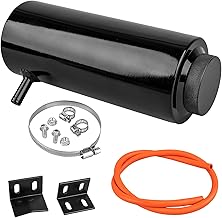
This 800ml aluminum overflow tank focuses on heat dissipation and a leak-proof design with an O-ring seal. Its compact dimensions mirror the EVIL ENERGY 800ml option, making it suitable for compact engine bays. Best for drivers who want a dependable seal and a tank that won’t corrode over time. Limitation: ensure the tube size and cap fitment align with your existing hoses and fittings.
Best for: Car owners prioritizing efficient heat management and a leak-proof seal in tighter engine compartments.
Dorman 54002 Engine Coolant Recovery Kit

The Dorman 54002 kit is a complete recovery setup designed for a broad range of applications, including cars, trucks, boats, and motor homes. It emphasizes a broader system approach with an accumulator bottle, cap, hang basket with mount holes, overflow tube, tubes clamps, washers, and mounting clips. This is best for users who want a full package for coolant recovery, not just a standalone reservoir. Caution: kit requires more space and a more involved installation than single-tank options.
Best for: Users who prefer an all-in-one recovery solution that can support multiple vehicle types and installation scenarios.
Buying Guide: Choosing the Right Coolant Overflow Tank
What capacity do you really need?
Overflow tanks come in compact 800 ml and larger 1 L sizes. Choose 800 ml for tight engine bays or when space is limited. Opt for 1 L if you want extra coolant capacity and longer intervals between top-offs.
What material matters?
Aluminum tanks resist corrosion and can support heat management, making them ideal for performance-focused builds. Plastic reservoirs are common, lighter, and often cheaper, but may be less durable under extreme heat.
How important is a sealed cap?
A tight seal with an O-ring gasket reduces leakage and maintains proper pressure in the cooling system. Confirm the cap matches your hose and fitting dimensions to prevent seepage.
Is compatibility more important than capacity?
Yes. A universal tank can fit many vehicles but confirm mounting points, hose ID, and cap size. In some cases, a vehicle-specific reservoir offers an easier fit with correct mounting holes and hose placements.
What about a complete kit vs. a single tank?
A complete recovery kit provides hoses, clamps, and mounting hardware, which can simplify installation on multiple platforms. If you only need a reservoir replacement, a single tank with its cap may be sufficient.
Frequently Asked Questions
-
What is the main purpose of a coolant overflow tank?
It collects excess coolant released during engine heat expansion, maintains proper coolant levels, and helps seal the cooling system to prevent leaks.
-
Can I use any overflow tank with my car?
Not always. Check space in the engine bay, hose ID, cap size, and mounting points. Universal tanks require careful measurement to ensure a proper fit.
-
Should I choose aluminum or plastic?
Aluminum resists corrosion and often handles heat better, but plastic options can be cheaper and lighter. Your climate, budget, and space influence the choice.
-
Do I need a complete recovery kit?
If you’re upgrading or maintaining multiple vehicles, a recovery kit provides compatibility with various applications and includes essential hardware for installation.
-
How do I avoid leaks after installation?
Ensure proper gasket seating on the cap, verify hose connections are secure, and consider thread sealant or tape where recommended by the manufacturer for airtight seals.
-
What installation considerations matter most?
Space availability, mounting hole alignment, hose diameter compatibility, and ensuring that the tank does not interfere with belts, fans, or moving components.