Looking to reduce road noise and keep your car cooler in hot weather? This guide highlights top insulation mats designed to block radiant heat and dampen vibrations. Each product is explained with key features, so you can compare performance, installation ease, and coverage. Whether you’re a DIY enthusiast or just want a quieter cabin, these options help improve comfort without compromising mileage.
| Product | Approx. Coverage | Key Benefit | Material Type |
|---|---|---|---|
| Siless Liner 157 (4 mm) 36 sqft | 36 sqft | Excellent thermal barrier, lightweight | Closed-cell PE foam with adhesive |
| KILMAT 80 mil 36 sqft | 36 sqft | High-density butyl with foil, strong dampening | Butyl & foil |
| VOISNE Sound Deading Material | 31 sqft | Flexible, easy to cut, 98% heat block | Aluminum foil + foam |
| Siless Liner 157 mil with AluFoil Finish | 36 sqft | AluFoil finish for enhanced heat blocking | AluFoil-covered PE foam |
| Allwin Car Heat Sound Deadening Mat | 10.8 sqft | High thickness for strong damping | Foam with aluminum foil |
The table above summarizes five popular car insulation options. All products are designed to reduce heat transfer and noise, but they vary in thickness, weight, and ease of installation. Consider your vehicle size, mounting surface, and budget when choosing the right solution for a quieter, cooler cabin.
Siless Liner 157 (4 mm) 36 Sqft – Closed Cell Foam

- Closed cell polyethylene foam with adhesive layer for easy installation and strong insulation.
- Blocks radiant heat transfer by up to 98%, helping keep the interior cooler in summer and warmer in winter.
- Lightweight, waterproof, odor-free, and flexible for straightforward fitting with or without rolling.
- Cost-efficient alternative to similar-claims materials, offering high value per square foot.
KILMAT 80 Mil 36 Sqft – Self-Adhesive Butyl Mat

- 80 mil self-adhesive butyl and foil construction designed for DIY installation.
- Increased thickness provides greater damping and noise reduction performance.
- Weight about 0.5 pounds per square foot, balancing effectiveness with manageability.
- Proven to reduce interior noise and improve climate control efficiency in vehicles.
VOISNE Sound Deading Material – 197 Mil, 31 Sqft

- Includes 28 pieces, with each mat measuring 15.7 x 9.8 inches and a 197 mil thickness.
- Heat insulation blocks 98% of radiant heat; helps engines and summers feel cooler.
- Waterproof aluminum surface makes cutting and installation easier; suitable for DIY setups.
- Flexible material that can be cut and combined to fit specific areas of a vehicle.
Siless Liner 157 Mil with AluFoil Finish
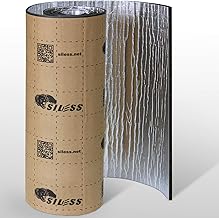
- AluFoil finish provides an extra barrier against heat and radiant energy.
- Same closed-cell PE foam core with adhesive for durable, moisture-resistant performance.
- Excellent thermal barrier properties to block engine heat, exhaust heat, and summer heat.
- Lightweight and flexible for simple installation on curved surfaces and panels.
Allwin Car Heat Sound Deadening Mat – 394 Mil

- Nominal thickness 394 mils with 10.8 sq ft coverage for strong damping in high-noise areas.
- Aluminum foil finish combines heat reflection with moisture resistance.
- Wide operating range from -40°F to 300°F, suitable for engine bays and under-hood installs.
- Self-adhesive, waterproof, and lightweight; designed for straightforward DIY installation.
Buying Guide: Key Purchase Considerations
- Coverage and thickness: Thicker mats generally provide stronger damping but may be harder to fit in tight spaces. Calculate the surface area to cover and prioritize material with higher mass and denser construction if you want maximum sound reduction.
- Thermal performance: Look for products that advertise heat transfer reduction percentages (e.g., 98% radiant heat blocking) and consider the climate you drive in to select an appropriate barrier level.
- Material composition: Polyethylene foam, butyl, and aluminum foils each offer different strengths. Closed-cell foam is water-resistant and lightweight; butyl offers strong dampening; aluminum foil reflects heat and adds rigidity.
- Adhesive quality and installation: A reliable adhesive layer simplifies application and reduces the risk of gaps. Ensure the surface is clean and dry before application to maximize adhesion and longevity.
- Durability and moisture resistance: In vehicles, moisture can undermine insulation. Choose materials described as waterproof or water-resistant and odor-free to maintain cabin air quality.
- DIY feasibility: Many products are designed for straightforward, do-it-yourself installation. If you’re new to car insulation, prioritize user-friendly kits and consider watching installation guides or tutorials.
- Weight considerations: Heavier mats can deliver better damping but may impact overall vehicle weight. Balance performance with practicality, especially for smaller cars.
- Cost per square foot: Compare the price against coverage and performance to assess value. A slightly higher upfront cost may yield longer-term benefits in comfort and energy efficiency.
- Temperature compatibility: Ensure the product operates within your vehicle’s typical temperature range to avoid material degradation over time.