The best car body pulling clamps depend on the direction of the pull and how the tool attaches to the damaged panel. The weyleity 5-ton 2-way clamp and QWORK clamp offer straight and top pulling; NATGAI is designed for straight and right-angle pulls; HUDEX provides reusable pull plates for welding; and the weyleity swivel hook suits frame and sheet-metal pulling. Compare listed capacities, jaw styles, and attachment methods before choosing.
| Product | Best For | Key Difference |
|---|---|---|
| weyleity 5 Ton 2-Way | Two-direction pulling | Up to 5 tons straight, 3 tons top pull |
| QWORK 2-Way Clamp | Compact, confined-area work | Self-tightening jaws with two pull directions |
| NATGAI Right-Angle Clamp | Right-angle and straight pulls | 180-degree rotating pulling ring |
| HUDEX 7 Plate Kit | Weld-on pulling applications | Reusable pull plates and hook |
| weyleity Frame Puller Hook | Frame and sheet-metal pulling | Swivel head and stated 4,400-pound working load limit |
weyleity 5 Ton 2-Way Clamp

This clamp is best for buyers who need both straight and top pulling from one tool. Its listed capacity is up to 5 tons for straight pulls and 3 tons for top pulls. Self-tightening serrated jaws are intended to hold sheet metal securely, while the compact design is described as useful in confined repair areas.
The drop-forged construction is a practical selection point for users seeking a clamp built for pulling work. Choose this if you need two pull directions and want stated capacity for each. Its top-pull capacity is lower than its straight-pull capacity, so match the setup and force to the repair task.
QWORK Compact 2-Way Pull Clamp

QWORK is best for buyers looking for a compact, lightweight clamp with straight and top-pull operation. The listed capacity is up to 5 tons for straight pulling and 3 tons for top pulling. Its self-tightening serrated jaws are designed for a positive grip, and the product description notes that the jaw shapes can fit into confined spaces.
Choose this model if access around the damaged panel is an important consideration. Its die-forged construction is presented as a labor-saving feature. The listing does not specify a separate right-angle capacity, so avoid assuming it matches clamps that explicitly list right-angle performance.
NATGAI Right-Angle Pulling Clamp
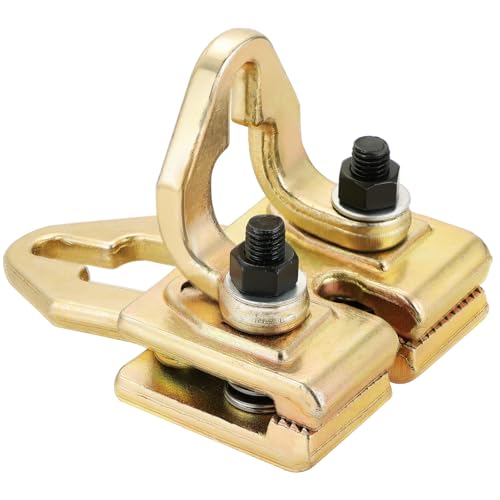
NATGAI is best for repairers who need a clearly specified right-angle pull as well as a straight pull. Its listed capacities are 5 tons straight and 2 tons at a right angle. A 180-degree rotating pulling ring helps position the connection, while self-tightening serrated jaws are designed to maintain grip as force is applied.
The drop-forged steel construction and heat-treated finish are listed features for users prioritizing a heavy-duty clamp. Choose this if the 2-ton right-angle rating fits your work. Do not treat its right-angle capacity as equal to its 5-ton straight-pull capacity.
HUDEX Universal Pull And Weld Plate Kit

This seven-plate kit is best for buyers who use weld-on pulling points for panels, frames, or chassis work. The listed set includes pull plates and a hook, and the plates can be reused until they become too small for welding. Powder-coated steel is specified for the components.
Choose HUDEX if you need a set of attachment plates rather than only a serrated-jaw clamp. Its welding-based use makes it a different option from clamps that grip sheet metal directly. The product information does not provide a pulling-capacity rating, so confirm that the kit suits the load and repair method before use.
weyleity Swivel Frame Puller Hook

This hook is best for buyers who need a frame-pulling attachment with flexible positioning. The listing states a 2,000-kilogram or 4,400-pound working load limit. Its flat nose is designed to grip sheet metal, and the 360-degree swivel head allows the puller to be positioned in different directions.
Choose this if a swivel hook better fits your pulling setup than a two-way clamp. It is described for dents, frame straightening, and collision repair. The stated working load limit is not the same as a directional pulling-capacity rating; check the complete equipment setup and intended load before using it.
Buying Guide: How To Choose A Car Body Pulling Clamp
Which pulling direction do you need?
Start with the direction required by the repair. Straight and top pulls are not interchangeable with right-angle pulls, and listed capacities may differ by direction. Compare each product’s specific rating rather than choosing by its largest number alone. A clamp with two-way operation offers flexibility, while a dedicated hook or weld-on plate kit uses a different attachment approach.
How should the clamp attach?
Serrated, self-tightening jaws grip sheet metal and are common on direct-pull clamps. A hook attaches differently, and a weld-on plate kit requires welding pull points. Consider access to the damaged area and the repair method you intend to use. Check that the jaw or attachment geometry is suitable for the material and location involved.
What capacity information matters?
Look for a stated capacity for the exact pull direction. For example, some two-way clamps list a higher straight-pull rating than top- or right-angle capacity. A hook’s working load limit should not be assumed to equal a clamp’s pull rating. Use the tool within its stated limits and follow the manufacturer’s instructions.
Clamp, hook, or plate kit?
- Choose a two-way clamp when you need serrated jaws and more than one pull direction.
- Choose a swivel hook when its nose and rotating head fit the pulling setup.
- Choose a plate kit when a weld-on attachment method is appropriate and reusable plates are useful.
Frequently Asked Questions
What does a self-tightening body clamp do?
Its serrated jaws are designed to grip more securely as pulling force is applied. Proper positioning and use within the product’s instructions remain important.
Are 5-ton straight and 3-ton top pulls equivalent?
No. They are separate directional ratings. The listed top-pull capacity is lower, so use the rating for the direction of the actual pull.
Is a pull hook the same as a serrated clamp?
No. A hook attaches by its nose or hook geometry, while a serrated clamp grips between jaws. Select the attachment type that suits the pulling setup.
Can pull plates be reused?
The HUDEX listing says its plates can be reused until they become too small for welding. Inspect the plates and follow safe welding and repair practices.
Should a car body clamp be used for every dent?
No. The appropriate tool depends on the damage, attachment point, pull direction, and repair method. Review the tool instructions and seek qualified collision-repair guidance when needed.