Choosing the right bumper exhaust heat shield can safeguard nearby paint, plastic trim, and components from radiant heat while maintaining engine bay cleanliness. This guide features five top options, highlighting each product’s material, temperature rating, and installation approach. Explore how these shields perform under daily driving, hot exhaust conditions, and vehicle-specific needs to pick a solution that fits your ride and climate.
| Product | Material/Build | Key Benefit | Approximate Fit |
|---|---|---|---|
| Aluminized Heat Shield Thermal Barrier | Aluminized fiberglass with adhesive backing | Easy trim, high radiant heat resistance | Universal 12″ x 24″ |
| BSTFLEX Heat Shield Mat | Adhesive-backed barrier material | Strong radiant heat reflection, durable | 24″ x 24″ |
| Titanium Pipe Shield | Double-layer titanium and silica fabric | Advanced heat protection up to 1350°F | 6″ x 12″ |
| DEGEOBERLIN Titanium Heat Barrier | Two-layer basalt/titanium with adhesive | High continuous/intermittent temps; broad use | 12″ x 47″ |
| Supra MK4 JZA80 Carbon Fiber Shield | Carbon fiber | Vehicle-specific fit and lightweight | 93-98 Supra MK4 compatibility |
Aluminized Heat Shield Thermal Barrier

The 12″ x 24″ aluminized fiberglass heat shield is a versatile barrier designed for widespread use around engine bays, including bumper areas. Its 0.032″ thickness allows flexible shaping, while the adhesive backing supports simple installation on clean surfaces. The reflective top layer helps screen radiant heat up to 1000°F, offering protection for painted surfaces and plastics from heat damage. This shield is best for custom fitting in varied vehicle layouts and daily-use applications.
BSTFLEX Reinforced Heat Shield Mat

This 24″ x 24″ shield uses durable reflective material capable of continuous operation up to 1200°F and intermittent 2000°F. It can reduce radiant heat by up to 80% and features an adhesive backing designed for straightforward application on clean surfaces. It’s particularly suited for airboxes, hoods, and other large areas where heat transfer protection is beneficial. Not recommended for rough or unfinished fiberglass or carbon surfaces.
Titanium Pipe Shield 6″ x 12″
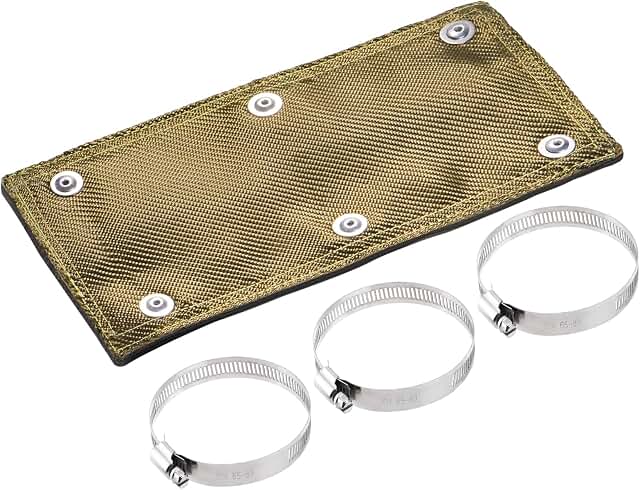
Designed as a compact, high-performance shield, this two-layer titanium solution uses an outer titanium layer with a silica interior to deliver protection up to 1350°F. Installation is streamlined with rivet-based standoff brackets and clamps, enabling solid attachment to pipes and ducts. The unique design creates an air gap that enhances cooling and heat dissipation, protecting sensitive hoses, lines, and wiring in tight spaces.
DEGEOBERLIN Titanium Heat Barrier Mat

This 12″ x 47″ adhesive-backed barrier features two basalt-based layers with titanium, offering continuous heat protection up to 1800°F and intermittent up to 2500°F. It can reduce radiant heat by as much as 90%, protecting floors and other nearby surfaces from sparks and heat exposure. It’s applicable in mufflers, chassis areas, engines, batteries, and near ovens or appliances in adjacent interiors.
Supra MK4 JZA80 Carbon Fiber Rear Bumper Shield

Engineered for the 93-98 Supra MK4 JZA80, this carbon fiber shield combines a lightweight profile with robust protection. While carbon fiber adds aesthetic appeal, the product also provides a practical shield against radiant heat in the bumper/exhaust area. It’s important to verify vehicle compatibility prior to purchase to ensure a precise fit for this model year and style.
Buying Guide: Key Purchase Considerations
- Temperature ratings: Choose shields with continuous and intermittent temperature specs that match your exhaust heat exposure. Higher ratings offer greater protection for sensitive components and nearby painted surfaces.
- Material and construction: Alloy and carbon fiber blends provide strength with light weight. Adhesive-backed options simplify installation, but ensure surface compatibility and proper surface cleaning before application.
- Size and fit: Measure the installation area and compare with shield dimensions. Universal sheets can be trimmed, while vehicle-specific shields offer exact fits.
- Installation method: Assess whether rivets, clamps, or adhesive backing best suit your surface and expected heat cycles. Consider potential detachment under vibration or heat cycling.
- Application breadth: Some shields are designed for entire engine bays, while others target specific hotspots like mufflers, hoses, or electrical wiring. Align the shield with your primary heat exposure zones.
- Durability and maintenance: Look for weather resistance, UV stability, and easy cleaning. Shields should resist oil, road grime, and corrosion in automotive environments.
- Installation impact: Verify any potential clearance issues with moving parts or thermal expansion. Ensure shield does not obstruct sensors, wiring, or airflow.
- Warranty and compatibility: Check whether the product offers a warranty and confirm compatibility with your vehicle’s make, model, and year to avoid misfit.