Exploring blind-spot sensor systems helps drivers reduce lane-change risks and improve overall road safety. This article highlights five top options that integrate with modern vehicles, offering radar or millimeter-wave sensing, LED alerts, and audible warnings. Each product section provides key features, installation notes, and what to consider when choosing a system for your car.
| Product | Brand | Features |
|---|---|---|
| EASYGUARD EBS001 Blind Spot Monitor | EASYGUARD Store | LED alerts, 6–12m monitoring range, lane-change assistant mode |
| Universal Blind Spot Monitoring Assistant | BlueDex Store | 24GHz sensing, side/rear detection, turn-signal responsive |
| Blind Spot Convex Car Mirror (2-Pack) | Utopicar Store | Frameless design, 3x larger image, outdoor adhesive |
| Pelsee P12 Pro 4K Dash Cam with BSD | pelsee Store | BSD alerts, ADAS, dual 4K front/rear cameras, GPS |
| Superfan Blind Spot Mirrors | View Company | Real convex glass, weatherproof, easy stick-on |
EASYGUARD EBS001 Blind Spot Monitor System

The EASYGUARD EBS001 is a dedicated blind-spot detection system designed to assist lane changes. It uses LED indicators to alert when a moving object enters the vehicle’s blind area, encouraging cautious maneuvers. The system monitors adjacent lanes within a range of 6–12 meters and alerts the driver when objects approach at a sufficient speed. In lane-change mode, the LED blinks rapidly and a buzzer emits three beeps to signal potential danger, supporting safer passing decisions.
Universal Blind Spot Monitoring Assistant

This system uses dual 24GHz millimeter-wave sensors to detect vehicles in side and rear blind spots. It supports 1–32.8 feet (0.3–10 meters) of detection range and provides LED alerts and a three-beep warning when the turn signal is engaged or when a vehicle is detected in the blind zone. Its ability to operate in low visibility conditions, such as rain or darkness, helps improve lane-change safety for a variety of driving environments.
Blind Spot Convex Car Mirror 2-Pack

These convex blind-spot mirrors extend the field of view on the vehicle’s side mirrors. Engineered to cover a wider area, they reflect a 3x larger image and come with an outdoor-rated adhesive base designed to withstand cold weather and car washes. The frameless design integrates smoothly with many factory mirrors, reducing distraction while enhancing lane-change awareness.
Pelsee P12 Pro 4K Dash Cam With BSD

The Pelsee P12 Pro 4K Dash Cam integrates blind-spot detection with advanced driver-assistance features (ADAS). It includes BSD for blind-spot awareness and multiple ADAS alerts (forward collision, lane departure, etc.). The dual-camera setup records in 4K front and 1080p rear, offering color night vision and GPS data. This system is especially suitable for drivers seeking both dash-cam evidence and blind-spot warnings in one device, with a 12-inch touchscreen for easy operation.
Superfan Blind Spot Mirrors
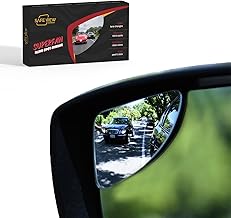
Superfan Blind Spot Mirrors use real convex glass to provide a wider, clearer view of the adjacent lanes. The design emphasizes safety during lane changes by reducing blind-spot uncertainty on highways and busy roads. The mirrors feature weatherproof construction and an easy stick-on installation, making them a practical upgrade for many vehicles without complicated wiring or installation steps.
Buying Guide: Key Purchase Considerations
- Detection technology: Wired radar/24GHz millimeter-wave sensors offer robust blind-spot alerts, while convex mirrors provide a visual extension without electronics. Choose based on whether you prefer sensor-based warnings, mirror-based augmentation, or a combination (dash cams with BSD).
- Detection range and coverage: Systems vary from short-range 1–10 meters to broader 6–12 meters. Consider your typical driving environment (city streets vs. highways) and the blind-spot size you want to monitor.
- Alerts and usability: LED indicators, audible beeps, and turn-signal integration influence reaction time. Some models trigger alerts only when signals are active, while others provide continuous warnings in certain modes.
- Power and installation: Wired systems may require professional installation or handling of vehicle power lines. Mirror-based options are largely plug-and-play but require a suitable mounting surface and adhesive compatibility.
- Camera-based vs. mirror-based: Dash-cam BSD solutions deliver video evidence and safety alerts, while mirrors enhance optics without a power draw. Consider whether you want a single device or a multi-sensor approach.
- Weather and durability: Exterior-grade mirrors and weatherproof housings perform better in rain, snow, and extreme temperatures. Check adhesive quality for mirror-based solutions and the resilience of LED/buzzer components.
- Vehicle compatibility: Some systems are universal, while others are designed for specific vehicle makes or dashboards. Verify compatibility with your car model and year.
- Future-proofing: A model with software updates or expandability (additional sensors, multi-camera support) can extend usefulness as driving conditions evolve.
In summary, selecting a blind-spot sensing setup involves balancing sensor-based warnings, visual augmentation through mirrors, and potential dash-cam features. For many drivers, combining a sensor-based system with high-clarity convex mirrors offers the best overall coverage and confidence during lane changes.