Answer: If you’re shopping for automotive electrical test meters, these five options cover essential needs from quick voltage checks to deep circuit diagnostics. The best picks are suited for DIY enthusiasts, professional technicians, and protecting newer vehicles with complex electrical systems. This guide explains who each product is best for and why it stands out, with clear comparisons to help you decide.
| Product | Best For | Why It Stands Out |
|---|---|---|
| Everyday car owners | Bright digital display, 3–48V range, polarity indicators, durable probe | |
| Professional diagnostics | Comprehensive probe angles, safe access, 30V rating | |
| Extensive troubleshooting | Large kit with many leads and adapters, versatile for many vehicles | |
| Wiring harness work | Wide coverage, durable materials, portable case | |
| Quick, all-in-one diagnostics | Single-tool solution for voltage, polarity, continuity, and more |
WINAMOO Auto Test Light With Digital Voltage Display

The WINAMOO device provides precise voltage readouts in a compact tester. It supports 3V–48V systems and includes a digital display with 0.1V resolution for reliable readings. Red and green LED indicators show positive and negative polarity, aiding quick battery load checks. Best for: vehicle owners who need fast, on-the-spot voltage checks in cars, trucks, or SUVs, including boats. Limitation: Not a full multimeter; it focuses on voltage and polarity rather than resistance or continuity testing. Use it for quick battery and wiring sanity checks.
SWANLAKE 22-Piece Back Probe Kit

This comprehensive probe set includes 15 stainless steel probes, 5 banana plug wires with clips, and 2 nickel-plated copper clips. Multi-angle back probes (straight, 90°, 135°) enable access to tight connectors without damaging insulation. Safe for up to 30V automotive circuits. Best for: technicians performing ECU diagnostics, sensor testing, and wiring verification. Limitation: Probes require careful handling to avoid accidental shorts in sensitive circuits.
LIIAMOAR 110 Pcs Automotive Circuit Test Lead Kit

This expansive 110-piece lead kit includes a carrying case, 72 terminals, multiple clip types, and adapters designed to diagnose and repair complex automotive circuits. It supports use with various meters and test equipment, and is suitable for cars, RVs, trucks, boats, and more. Best for: full-scale electrical troubleshooting projects and workshop setups. Limitation: The sheer number of components can be overwhelming for casual users.
LINXINO 68 Pcs Test Lead Kit

The LINXINO kit offers 68 pieces designed to diagnose and repair automotive circuits. It emphasizes compatibility with common multimeters and oscilloscopes, with durable stainless steel probes and nickel-plated clips. Best for: workshops requiring reliable, multi-vehicle testing leads with good organization. Limitation: Some users may prefer a more compact starter set for basic tasks.
ANENG Digital Multimeter With Case

The ANENG multimeter provides versatility for automotive and household use, measuring AC/DC voltage, current, resistance, continuity, and diodes. It offers a user-friendly display and straightforward operation, making it suitable for beginners and professionals alike. Best for: users who need a capable, all-rounder meter that fits into a tool kit. Limitation: Not specialized for high-end automotive diagnostics or live wiring analysis beyond standard measurements.
ANCEL PB100 Automotive Power Circuit Probe
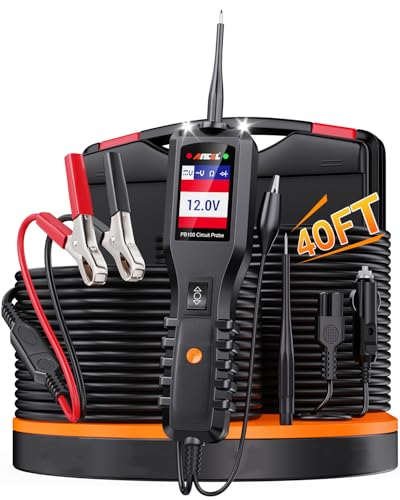
The ANCEL PB100 offers an all-in-one approach for automotive power circuit testing, covering DC and AC voltage, current, resistance, short detection, and component activation. It supports 12–24V systems and includes audible cues for quick triage in low-light conditions. Best for: beginners and professionals who want a single tool to perform multiple checks quickly. Limitation: It may not replace a full-featured multimeter for advanced measurements in every scenario.
Buying Guide: Key Purchase Considerations
- Scope of testing: Do you need a quick voltage tester or a full-featured meter with resistance, continuity, and diode testing?
- Voltage range: Ensure the tool covers typical automotive systems (often 12–48V) and any specialty equipment you work with.
- Access and probes: Consider back-probe kits and multi-angle probes if you work in tight connectors or harnesses.
- Durability and safety: Look for rugged probes, protective sleeves, and appropriate voltage ratings to minimize damage and risk.
- Portability and storage: A compact kit with a sturdy case helps organize components for field work and shop use.
- Learning curve: For beginners, a user-friendly display, clear indicators, and intuitive modes are crucial.
- Future needs: If you anticipate expanding into more complex diagnostics, consider modular sets you can grow into.
Frequently Asked Questions
- What is the main difference between a test light and a multimeter?
– A test light generally indicates presence or absence of voltage with a light or indicator, while a multimeter provides numeric readings for voltage, current, resistance, and more. - Do I need a 12V or 24V tool for modern vehicles?
– Most passenger vehicles operate around 12V, but some heavy-duty or marine systems can use higher voltages. Check your typical applications before selecting. - Are back probes necessary for automotive testing?
– They are highly useful for accessing connectors without damaging insulation, especially in tight spaces and sensitive wiring. - Can these meters diagnose ECU issues?
– Some tools aid in diagnosis by testing circuits and components, but diagnosing an ECU often requires specialized equipment and knowledge beyond a basic meter. - Is an all-in-one tester better than separate tools?
– All-in-one tools offer convenience, but dedicated meters may provide deeper measurements and higher precision for professional work. - What maintenance helps extend tool life?
– Keep probes clean, store them in their case, avoid excessive bending, and protect delicate tips from corrosion or damage.