For automotive A/C lines exposed to engine heat, choose a heat-resistant sleeve sized for the line; for outdoor HVAC pipes, use weather-focused insulation instead. The BSTFLEX sleeve is best for a compact, side-entry fit, while the NEZUIBAN sleeve suits small lines near intense heat. Amerbro offers a wider wrap, and XFasten tape or the Xeeol cover can suit larger or outdoor pipe-insulation needs. Check the product dimensions and intended application before buying: automotive heat shielding and outdoor HVAC insulation serve different purposes.
| Product | Best For | Format |
|---|---|---|
| BSTFLEX 1/2-Inch Sleeve | Small lines and wiring | Side-entry sleeve |
| Amerbro 3/4-Inch Heat Shield | Wider hoses or pipes | Fiberglass wrap |
| NEZUIBAN 1/2-Inch Heat Shroud | Small lines near extreme heat | Split sleeve |
| XFasten 3-Inch Tape | Flexible pipe wrapping | Adhesive tape |
| Xeeol Outdoor Cover | Exposed outdoor pipes | Reusable cover |
BSTFLEX 1/2-Inch Side-Entry Sleeve

This 39-inch sleeve is designed for hoses, tubing, cables, and wire harnesses in high-temperature automotive and industrial settings. Its construction combines aluminum foil, fiberglass, and polyester, with a 25% overlap side-entry design. The listed working temperature range is -40°C to +150°C, and the product description also notes oil resistance.
Best for: Small automotive lines or wiring where a side-entry wrap is useful. Choose this if you want a sleeve that can be positioned around a component without treating it as outdoor weather insulation. Check the stated 1/2-inch inside diameter before ordering; it may not suit larger lines.
Amerbro 3/4-Inch Fiberglass Heat Shield

Amerbro’s wrap measures 3.9 inches wide and 10 feet long, and is described for pipes or electrical wires. Its fiberglass fabric is listed as heat-resistant up to 1022°F. The product is intended to block heat around lines and wiring, making it a candidate for components routed near hot areas.
Best for: Buyers who need a wider, longer wrap for a pipe or hose measuring up to the listed 3/4-inch diameter. The width gives more wrap material than a narrow sleeve. Verify the actual line dimensions first: the product description asks buyers to confirm fit, and the stated temperature figure is not a substitute for checking the installation’s requirements.
NEZUIBAN Split Heat Shroud Sleeve

This 1/2-inch-inside-diameter sleeve has a full-length split and hook-and-loop closure, so it can wrap around existing hoses, fuel lines, or wires without disconnecting them. It uses fiberglass with a reflective aluminized outer layer. The manufacturer lists protection against 1200°F direct heat and 2000°F radiant heat, and describes resistance to abrasion, oil, grease, and road debris.
Best for: Small lines that are already installed near high-temperature areas, especially when opening and closing a sleeve is more practical than threading a line through it. Avoid choosing it for a larger A/C line without confirming the diameter; its listed 1/2-inch inside diameter limits fit.
XFasten 3-Inch Foam Insulation Tape
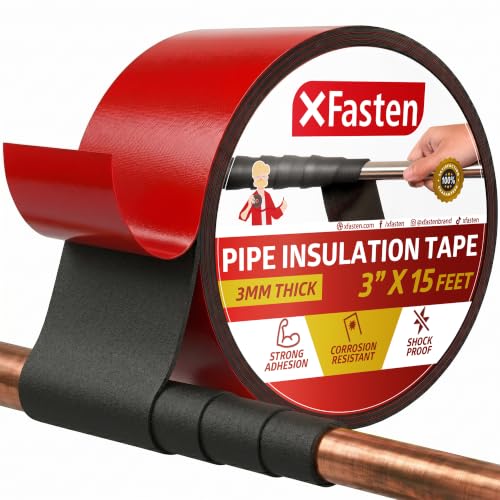
This 3-inch-by-15-foot tape is presented for HVAC and outdoor pipe insulation. Its listed features include 100 pounds per inch tensile strength, thermal conductivity of 0.11 BTU, and stretch of up to six times without breaking. The manufacturer says it helps reduce energy loss and frosting and can bend around hard-to-reach pipe sections.
Best for: Buyers wrapping larger or irregular pipe areas who want an adhesive tape format. It is more relevant to HVAC pipe insulation than to shielding a small automotive line from engine-bay heat. The listed features do not specify a direct-heat temperature rating, so do not assume it replaces a high-temperature automotive sleeve.
Xeeol Four-Layer Outdoor AC Pipe Cover

This 6-foot cover is made with 600D Oxford fabric, pearl cotton, dual aluminum foil, and a PU coating. Its listed purpose is outdoor protection from rain, snow, heat, cold, and UV exposure. Four adjustable buckle straps secure it, and the cuttable design allows the length to be trimmed. The cover is described as removable and reusable.
Best for: Exposed outdoor A/C pipes that need a weather barrier, rather than a compact automotive heat sleeve. Choose this if weather protection and reuse are priorities. It is a 6-foot cover, so confirm the pipe run and diameter can be accommodated before purchase.
Buying Guide
Is the line in a vehicle or outdoors?
Start by identifying the environment. Automotive lines near hot components call for a heat-shield sleeve or wrap with relevant heat-resistance information. Outdoor HVAC pipes need protection from weather and sunlight; a cover or insulation tape is designed for that different task. The products in this list are not interchangeable by default.
What size and installation style do you need?
Measure the line’s outside diameter and the length that needs coverage. Compare that measurement with a sleeve’s listed inside diameter, or with a wrap’s width and length. A split or side-entry sleeve can wrap around an installed line. Tape conforms around bends, while a strapped cover is intended to fit over an outdoor pipe run.
Which material and protection matter most?
For heat exposure, compare the product’s stated temperature information and construction. For outdoor use, look for the listed weather, moisture, and UV protection. Also consider whether the material needs to resist oil, abrasion, or road debris in the actual location. Avoid relying on a general “insulation” label when the product’s stated application differs from yours.
Should I choose tape or a sleeve?
Choose a sleeve when a defined diameter and fitted barrier make sense, especially if it has an opening for installation around existing lines. Choose tape for a flexible wrap around irregular sections. A reusable cover is a separate option for exposed outdoor pipes. Follow the product’s installation directions and keep the wrap clear of moving parts and components outside its stated use.
Frequently Asked Questions
Can outdoor AC pipe insulation be used on automotive A/C lines?
Not automatically. Outdoor covers and HVAC tape target pipe insulation and weather exposure, while automotive sleeves in this list are described for heat shielding. Match the material and stated application to the line’s location.
How do I choose the right insulation size?
Measure the line’s outside diameter and compare it with the product’s listed inside diameter or fit dimensions. Also check how much length needs coverage.
Is a split sleeve easier to install on an existing line?
A split sleeve with a closure can be wrapped around an existing component without disconnecting it, as described for the NEZUIBAN product. Confirm that its diameter and intended use fit the application.
Does a heat shield keep an A/C line cold?
A heat shield is intended to reduce heat exposure; the listed product information does not establish that it will cool a line or improve vehicle A/C performance. Choose according to the protection need stated by the manufacturer.
Do the temperature ratings mean a product is suitable for every engine bay?
No. A listed temperature figure is one selection detail, not proof of suitability for every installation. Check fit, location, exposure type, and the product’s full directions before use.