The best auto body frame tools depend on the repair: a complete frame-pulling system suits collision straightening, while clamps, pull plates, and hammer-and-dolly tools handle more focused panel work. The VEVOR systems are best for shops needing a pulling tower and hydraulic equipment; the SEBLAFF and NATGAI clamps suit targeted pulls; and the HUDEX kit supports welding-based pulling setups. Compare pulling capacity, included equipment, and the type of repair before choosing.
| Tool | Best for | Key distinction |
|---|---|---|
| VEVOR frame puller with airbag jack | Shops seeking a complete setup | 6-ton puller, foot pump, jack, and 16 tools |
| VEVOR frame puller with pneumatic pump | Air-equipped repair spaces | 6-ton puller and air-powered hydraulic pump |
| SEBLAFF pull clamp | Two-direction pulling | 5-ton straight and 3-ton top pull capacity |
| HUDEX pull and weld clamp set | Weld-on pulling applications | Seven reusable steel pull plates |
| NATGAI right-angle clamp | Pulling in restricted positions | 5-ton straight and 2-ton right-angle capacity |
VEVOR 6-Ton Frame Puller With Airbag Jack

This VEVOR system is best for repair shops that need a frame puller with lifting and positioning equipment in one package. It provides up to 6 tons of pulling force and includes a 118-inch reinforced chain, a 3-ton anti-detachment hook, a 3-ton airbag jack, a 6000 PSI hydraulic foot pump, and 16 straightening tools.
The post swings from -60 to +60 degrees and tilts up to 35 degrees. Its eight-pin design supports adjustment and positioning. The airbag jack has a listed lift range of 5.7 to 15.75 inches, with a three-layer reinforced airbag and a six-stage steel pipe for controlled descent. Choose this model if the jack and included tools are useful for your repair workflow.
Limitation: The jack is rated for 3 tons, while the pulling system is rated for 6 tons; these are separate specifications, not interchangeable capacities.
VEVOR 6-Ton Frame Puller With Pneumatic Pump

This VEVOR frame-straightening system is best for shops that have an appropriate compressed-air supply and want foot-operated pump control. It delivers up to 6 tons of pulling force and includes a 118-inch reinforced chain, a 3-ton anti-detachment hook, a swivel post, and 16 straightening tools. The post swings from -60 to +60 degrees and tilts up to 35 degrees.
The hydraulic pneumatic pump uses a G3/8 connector and lists an air-pressure requirement of 0.6–1 MPa. That pump setup is the main distinction from the VEVOR version with an airbag jack. Choose this model if air-powered operation fits your workspace and you do not need the included jack.
Limitation: It requires an air source meeting the stated pressure range, so it may not suit a workspace without compatible compressed air.
SEBLAFF 5-Ton Two-Way Pull Clamp

The SEBLAFF clamp is best for targeted pulling on recessed panels and other auto body repair areas where a separate frame-pulling system is already available. Its listed capacity is 5 tons for straight pulling and 3 tons for top pulling. Serrated jaws tighten as the clamp is pulled, helping it maintain its grip during use.
Choose this clamp if you need two pulling directions from one tool and want a self-tightening jaw design. It can be used for car and truck dent repair, according to the product details, but it is a clamp rather than a complete frame-straightening setup.
Limitation: The listing does not include a pulling tower, pump, or chain, so plan for the compatible pulling equipment your repair process requires.
HUDEX Seven-Plate Pull and Weld Clamp Set

The HUDEX kit is best for technicians using weld-on plates for pulling panels, frames, and chassis areas. It includes seven pull plates and a hook, with powder-coated steel construction. The plates are designed for repeated use until they become too small for welding, making this a reusable option for repair work that involves attaching plates to damaged metal.
Choose this kit when you need a set of pulling plates rather than a freestanding frame machine or a self-tightening clamp. The product describes the set as compatible with a wide range of vehicle models, but it does not provide a specific vehicle fitment list.
Limitation: The pull plates are intended for welding, so this set is not the best choice if you need a non-weld clamp or complete pulling system.
NATGAI 5-Ton Right-Angle Pulling Clamp
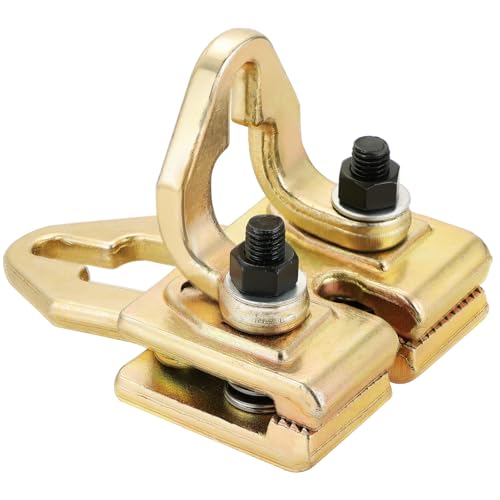
The NATGAI clamp is best for repairers who need to pull straight or at a right angle, including in tighter work areas. It is rated for 5 tons of straight pulling and 2 tons at a right angle. Its self-tightening serrated jaws grip more firmly as tension is applied, and its pulling ring rotates 180 degrees for positioning.
The clamp is made from drop-forged steel, and the product lists a precision heat-treated finish for wear resistance. Choose it over the SEBLAFF clamp if right-angle pulling and a rotating ring are priorities. Its rated right-angle capacity is lower than its straight-pull capacity.
Limitation: The two pulling capacities differ; do not treat the 5-ton straight-pull rating as the right-angle rating.
Buying Guide: How to Choose Auto Body Frame Tools
Do you need a complete frame puller or an individual tool?
Choose a frame-pulling system if you need a pulling post, hydraulic equipment, and multiple straightening tools. A clamp is a more focused choice when your shop already has a pulling setup. Pull plates are suited to welding-based attachment, while a hammer-and-dolly kit is intended for hands-on panel shaping rather than heavy frame pulling.
Which pulling direction and capacity do you need?
Compare straight, top, and right-angle capacity separately. The SEBLAFF clamp lists 5 tons straight and 3 tons top pulling; the NATGAI lists 5 tons straight and 2 tons at a right angle. A clamp’s listed capacity is not the same as the rating of a complete frame puller, jack, or other included component.
What should you check before buying?
- Confirm whether the system requires compressed air and check the stated pressure requirement.
- Check which accessories are included, such as a chain, hook, pump, jack, or straightening tools.
- For weld-on pull plates, confirm that the repair method and available equipment suit welding.
- Consider the tool’s intended work area: frame deformation, localized dent pulling, panel alignment, or surface shaping.
Frequently Asked Questions
What is an auto body frame puller used for?
An auto body frame puller applies controlled pulling force to help correct dents and deformations in damaged vehicle structures. The tool and setup should match the repair and the rated capacity required.
Are pull clamps a substitute for a frame-straightening system?
No. A pull clamp grips a vehicle panel or repair point, but it does not include the tower, pump, or other equipment found in a complete frame-pulling system.
What is the difference between a straight pull and a right-angle pull?
A straight pull applies force in line with the pulling setup. A right-angle pull applies force at an angle, which can help position the pull differently. Capacity ratings can differ by direction.
When should you choose pull plates?
Choose pull plates when your repair process uses welded attachment points for pulling. They are not the same as clamps that grip without welding.