Looking for a reliable 1-gallon auto body filler? This guide highlights solid options that are widely used for dents, dings, and cosmetic repairs on metal and fiberglass. The selections below cater to different project needs: lightweight sanding, fast drying, strong adhesion, and easy spreadability. Ideal buyers include hobbyists, professional shop technicians, and DIYers tackling car, truck, or boat repairs. The table summarizes key picks to compare at a glance.
| Product | Brand | Volume | Best For |
|---|---|---|---|
| 3M Lightweight Body Filler | 3M | 1 gallon | Smooth finish, easy spreading |
| Evercoat Lite Weight Body Filler | Evercoat | 128 fl oz | Clog-free, sands easily |
| U. S. Chemical & Plastics Feather-rite | U.S. Chemical & Plastics | 1 gallon | Lightweight, easy finish |
| Duraglas Fiberglass Filled Filler | U.S. Chemical & Plastics | 1 gallon | Fiberglass repairs, rust-friendly |
| High Teck 77062-1 Lightweight Body Filler | High Teck | 1 gallon | Lightweight, practical for everyday dent repairs |
3M Lightweight Body Filler, 1 Gal
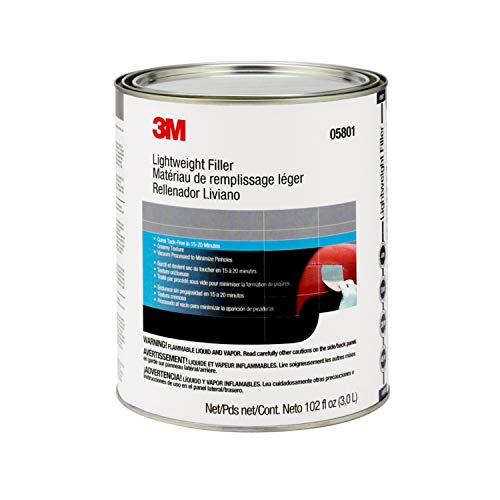
The 3M Lightweight Body Filler offers a creamy formulation that eases mixing and spreading. It provides good handling and a tack-free finish after cure, helping to produce a smooth surface for further sanding and painting. This option is well suited for professional shops and serious DIYers who want predictable leveling with minimal effort.
- Best for. Those needing a reliable, smooth finish with straightforward application.
- Limitations. May require precise mixing to optimize tack-free time.
Evercoat Lite Weight Body Filler

Evercoat Lite Weight is designed to be tack-free and sands to a fine finish, with a formulation that minimizes clogging in sandpaper. It sands easily with 80-grit paper, making it a practical pick for projects requiring quick progression from shaping to sanding. It’s best for lighter vehicle dents and aluminum or fiberglass repairs where a lighter fill helps speed up the workflow.
- Best for. Projects needing fast sanding with less paper clogging.
- Limitations. Designed as lightweight filler; may require a heavier fill for deep dents.
U. S. Chemical & Plastics Feather-Rite, 1 Gallon

Feather-Rite is a lightweight autobody filler engineered for easy sanding and a smooth finish. Its lightweight nature makes it suitable for quick, shallow repairs on metal and fiberglass. Choose this if you want a straightforward application with predictable sanding behavior and good adhesion to common substrates.
- Best for. Lightweight repairs where easy sanding matters most.
- Limitations. May not be ideal for very deep dents without multiple passes.
Duraglas Fiberglass Filled Filler, 1 Gal

Duraglas Filler blends short fiberglass fibers into a repair putty designed for metal and fiberglass. This makes it a strong option for rust repairs and structural patches, especially where fiberglass reinforcement is beneficial. It’s best for more demanding repairs where added structural support is advantageous.
- Best for. Rust repairs and fiberglass-augmented patches.
- Limitations. Heavier than pure filler; may require careful sanding to avoid fiber visibility.
High Teck 77062-1 Lightweight Body Filler

High Teck 77062-1 is a lightweight gray body filler that aims to combine easy spreadability with a workable cure profile. It’s a practical option for general dent repairs on metal panels and some fiberglass surfaces, offering predictable sanding characteristics and good adhesion when properly prepared.
- Best for. Everyday dent repairs where a balance of weight and workability is desired.
- Limitations. Color and finish may vary slightly with batch; confirm compatibility with subsequent primers.
Buying Guide: Key Purchase Considerations
- What is the project material? Metal panels, fiberglass, or aluminum may influence adhesive and sanding behavior. Choose a filler proven for your substrate.
- What level of durability is needed? For rust-prone areas or structural patches, fiberglass-filled or reinforced fillers may perform better.
- How important is sanding efficiency? Lightweight fillers reduce clogging and speed up the sanding process; consider 80- to 120-grit compatibility.
- What cure and dry times work best? Fast-drying formulas save time but require precise timing to prevent edge issues; slower cures offer more working time.
- Is ease of application a priority? Creamy formulas and tack-free finishes simplify spreading and surface leveling.
FAQ
- Q: Can I use any of these fillers on aluminum? A: Most are suitable with proper surface preparation; some are specifically noted as compatible with aluminum substrates.
- Q: Do they require a hardener? A: Many fillers are sold with a hardener or are compatible with one; always follow the manufacturer’s mixing instructions.
- Q: How long before sanding? A: Drying times vary by product; refer to the product page for tack-free and cure time guidelines.
- Q: Which filler is best for deep dents? A: Heavier or reinforced fillers like fiberglass-filled options can better fill deeper imperfections.
- Q: Can I prime over these fillers immediately after sanding? A: Yes, after a thorough sanding and cleaning to remove dust, priming is typically recommended.
- Q: Are these fillers safe for automotive paint overcoats? A: They are designed for automotive repairs but always ensure compatibility with your primer and topcoat system.