Adhesive removal is a common car detailing challenge, from bumper stickers to residue left by labels or decals. The right remover protects painted surfaces while dissolving adhesives, tar, and grime. Below are five top options designed for automotive use, complete with application notes and surface considerations to help you choose the best product for your vehicle.
| Product | Key Use |
|---|---|
| Goo Gone Automotive | Sticker, gum, sap, and residue removal on auto surfaces |
| SHIELDOM Adhesive Remover | Glues, labels, decals on glass, metal, and paint |
| Goo Gone Adhesive Remover Spray Gel | Sticky messes on hard surfaces, carpets, fabrics |
| Goo Gone Automotive Adhesive Remover | Bumper stickers, grease, tar, dirt on exterior/interior |
| 3M Adhesive Remover | Adhesive residues and masking remnants in repairs |
Goo Gone Automotive – Versatile Interior And Exterior Cleaner

This Goo Gone Automotive formula focuses on removing bumper stickers, gum, bird droppings, tree sap, spray paint, brake dust, and asphalt from automotive surfaces. It also functions as a grease remover for tar and grime, and works well on decals, making it a practical option for quick cleans on bumpers, hoods, and wheel wells. The product is designed to minimize surface damage while lifting tough residues, particularly useful for pre-wash prep or post-detail touchups. Always test on an inconspicuous area to confirm paint compatibility before broad use.
SHIELDOM Adhesive Remover Kit

This adhesive remover set highlights a plastic razor blade scraper and a spatula to ensure safe, precise removal of glue, stickers, labels, and decals without scratching painted surfaces. The formula is designed for use on metal, glass, plastic, and painted surfaces, offering a versatile option for removing sticky residues from dashboards, door jambs, windows, and exterior panels. Its gentle approach helps protect clear coats while breaking down adhesive bonds, making it suitable for careful detailing work after repairs or during restoration projects.
Goo Gone Adhesive Remover Spray Gel
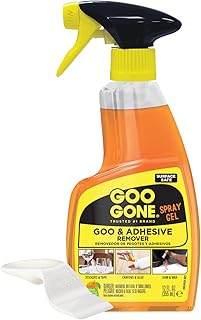
The Goo Gone Spray Gel specializes in sticky messes like labels, tape residue, tar, grease, gum, and glue on a variety of surfaces. The thick gel adheres to vertical or overhead areas and hard surfaces, enabling efficient dissolution of adhesives while minimizing runoff. It is formulated for use on hard surfaces, carpets, fabrics, finished wood, glass, metal, and plastics. For car care, it’s useful on interior trim, fabrics, mats, and hard plastics where residue lingers after windshield or interior repairs. Always follow safety guidance and ventilate during use.
Goo Gone Automotive Adhesive Remover Spray Gel

This Goo Gone Automotive Spray Gel expands on the standard remover by addressing bumper stickers, decals, tree sap, brake dust, bird droppings, gum, spray paint, asphalt, and more. It is designed as a no-drip, surface-safe solution that can tackle both exterior and interior detailing tasks. The gel formulation helps control application on larger panels and around intricate surfaces, reducing splash risk. Use on automotive surfaces where finish preservation is a priority, and rinse or wipe after residue dissolution to prevent lingering oils on sensitive materials.
3M Adhesive Remover, Quick Clean For Surfaces

3M Adhesive Remover offers a blend of non-abrasive solvents designed to dissolve adhesive residues, tape, tar, wax, and other sticky remnants without compromising cured paint. It’s positioned as useful during and after collision repair processes, particularly for removing residual masking or adhesive sheets. The easy-to-use aerosol format allows controlled application, helping to protect sensitive finishes while enabling efficient cleanup in workshop or garage settings. Consider testing on a small area before broader use on delicate paint or clear coats.
Buying Guide: How To Choose The Right Automotive Adhesive Remover
- Surface compatibility: Look for formulas labeled safe for painted finishes, clear coats, plastics, and fabric. If unsure, test on an inconspicuous spot first.
- Residue strength vs. finish safety: Stronger removers remove stubborn residues but may require additional rinsing or a conditioning step to prevent dulling. Choose a product that matches the level of residue and your finish’s sensitivity.
- Application method: Sprays, gels, and wipes offer different control. Gels cling to vertical surfaces, while sprays provide broad coverage. A plastic scraper or soft cloth helps avoid scratches on delicate surfaces.
- Surface versatility: If you need one product for multiple areas (glass, metal, painted panels, upholstery), a multi-surface remover is advantageous. Consider products that specify automotive use for best compatibility.
- Ventilation and safety: Many removers contain solvents. Use in a well-ventilated area and wear protective gloves if recommended by the manufacturer.
- Removal process: Some formulations work best with contact time; others require immediate wipe-off. Follow product instructions to minimize potential paint damage.
- Cleaning up after use: Some removers leave a residue or oil that might affect adhesion of waxes or sealants. A quick wash or wipe-down after residue removal helps maintain a clean surface ready for finishing.
When choosing an adhesive remover for car paint, consider the type of residue, the surface being treated, and how you plan to finish the area afterward. For routine decal removal and light residue, milder formulas combined with a soft cloth may suffice. For heavier grime such as tree sap or tar, a stronger, purpose-built automotive remover can save time while protecting the finish. Always follow safety instructions and verify compatibility with your vehicle’s finish before large-scale use.