The best 5/8-18 heim joint depends on whether you need a single right-hand rod end, a matching right- and left-hand pair, or a larger kit for multiple links. The options below cover those setups, with bore and thread details to help you check fit before buying. YIFUOK’s single joint suits a replacement or one-link build; its RH/LH set is better for adjustable linkages; and the FQRANBO kit is intended for buyers needing four pairs.
| Product | Best for | Thread setup |
|---|---|---|
| YIFUOK RH Rod End | Single-joint replacement | Right-hand |
| YIFUOK Panhard Kit | One adjustable link | Right- and left-hand pair |
| YIFUOK 2-Pack | Two-joint purchase | RH and LH |
| HiPicco POSB10 | Mechanical assemblies | Right-hand, self-lubricating |
| FQRANBO 4-Pair Kit | Multiple suspension links | Kit configuration |
YIFUOK Right-Hand Chromoly Rod End
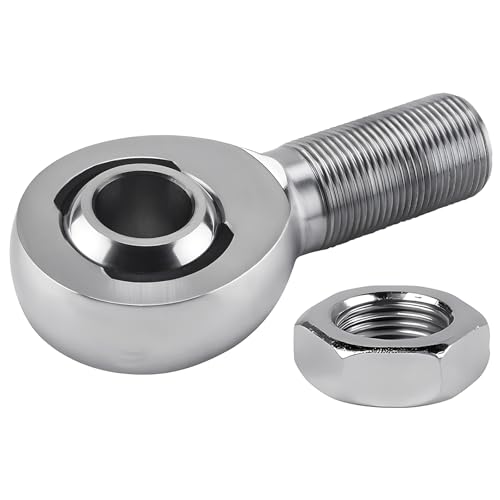
This single RH rod end is best for replacing one joint or building a linkage that specifically requires a right-hand 5/8″-18 thread. Its listed dimensions include a 5/8-inch bore, 1.50-inch width, 3/4-inch ball width, 1.63-inch thread length, and 2.63-inch centerline length.
The product is described as C1045 chromoly steel with a hardened, ground race and bore. It includes a jam nut and is designed to accommodate angular misalignment. Choose it if a single right-hand joint matches your design and you want the listed precision-ground bearing features. Avoid it if your assembly needs a left-hand thread or a matched pair; this listing describes one right-hand rod end.
YIFUOK RH/LH Panhard Joint Set

This set is best for buyers making an adjustable Panhard bar or another link that benefits from one right-hand and one left-hand thread. The listing specifies a 5/8-inch bore, 5/8″-18 threads, a 1.50-inch width, and a 2.63-inch centerline length. It also lists compatibility with 1 1/4-inch OD tubing with a .120-inch wall and 1.01-inch ID.
The joints are described as heat-treated C1045 chromoly steel with a zinc-plated finish, and the set includes lock nuts and a bushing assembly. The listed load capacity is 17,955 pounds. Check the tube and joint dimensions against your build before ordering; the supplied specifications do not establish fit for every suspension design.
YIFUOK RH/LH Jam-Nut 2-Pack

This two-pack is best for buyers who need both thread directions without ordering a larger tube-adapter kit. The listing identifies one left-hand and one right-hand 5/8″-18 rod end, each with a 5/8-inch bore. Dimensions include a 3/4-inch ball width, 1.63-inch thread length, and 2.63-inch centerline length.
The rod ends are described as heat-treated C1045 steel with silver-zinc plating and precision-ground surfaces. Jam nuts are included, and the listing gives a 17,955-pound load capacity. Confirm the RH/LH arrangement and measurements before purchase, especially if replacing existing joints where thread direction matters.
HiPicco POSB10 Self-Lubricating Rod Ends

These two right-hand rod ends are best for mechanical assemblies where the listed self-lubricating design and angular movement range are useful. Each has a 5/8-inch bore and 5/8″-18 right-hand male thread. The product specifies a maximum angular misalignment of 11 degrees and includes jam nuts.
The body is listed as forged #45 steel, with a hardened bearing-steel ball and a chromium-plated inner spherical surface. The listing gives a 21N static load capacity and a 20KN dynamic load capacity. It is a right-hand-only pair, so choose another option if your assembly requires left-hand threads or the 13-degree misalignment listed by another model.
FQRANBO Four-Pair Heim Joint Kit

This kit is best for buyers outfitting several links, such as steering, suspension, or traction-bar projects. The listing describes four pairs, right- and left-hand threads, tube adapters, and jam nuts. The rod ends use 5/8-inch shafts with 18 threads per inch and are listed for 1 1/4-inch OD tubing with a .120-inch wall and 1.01-inch ID.
The joints are described as heat-treated C1045 steel with silver-zinc plating, and the listing states a 17,955-pound load capacity. Its larger quantity may not suit a repair requiring only one joint or pair. Confirm the included quantity, thread direction, and tube dimensions against your parts list before ordering.
Buying Guide
What does 5/8-18 specify?
For these products, 5/8″-18 identifies the threaded shank diameter and thread count: a 5/8-inch thread with 18 threads per inch. It does not, by itself, confirm the ball bore, joint width, or thread direction. Check those measurements separately.
Should you choose RH, LH, or both?
A right-hand-only joint is appropriate when the mating part and adjustment method call for a right-hand thread. A set with both RH and LH ends can support adjustable link designs, but only when the rest of the assembly is configured for those thread directions. Verify the thread direction on the part you are replacing.
Which dimensions should you compare?
Match the bore to the pin or bolt, then check ball width, overall centerline length, thread length, and jam-nut thread. For a tube-based link, compare the stated tube diameter and wall thickness as well. Do not rely on the 5/8-18 label alone to establish fit.
How should you compare materials and load figures?
Listings describe different materials, finishes, and load figures, and those figures may refer to different conditions. Compare the exact product specifications and consult the requirements for your application. The listed capacity is not a substitute for verifying suitability in a safety-critical steering or suspension system.
Frequently Asked Questions
Is a 5/8-inch bore the same as a 5/8-18 thread?
No. The bore is the hole through the spherical ball; 5/8-18 describes the threaded shank. Check that both dimensions match your hardware.
Do all the listed joints include jam nuts?
The product descriptions identify jam nuts for these selections, but included components vary by listing. Review the selected item’s specifications to confirm the supplied hardware.
Can I use any 5/8-18 heim joint for a suspension link?
No. Thread size alone does not confirm suitability. Verify bore, width, thread direction, tube fit, load requirements, and application-specific design needs.
What should I check before replacing a rod end?
Record the old joint’s thread direction, bore, ball width, centerline length, and thread length. Compare each measurement with the replacement listing before installation.