The ideal 12V 100Ah leisure battery choice depends on your needs: lightweight lithium options for high cycle life and deep cycling, or maintenance-free AGM batteries for proven reliability and easy maintenance. This guide highlights five strong choices that suit RVs, boats, solar setups, and off-grid use. Each product is described with who it’s best for and why it stands out, plus a quick caveat to consider before buying.
| Product | Technology | Best For | Key Benefit |
|---|---|---|---|
| Kingboss 12V 100Ah LiFePO4 | LiFePO4 | Heavy-use, long life, solar storage | High safety with built-in BMS; lightweight with long cycle life |
| LIPULS 12V 100Ah LiFePO4 | LiFePO4 | Versatile power storage, expandable systems | High cycle life; expandable configurations |
| RVLithTime 12V 100Ah Lifepo4 | LiFePO4 | Off-grid RV and marine backup | Long lifespan and wide operating range |
| Weize Deep Cycle AGM 12V 100Ah | AGM | Maintenance-free, value-focused setups | Low self-discharge; sturdy, sealed design |
| UPLUS 12V 100Ah Deep Cycle | AGM/Gel Hybrid | Backup power for solar, camping, and trolling motors | Maintenance-free with robust capacity management |
Product snapshot: the five options above cover a spectrum from advanced LiFePO4 chemistry to robust AGM designs. The table provides a quick comparison to help you pick quickly, while the sections below dive into details for each model.
Kingboss 12V 100Ah LiFePO4 Battery

Type: LiFePO4 with built-in 100A BMS for overcharge, over-discharge, over-current, overheating, and short circuits. Weight is around 24 lbs with compact 12.9 x 6.69 x 8.5 inch dimensions. Best for: boat, RV, and home solar storage where long cycle life and safety matter. Why selected: high energy density and protective BMS support reliable performance in demanding environments. Limitation: ensure compatible charging equipment and correct series/parallel configurations for larger systems.
LIPULS 12V 100Ah LiFePO4 Battery

Type: LiFePO4 with built-in 100A BMS. Size conforms to group 24/27/31 blocks for flexible mounting. Best for: solar storage and mobile off-grid applications where weight and depth of discharge are important. Why selected: up to 15,000 cycles at moderate DOD with strong heat tolerance. Caution: ensure proper parallel/series configurations to reach desired voltage and capacity.
RVLithTime 12V 100Ah Lifepo4 Battery
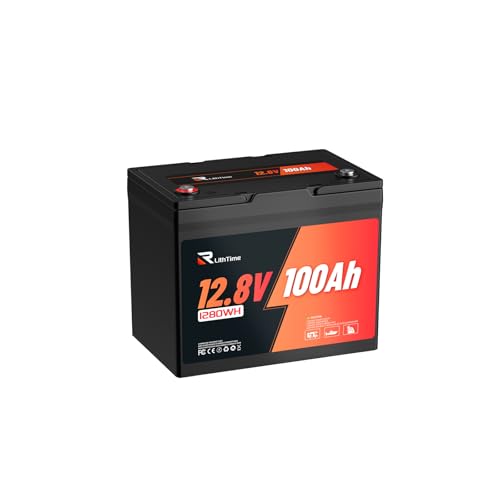
Type: LiFePO4 with a built-in BMS. Weight around 21 lbs; compact size that matches BCI Group 24. Best for: RV and marine applications needing extreme temperature tolerance and deep cycle reliability. Why selected: claims high cycle life and broad temperature range suitability. Limitation: verify compatibility with your existing battery box and BMS requirements.
UPLUS 12V 100Ah Deep Cycle AGM Battery

Type: AGM with maintenance-free design. Group 27 size with thick AGM separators and valve-regulated technology. Best for: solar backup, RVs, and camping setups that prioritize leak-proof operation and easy maintenance. Why selected: true maintenance-free operation with high capacity for general leisure-use scenarios. Caution: AGM depth of discharge is typically limited; plan usage to preserve life.
Weize Deep Cycle AGM 12V 100Ah

Type: AGM, maintenance-free with low self-discharge. Dimensions 12.99 x 6.73 x 8.43 inches. Best for: budget-conscious setups, off-grid cabins, and portable solar systems. Why selected: reliable sealed design and easier installation. Limitation: slower charging efficiency compared to LiFePO4 under heavy loads; consider charger compatibility.
Buying Guide: Key Considerations For 12V 100Ah Leisure Batteries
What chemistry should you choose?
- LiFePO4: longest cycle life, lighter weight, higher upfront cost, but best overall for frequent cycling and deep discharges.
- AGM: maintenance-free, robust, more affordable per cycle, heavier, with safer handling and spill resistance.
How will you use the battery?
- RVs and boats: consider weight, cycle life, and charging options. LiFePO4 shines with frequent cycles and solar charging.
- Solar storage: ensure compatibility with your solar controller and potential for parallel/series configurations.
- Backup power: AGM can be a cost-effective, reliable option for stationary use with limited space for frequent cycling.
What charging setup is required?
- LiFePO4 batteries typically benefit from dedicated BMS and compatible LiFePO4 chargers.
- AGM batteries require chargers suitable for sealed lead-acid chemistry and proper charging profiles.
What are size and compatibility considerations?
- Check group size compatibility (G24, G27, G31, etc.) and physical dimensions to fit your battery box or tray.
- Confirm terminal type and connections (left positive, right negative, internal threading) to ensure a snug fit.
What about safety and maintenance?
- LiFePO4 cells are thermally stable with built-in BMS; AGM designs are leak-proof and require minimal maintenance but need proper venting in some uses.
- Always follow manufacturer guidelines for charging current and depth of discharge to maximize life.
Summary: For frequent cycling, space and weight constraints, and long lifespans, LiFePO4 options (Kingboss, LIPULS, RVLithTime) offer clear advantages. For cost-conscious setups or stationary backups, AGM models (Weize, UPLUS) provide dependable performance with simpler charging requirements. Consider your device compatibility, charging ecosystem, and expected cycle life when choosing.
FAQ
- What is the difference between LiFePO4 and AGM batteries?
- Can I mix LiFePO4 and AGM batteries in the same system?
- What is a typical depth of discharge (DOD) recommended for LiFePO4 vs AGM?
- Do I need a special charger for LiFePO4 batteries?
- How do I know which group size fits my battery box?
- What should I consider for solar setups?
LiFePO4 offers longer cycle life, lighter weight, and typically higher upfront cost; AGM is maintenance-free, heavier, and more affordable per cycle.
Mixing chemistries is generally not recommended. Use a system designed for a single chemistry to avoid charging imbalances and safety issues.
LiFePO4 often supports higher practical DOD (up to 80% in many cases) with longer life; AGM batteries commonly target around 50% to preserve cycle life.
Yes. LiFePO4 requires compatible LiFePO4 battery chargers, and a BMS can provide added protection. AGM uses lead-acid chargers suitable for sealed chemistry.
Check the Group Size standard (G24, G27, G31, etc.) and compare dimensions to your enclosure or tray.
Ensure the battery’s chemistry is compatible with your solar controller and that the system supports series/parallel configurations if you need higher capacity.