If you need reliable heat for a parked car, a 110V car interior heater can be a practical solution for small spaces or when a vehicle’s own system isn’t available. This guide highlights five 110V and 12V options that are easy to install, compact, and designed to provide rapid warmth or defogging. The selections aim at different buyers: frequent travelers needing portable warmth, weekend warriors with limited space, and drivers seeking quick windshield defrosting. Below is a quick buying summary before the detailed product breakdown.
| Product | Best For | Key Benefit | Limitations |
|---|---|---|---|
| PTCYICU PTC Fan Heater 200W 110V | Small-space use, indoor rooms | Fast ceramic heating with constant-temperature control | Higher wattage may draw more power |
| Zerostart 2600900 Interior Car Warmer | Vehicles needing floor or dash mounting | Compact plug-in design with mounting bracket | Requires vehicle environment setup for best use |
| PTCYICU PTC Fan Heater 100W 110V | Very small spaces, lightweight installs | Similar technology in a lower wattage option | Less powerful than 200W variant |
| Coldmaster Universal 12v Heater | Integrated vehicle heating where HVAC is available | Connects to coolant system for warm air | Not a standalone heater; system integration required |
| 12V 200W Car Heater and Fan (BSTGEKELY) | Defrosting and cabin comfort on the go | Dual mode, 360° vent rotation | 12V operation; relies on vehicle power |
PTCYICU PTC Fan Heater 200W 110V

Best for small spaces and quick heat. This model uses a ceramic PTC heating element with a constant-temperature thermistor to maintain safer, steady temperatures. Its compact 60mm design and included wiring simplify installation in compact areas such as 0.5 cubic spaces. Best for pilots needing fast warmth in tiny cabins or workspaces inside a vehicle. Caution: ensure proper insulation and ventilation to avoid overheating in tight spaces.
- 200W 110V power for rapid warming
- PTC thermistor with surface insulation for safety
- Portable with mounting holes for flexible placement
Zerostart 2600900 Interior Car Warmer
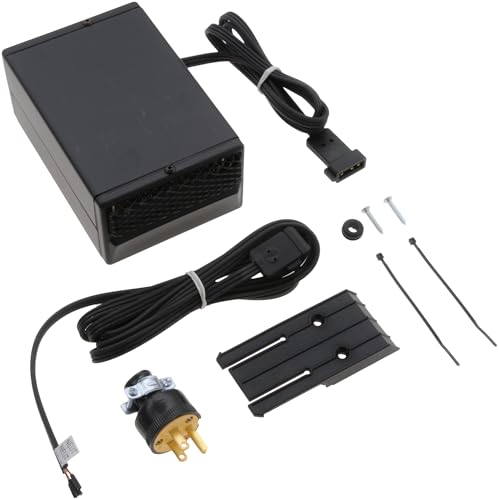
The compact plug-in heater is ideal for passenger vehicles, light-duty vans, and small recreational setups. It can be mounted on the floor or under the dash using the included bracket, making it a flexible choice for easier installation. This unit is best for drivers who want a simple, floor-level heat source or defogger that integrates smoothly with smaller interiors. Avoid this if you need a standalone engine-independent heating option; it relies on vehicle systems for full operation.
- 3,000 BTU output at 120V, 900W
- Easy to install with included mounting bracket
- Designed to defog and provide cabin warmth
PTCYICU PTC Fan Heater 100W 110V

Best for ultra-compact spaces where only modest warmth is needed. The 100W variant mirrors the 200W model’s technology, providing constant-temperature control and safe warmth in very small areas. It’s well-suited for tiny cabins or benchtop use. Caution: lower output means slower heat buildup in larger compartments.
- 110V operation with compact 60mm size
- Automatic constant-temperature control
- Surface insulation for safety
Coldmaster Universal 12v Heater

Best for vehicles with a complete HVAC system that can support integrated heating from the coolant loop. This unit is not a standalone heater; it requires a coolant connection to generate warm air, making it ideal for larger vehicles with the right infrastructure. Choose this if your aim is consistent cabin heating as part of the vehicle’s existing climate system. Limitation: requires proper electrical and engine coolant integration for operation.
- Integrated heating unit within vehicle HVAC system
- Works with coolant lines and electrical components
- Requires adequate alternator and battery capacity for reliable performance
12V 200W Car Heater and Fan (BSTGEKELY)

Best for defrosting and cabin comfort on the go. This 12V device offers 200W of warming power plus a fan option for cooling in warmer months, delivering year-round versatility. The 360-degree rotating vent allows precise airflow direction to windshields, feet, or seats. Caution: 12V devices can draw significant current; monitor battery health during prolonged use.
- Defrosting and cabin warming in one unit
- 360-degree rotating vent for flexible airflow
- Switchable modes for year-round comfort
Buying Guide: 110V Car Interior Heaters — Key Considerations
- Power source: 110V units plug into standard outlets, while 12V models draw from the vehicle battery. For off-vehicle use, 110V models are convenient; for in-vehicle use, 12V models are more practical.
- Heat output: Higher wattage provides faster warming but increases power draw. Match watts to the interior size you intend to heat.
- Installation: Some heaters are portable, while others require mounting brackets or integration with the vehicle’s HVAC system. Consider space, mounting options, and ease of installation.
- Safety features: Look for surface insulation, thermistor-based temperature control, and built-in fuses or overload protection to prevent overheating and electrical issues.
- Defrosting capability: If windshield defogging is a priority, choose units with directed airflow and 360-degree vents for efficient defogging.
- Maintenance: Compact units with simple wiring and accessible components are easier to service. Consider ease of replacement parts and wiring access.
- Vehicle compatibility: For integrated systems like Coldmaster, ensure compatibility with your vehicle’s coolant lines and electrical capacity.
- Portability vs. permanence: Decide between a portable heater for multiple vehicles or a semi-permanent setup integrated into a single vehicle.
FAQ
- What is the main difference between 110V and 12V heaters?
– 110V heaters run on standard wall outlets and are often used for stationary warm spaces, while 12V heaters run off a vehicle’s battery and are designed for in-vehicle use. - Is a higher wattage always better for a car interior heater?
– Higher wattage heats faster but consumes more power; choose wattage based on interior size and power availability. - Can these heaters be used in any vehicle?
– Some units are standalone 12V heaters suitable for most cars, while others require vehicle HVAC integration or specific mounting conditions. - Do these heaters pose safety risks?
– Reputable models include insulation and thermistor controls to limit temperature. Always follow installation safety guidelines and keep vents clear. - Is defrosting performance dependent on airflow direction?
– Yes. Vents that direct air toward the windshield improve defrosting and visibility quickly. - Can I operate a 12V heater overnight?
– Prolonged operation draws significant battery power; ensure your battery capacity and alternator can sustain the load.