The best 1-quart synthetic oil depends on the viscosity and oil type specified in your vehicle’s owner’s manual. Valvoline Advanced Full Synthetic 5W-30 is a suitable option when your engine calls for 5W-30, while its 0W-20 and 10W-30 versions serve engines requiring those grades. For higher-mileage vehicles, Valvoline MaxLife Full Synthetic 5W-20 and Castrol EDGE High Mileage 5W-30 offer formulas aimed at older engines. Check the required viscosity and specifications before choosing; the products are not interchangeable just because each comes in a quart container.
| Product | Oil type | Best suited for |
|---|---|---|
| Valvoline Advanced 5W-30 | Full synthetic | Engines calling for 5W-30 |
| Valvoline Advanced 0W-20 | Full synthetic | Engines calling for 0W-20 |
| Valvoline Advanced 10W-30 | Full synthetic | Engines calling for 10W-30 |
| Valvoline MaxLife 5W-20 | High-mileage full synthetic | Higher-mileage vehicles requiring 5W-20 |
| Castrol EDGE High Mileage 5W-30 | High-mileage full synthetic | Higher-mileage vehicles requiring 5W-30 |
Valvoline Advanced Full Synthetic 5W-30

Best for: Drivers who need a 1-quart bottle of 5W-30 full synthetic oil for an engine that specifies this viscosity. It is selected as a general-purpose option within this group because the listed features focus on wear, friction, heat, and deposits rather than only high-mileage use.
Valvoline states that this oil provides 40% stronger wear protection than industry standards and 15% better deposit defense. Those figures are manufacturer claims; consult the product label and vehicle manual to confirm the oil meets your vehicle’s requirements.
Limitation: This is a 5W-30 product, so avoid it if your manual calls for a different viscosity.
Valvoline Advanced Full Synthetic 0W-20
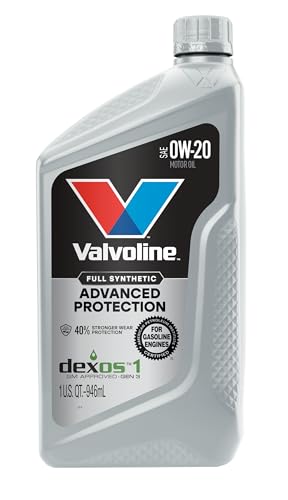
Best for: Owners whose vehicle specifically requires 0W-20 and who need a quart for topping off or an oil change. The formula shares the listed wear and deposit protection claims of the Valvoline Advanced line.
The manufacturer describes protection against wear, friction, heat, and deposits, with 40% stronger wear protection and 15% better deposit defense than industry standards. Choose this grade based on the vehicle’s requirements, not on a general assumption that lower-viscosity oil suits every engine.
Limitation: It is not a substitute for 5W-30 or another grade unless the vehicle manufacturer permits that viscosity.
Valvoline Advanced Full Synthetic 10W-30

Best for: Drivers whose owner’s manual specifies 10W-30 and who want a single quart of full synthetic motor oil. It offers the same stated wear, friction, heat, and deposit protection focus as the other Valvoline Advanced grades in this selection.
Valvoline lists 40% stronger wear protection and 15% better deposit defense than industry standards. This makes it a comparison option for buyers prioritizing the product’s stated protection features while matching the required grade.
Limitation: The 10W-30 viscosity is not appropriate for every vehicle. Confirm the permitted grade in the owner’s manual, especially before topping off oil.
Valvoline MaxLife High Mileage Full Synthetic 5W-20

Best for: Owners of vehicles with 75,000 miles or more that call for 5W-20. Its high-mileage formula includes seal conditioners intended to help prevent leaks and reduce oil consumption. Valvoline also states that it delivers 50% stronger wear protection than industry standards.
This quart is a better match for high-mileage needs than a standard full synthetic option when the vehicle requires 5W-20. The listed features also mention improving fuel economy, but results can vary by vehicle and driving conditions.
Limitation: Its high-mileage features do not make it the right choice for engines requiring another viscosity.
Castrol EDGE High Mileage 5W-30

Best for: Higher-mileage vehicles requiring 5W-30. Castrol lists features intended to reduce leaks, oil burnoff, and power-robbing deposits, plus phosphorus replacement technology to help extend emission-system life.
The product information states an oil-change interval of up to 15,000 miles. Treat that as a product claim, not a universal service schedule: follow the vehicle manufacturer’s maintenance guidance and account for driving conditions.
Limitation: This is a high-mileage 5W-30 formula, not a universal oil for every engine or mileage level.
Buying Guide: How to Choose 1-Quart Synthetic Oil
Which viscosity should you buy?
Start with the owner’s manual or oil-fill cap and match the specified viscosity, such as 0W-20, 5W-30, or 10W-30. The viscosity grade describes how the oil flows under different temperature conditions. Do not select a different grade solely because it is synthetic or available in a convenient quart bottle.
Do you need standard or high-mileage oil?
Standard full synthetic options may fit vehicles without a specific high-mileage need, provided the viscosity and required specifications match. High-mileage formulas are designed for older or higher-mileage engines; the products listed here identify 75,000 miles as a target for Valvoline MaxLife. Compare features such as seal conditioners and deposit control, but do not expect them to repair mechanical damage.
Is one quart enough?
A quart is useful for topping off or keeping a small reserve, but the amount needed varies by engine. Check the dipstick and follow the correct procedure in the owner’s manual. If the oil level repeatedly drops, investigate the cause instead of relying only on frequent top-offs.
What else should you verify?
Confirm that the oil meets the specifications required by your vehicle, in addition to matching viscosity. Product claims about protection or oil-change intervals do not override the manufacturer’s maintenance schedule. Also check the package size: a one-quart bottle can be convenient, while multi-quart listings may be a better fit for a complete oil change.
Frequently Asked Questions
Can I use any 1-quart synthetic oil in my car?
No. Match the viscosity and oil specifications stated in your owner’s manual. A quart is only the container size; it does not establish vehicle compatibility.
Is synthetic blend the same as full synthetic?
No. A synthetic blend and a full synthetic are different oil types. Check the label and choose the type required or recommended for your vehicle.
Can high-mileage oil stop an engine leak?
High-mileage oils may contain seal conditioners intended to help prevent leaks or reduce oil consumption. They are not guaranteed to stop an existing leak or repair worn components.
Can I mix different viscosities to top off?
Use the oil grade recommended by the vehicle manufacturer whenever possible. If you are unsure whether a different grade is acceptable, consult the manual or a qualified service professional before mixing.